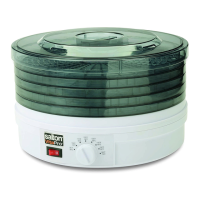
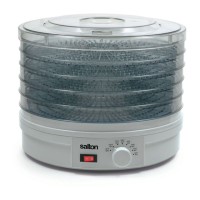
The Salton Food Dehydrator, Model DH-1043, is an appliance designed for drying various types of food, including fruits, vegetables, meats, and even flowers for arrangements or potpourri. It offers an economic and fast method for food dehydration, allowing users to preserve food and create snacks or ingredients for meals.
Function Description:
The primary function of the Salton Food Dehydrator is to remove moisture from food items, thereby extending their shelf life and concentrating their flavors. This process involves circulating warm air through stacked trays, gradually drying the food without cooking it. The dehydrated food can be consumed as a snack, rehydrated for use in recipes, or stored for later use. The dehydrator is also suitable for drying flowers for decorative purposes or potpourri.
Important Technical Specifications:
While specific electrical specifications like wattage or voltage are not explicitly detailed in the provided manual, the device operates on standard household electrical power, as indicated by the "Polarized Plug" section. The appliance features a polarized plug, meaning one blade is wider than the other, designed to fit into a polarized outlet in only one way to reduce the risk of electric shock. The dehydrator includes a base unit, five stackable dehydrator trays, a vented see-through cover, and an illuminated On/Off switch. The design allows for efficient air circulation to ensure even drying across the multiple trays.
Usage Features:
- Ease of Use: The dehydrator is designed for straightforward operation. Users are instructed to prepare food, arrange it on the trays without overlapping, place the trays on the preheated base, and cover them. The drying process is then initiated by turning on the illuminated On/Off switch.
- Preheating: It is recommended to preheat the dehydrator for 5 minutes before placing food on the trays.
- Food Preparation: The manual provides detailed instructions for preparing various foods, including washing, peeling (optional for some fruits), pitting, slicing, and pretreating.
- Slicing Guidelines: Most fruits dry best when sliced between 6 mm (1/4") and 13 mm (1/2") thick. Vegetables are generally recommended to be sliced into 6 mm (1/4") pieces. Thinner cuts generally result in shorter drying times.
- Pretreatment Options: For fruits, pretreatment can prevent discoloration and enhance flavor. Options include pineapple or lemon juice, sodium bisulfite solution (food-safe USP grade only), ascorbic acid or citric acid powder solution, and syrup blanching for a sweeter, candied fruit. For vegetables, pretreatment (blanching, steam blanching, or microwave blanching) can help retain color, extend shelf life, and enhance nutritional value.
- Drying Charts: Comprehensive drying charts are provided for fruits, vegetables, and herbs, detailing preparation methods, expected texture when dry, and estimated drying times in hours. These times are approximate and can vary based on food type, size, quality, quantity, and personal preference.
- Meat Dehydration (Jerky): For making jerky, it is crucial to trim excess fat and slice meat across the grain between 3 mm (1/8") and 6 mm (1/4") thick. Marinating for 6-8 hours is recommended. Turkey or chicken should be cooked prior to dehydrating.
- Flower Drying: The dehydrator can dry whole flowers (8-10 hours until brittle) or petals for potpourri (approximately 5 hours).
- Checking for Dryness: Users are advised to begin checking food before the estimated dehydration time is complete.
- Rehydration: The manual includes instructions for rehydrating dried fruits and vegetables using soaking, boiling, or steaming methods, or by adding them directly to recipes. It advises against adding sugar or salt during rehydration as it can slow the process.
- Notes Section: A dedicated "NOTES" section is provided at the end of the booklet for users to record information such as food type, size, total quantity, weight per tray, and dehydrating time, which can help in optimizing future drying processes.
Maintenance Features:
- Cleaning: After each use, the dehydrator trays and cover should be washed in warm soapy water, rinsed well, and dried. The base unit should be wiped with a soft, damp cloth.
- Immersion Warning: It is explicitly stated that the base unit should NEVER be immersed in water or any other liquid to prevent electrical hazards.
- Storage: All parts, especially the trays and lid, must be completely dry before reassembling and storing the appliance.
- Food Storage: Dehydrated food should be packed in clean, dry, airtight containers (glass jars or freezer bags are recommended) after cooling. Excess air should be removed from plastic bags. Food should be packed tightly without crushing to eliminate air space.
- Labeling: It is important to label and date all stored foods.
- Shelf Life: Properly stored fruits and vegetables have an approximate shelf life of 1 year, while meat has a shelf life of 3 months. For longer storage or to slow deterioration, packaged foods (except meats and chicken) should be stored in a dry, dark, cool place, or in the refrigerator/freezer. Meats and chicken should always be stored in the refrigerator or freezer.
- Regular Checks: Dehydrated food should be checked about once a month for signs of moisture or mold.
Safety Precautions:
The manual emphasizes several important safeguards, including reading all instructions, avoiding touching hot surfaces, not immersing the cord, plugs, or appliance in water, supervising children, unplugging when not in use or before cleaning, and not operating with a damaged cord or if the appliance malfunctions. It also advises against outdoor use, letting the cord hang over edges, placing near hot surfaces, or using for purposes other than intended. The appliance is for household use only. Liquids should not be poured into the appliance, and it should not be operated near combustible or pressurized spray cans. The unit should not be left unattended for longer than the times indicated in the booklet.

 Need help?
 General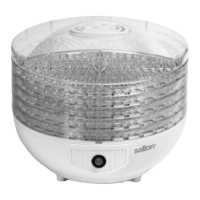

 To Next Page