EasyManua.ls Logo

Samsung Cassette Type Series - User Manual

Samsung Cassette Type Series
28 pages
Print Icon
To Next Page IconTo Next Page
Loading...
Air Conditioner
user manual
imagine the possibilities
Thank you for purchasing this Samsung product.
To receive more complete service, please
register your product at
www.samsung.com/register
Cassette Type Series
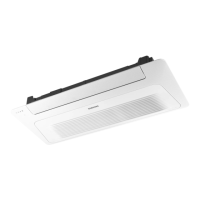
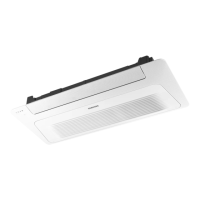
1 Way/Slim 1 Way cassette
2 Way cassette
4 Way/mini 4 Way cassette
IFSE P
Ne
RGD
HuPo
DB98-29823A(11)
Cassette type_IB_E_29823-11.indd 29 2011-03-17 오후 2:05:31

Other manuals for Samsung Cassette Type Series

Question and Answer IconNeed help?

Do you have a question about the Samsung Cassette Type Series and is the answer not in the manual?

Summary

safety information

What the icons and signs in this user manual mean

Explains the meaning of warning and caution icons used throughout the manual.

SEVERE WARNING SIGNS

Details severe warnings regarding fire, explosion, injury, and property damage.

CAUTION SIGNS

viewing your air conditioner

1 WAY & SLIM 1 WAY CASSETTE

Details the main parts and display of the 1 Way and Slim 1 Way cassette models.

2 WAY CASSETTE

Details the main parts and display of the 2 Way cassette model.

4 WAY & MINI 4 WAY CASSETTE

Details the main parts and display of the 4 Way and Mini 4 Way cassette models.

using your air conditioner

TIPS ON USING AIR CONDITIONER

Offers recommendations for efficient cooling, heating, and handling of common operational scenarios.

cleaning and maintaining the air conditioner

CLEANING THE EXTERIOR

Instructions for cleaning the external surfaces of the air conditioner unit.

CLEANING THE GRILLE

Steps for safely removing and cleaning the front grille of the air conditioner.

CLEANING THE FILTER

Detailed steps for removing and cleaning the air filter for various cassette models.

MAINTAINING YOUR AIR CONDITIONER

Guidance on preparing the unit for extended periods of non-use and general upkeep.

Periodical checks

A chart outlining recommended maintenance tasks and their frequencies for the unit.

Internal protections via the unit control system

Explains internal protection mechanisms that operate during heating, cooling, and startup.

appendix

TROUBLESHOOTING

A table listing common problems and their corresponding solutions for the air conditioner.

OPERATION RANGES

Indicates the optimal outdoor and indoor temperature and humidity ranges for efficient operation.

Installation Part

Indoor Unit Installation

Step-by-step guide for correctly installing the indoor unit, including measurements and leveling.

Performing Leak Test & Insulation

Details procedures for leak testing refrigerant pipes and insulating them to prevent condensation.

Drain pipe and Drain Hose Installation

Instructions for installing the drain pipe and ensuring proper water drainage and condensation prevention.

Flexible hose Installation

Guidelines for installing flexible hoses, ensuring proper orientation and connection.

Drainpipe Connection

Specifics on connecting drainpipes, including slope requirements and U-trap installation.

Centralized Drainage

Instructions for setting up drainage for multiple indoor units connected to a central point.

Wiring Work

Procedures for connecting power and communication cables between indoor and outdoor units.

Selecting compressed ring terminal

Table specifying dimensions for compressed ring terminals used in electrical connections.

Specification of electronic wire

Details on electronic wire specifications, including capacity calculation for ELB/MCCB.

Indoor Unit Setting

Instructions for setting the main address of the indoor unit using rotary switches.

Additional Functions

Explains how to enable or disable additional functions like room sensors and heaters.

Summary

safety information

What the icons and signs in this user manual mean

Explains the meaning of warning and caution icons used throughout the manual.

SEVERE WARNING SIGNS

Details severe warnings regarding fire, explosion, injury, and property damage.

CAUTION SIGNS

viewing your air conditioner

1 WAY & SLIM 1 WAY CASSETTE

Details the main parts and display of the 1 Way and Slim 1 Way cassette models.

2 WAY CASSETTE

Details the main parts and display of the 2 Way cassette model.

4 WAY & MINI 4 WAY CASSETTE

Details the main parts and display of the 4 Way and Mini 4 Way cassette models.

using your air conditioner

TIPS ON USING AIR CONDITIONER

Offers recommendations for efficient cooling, heating, and handling of common operational scenarios.

cleaning and maintaining the air conditioner

CLEANING THE EXTERIOR

Instructions for cleaning the external surfaces of the air conditioner unit.

CLEANING THE GRILLE

Steps for safely removing and cleaning the front grille of the air conditioner.

CLEANING THE FILTER

Detailed steps for removing and cleaning the air filter for various cassette models.

MAINTAINING YOUR AIR CONDITIONER

Guidance on preparing the unit for extended periods of non-use and general upkeep.

Periodical checks

A chart outlining recommended maintenance tasks and their frequencies for the unit.

Internal protections via the unit control system

Explains internal protection mechanisms that operate during heating, cooling, and startup.

appendix

TROUBLESHOOTING

A table listing common problems and their corresponding solutions for the air conditioner.

OPERATION RANGES

Indicates the optimal outdoor and indoor temperature and humidity ranges for efficient operation.

Installation Part

Indoor Unit Installation

Step-by-step guide for correctly installing the indoor unit, including measurements and leveling.

Performing Leak Test & Insulation

Details procedures for leak testing refrigerant pipes and insulating them to prevent condensation.

Drain pipe and Drain Hose Installation

Instructions for installing the drain pipe and ensuring proper water drainage and condensation prevention.

Flexible hose Installation

Guidelines for installing flexible hoses, ensuring proper orientation and connection.

Drainpipe Connection

Specifics on connecting drainpipes, including slope requirements and U-trap installation.

Centralized Drainage

Instructions for setting up drainage for multiple indoor units connected to a central point.

Wiring Work

Procedures for connecting power and communication cables between indoor and outdoor units.

Selecting compressed ring terminal

Table specifying dimensions for compressed ring terminals used in electrical connections.

Specification of electronic wire

Details on electronic wire specifications, including capacity calculation for ELB/MCCB.

Indoor Unit Setting

Instructions for setting the main address of the indoor unit using rotary switches.

Additional Functions

Explains how to enable or disable additional functions like room sensors and heaters.

Overview

This document describes a Samsung Cassette Type Air Conditioner, available in 1-Way/Slim 1-Way, 2-Way, and 4-Way/Mini 4-Way cassette models. It highlights the device's features, safety information, usage tips, maintenance procedures, troubleshooting, operation ranges, and installation instructions.

Function Description:

The Samsung Cassette Type Air Conditioner is designed to provide optimal cooling and heating for various indoor environments, particularly business and commercial accommodations. It can be installed into most types of suspended ceilings, offering flexible air distribution through controllable 1, 2, or 4 sides depending on the model. The unit operates as a "Heat pump" system, providing both cooling in summer and efficient heating in winter. All functions are easily controlled via a remote control. The device incorporates internal protection mechanisms, such as turning off the internal fan against cold air during heating or de-ice cycles, and protecting the compressor and internal battery during specific operation modes.

Important Technical Specifications:

The air conditioner operates within specific outdoor and indoor temperature ranges for cooling, heating, and drying modes. For cooling, outdoor temperatures can range from -5°C/23°F to 43°C/109°F, with indoor temperatures from 18°C/64°F to 32°C/90°F and humidity at 80% or less. Heating operations are possible with outdoor temperatures from -20°C/-4°F to 24°C/75°F and indoor temperatures from 15°C/59°F to 27°C/81°F. Drying modes share the same outdoor and indoor temperature ranges as cooling. The standardized temperature for heating is 7°C/45°F. If the outdoor temperature drops to 0°C/32°F or below, heating capacity may be reduced. Similarly, cooling operation above 32°C/90°F indoor temperature may not achieve full capacity.

Electrical specifications require the power supply voltage and frequency to be compatible with the air conditioner. An independent circuit breaker (MCCB, ELB) is required, with its capacity determined by the sum of rating currents of each indoor unit (ΣAi) using the formula: X [A] = 1.25 X 1.1 Χ ΣΑi. Power cables should be copper wires of H07RN-F or H05RN-F grade, with a minimum cross-section of 2.5mm² for power and 0.75~1.5mm² for communication. The maximum length of the power cable is limited to ensure less than 10% power drop. Refrigerant pipes require insulation with T13.0 or thicker Acrylonitrile Butadien Rubber, with minimum insulation thickness varying by pipe size (e.g., 13mm for Ø6.35~Ø15.88mm pipes, 25mm for larger pipes). The insulator's heat-resistance temperature should exceed 120°C.

Usage Features:

The air conditioner offers a "Cool Summer Offer" by providing effective cooling during hot periods and is a "Cost Efficient System" due to its advanced heat pump technology, which is up to 300% more efficient than electrical heating. Its "Look for Everywhere" design is elegant and harmonious, complementing various interior décors. The "Compact and easy-to-use Cassette type" design allows for flexible installation in suspended ceilings.

Tips for usage include: avoiding drastic temperature changes to save energy, supplementing with an additional heating appliance if outdoor temperatures are extremely low, and understanding the automatic de-ice mode during heating (where the unit stops heating for about 10 minutes and the internal fan turns off). The fan may also delay operation for 3-5 minutes at startup in heating mode to prevent cold blasts. During power failures, the unit will stop and restart automatically when power returns. A 3-minute delay in cool/warm air output after startup protects the compressor. For wireless remote control, the effective distance is up to 7 meters, and batteries should be removed during long periods of disuse to prevent leakage.

Maintenance Features:

Regular cleaning and maintenance are crucial for optimal performance and longevity.

  • Exterior Cleaning: The surface of the unit can be wiped with a slightly wet or dry cloth. A soft brush can be used for odd-shaped areas. Benzene or thinner should not be used as they can damage the surface and pose a fire risk.
  • Grille Cleaning: The front grille can be opened by pushing tabs or clips, then detached. It can be cleaned with a vacuum cleaner or soft brush. If heavily soiled, it can be rinsed with running water and dried in a ventilated area. Cleaning the grille is also possible while it remains attached to the panel.
  • Filter Cleaning: The washable foam-based air filter captures large particles. It should be cleaned every two weeks, or more frequently in dusty areas, using a vacuum cleaner or soft brush, or by rinsing with water and drying in a ventilated area. After cleaning, the Filter Reset button on the remote control should be pressed for 2 seconds to reset the filter schedule.
  • Periodical Checks:
    • Monthly: Clean the air filter.
    • Every 4 Months: Clean the condensate drain pan, thoroughly clean the heat exchanger, clean the condensate drain pipe, and replace remote control batteries.
    • Once a Year (by qualified personnel): Clean the heat exchanger on both the inside and outside of the unit, clean electric components with air jets, verify all electric components are firmly tightened, clean the fan, verify the fan assembly is firmly tightened, and clean the condensate drain pan.
  • Extended Disuse: If the air conditioner will not be used for several months, it should be dried thoroughly by operating in Fan mode for 3-4 hours, then disconnected from power. Before reusing, it should be run in Fan mode again for 3-4 hours to remove odors.

Safety Information:

The manual emphasizes critical safety warnings and cautions.

  • Installation: Must be performed by qualified service technicians according to national wiring regulations and safety standards. The unit must be grounded, and an exclusive power source with a rated circuit breaker must be used. Refrigerant tubes should be connected before electrical lines.
  • Operation: Do not block vents, insert objects, or place heavy items on the unit. Avoid spraying water or flammable gases near the unit. Do not disassemble or repair the unit yourself.
  • General: Keep children away from the unit. Do not drink drain water. Ensure proper ventilation in rooms where the unit operates for extended periods.

The product complies with the Low Voltage Directive (2006/95/EC) and Electromagnetic Compatibility Directive (2004/108/EEC) of the European Union. It also adheres to "EEE Yönetmeliğine Uygundur" (EEE Regulation Compliant) and "This EEE is compliant with RoHS." Packaging materials and used batteries should be disposed of according to national standards for environmentally safe recycling.

Samsung Cassette Type Series Specifications

General IconGeneral
BrandSamsung
ModelCassette Type Series
CategoryAir Conditioner
LanguageEnglish

Related product manuals