This document serves as a Quick Reference Guide for the Samsung Galaxy S4 Active, a mobile communication device. It provides an overview of the device's physical components, basic operational instructions, and common feature usage.
Device Overview and Physical Components:
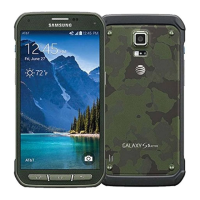
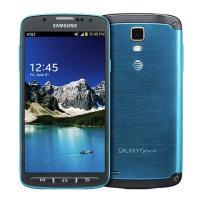
The Samsung Galaxy S4 Active features a standard smartphone design with a front and rear view illustrated.
On the front of the device, from top to bottom, you'll find:
- Earpiece: Used for listening during phone calls.
- Light sensor: Automatically adjusts screen brightness based on ambient light.
- Proximity/gesture sensor: Detects when the device is near your face during a call to turn off the screen, or recognizes hand gestures for certain functions.
- Front camera: For taking selfies and video calls.
- Power/lock button: Located on the right side, used to turn the screen on/off or power the device on/off.
- Volume button: Located on the left side, used to adjust the volume of calls, media, and notifications.
- Touch screen: The primary interface for interacting with the device, displaying apps, information, and allowing touch input.
- Menu button: A capacitive button below the screen, typically used to access options within an application.
- Home button: A physical button below the screen, used to return to the home screen from any application.
- Back button / escape key: A capacitive button below the screen, used to go back to the previous screen or close the current application.
On the rear of the device, from top to bottom, you'll find:
- Microphone for speakerphone: Used for hands-free calls.
- Headset jack: For connecting wired headphones or headsets.
- IR LED: Likely used for infrared remote control functionality.
- GPS antenna: For global positioning and location services.
- Rear camera: The primary camera for taking photos and videos.
- Flash: Provides illumination for the rear camera in low-light conditions.
- Back cover: The removable or fixed rear panel of the device.
- Speaker: For audio output, such as ringtones, music, and speakerphone calls.
- Micro USB port: For charging the device and connecting to a computer for data transfer.
Basic Device Usage:
Turning the Device On/Off:
To power on the Samsung Galaxy S4 Active, press and hold the Power button for approximately 2 seconds. To turn the device off, press and hold the Power button until a "Power Options" message appears on the screen, then tap "Power Off."
Answering and Ending Calls:
When you receive an incoming call, the "Incoming Call" screen will appear.
- To answer the call, slide the Green phone icon from the left to the center of the screen.
- To end the call, slide the Red phone icon from the right to the center of the screen.
Accessing and Composing Email:
To access your email:
- From the home screen, tap the Email button.
To compose a new email:
- Tap the Compose Icon.
- Tap the "TO" field and enter the recipient's email address or name.
- Enter a subject and type the body of your email.
- To send the email, tap the SEND icon.
To attach files to an email:
- Before sending, tap the Attachment Icon.
Creating a Calendar Entry:
- From the home screen, tap the Calendar icon.
- Tap the specific date you wish to add an event to.
- Tap "Event."
- Tap "Create New" (represented by a circled plus sign in the upper right corner).
- Touch "Done" to save the entry.
Customization Features:
Changing Your Ringtone:
- From the home screen, tap "Settings."
- Tap "My Device" (located at the top of the settings menu).
- Tap "Sound."
- Tap "Ringtones."
- Select your desired ringtone and then click "OK."
Changing the Lock Screen Message:
To personalize the tag line displayed on your lock screen (e.g., changing "Life Companion" to a custom message):
- From the home screen, tap "Settings."
- Select "My Device" (at the top).
- Tap "Lock Screen."
- Tap "Lock screen widgets."
- Select "Edit personal information."
Changing Your Email Signature:
- From the email screen, tap the Menu button on your device.
- Select the "Help" option.
- All email account settings can be found here.
- Select "Edit email signature."
- Tap "Start now" button.
- Select the account you want to edit.
- Tap "Signature."
- Edit your signature, then tap "Done" to save.
- From the home screen, tap the Contacts button.
- Tap "Contacts" (at the top).
To add new contacts:
- Select the plus button (under contacts).
- Select where you would like to store the contact information.
- Add the contact's information.
- Tap "Save" to save the contact.
Security and Maintenance Features:
Resetting Device Password:
If you need to reset your device password:
- From the home screen, tap the MENU button on your device.
- Select "SETTINGS."
- Select "My device" (at the top).
- Select "Lock screen."
- Select "Screen lock."
- Confirm your current password.
- Select "password."
- Confirm your new password.
- Tap "OK."
AD Account Password Change:
If you receive a "Sign in Failed" message for your City of Philadelphia Account, indicating a password change:
- When prompted, enter your new password.
- The system will show your email address (e.g., First.Last@phila.gov).
- Enter the password prompt, then enter a new password.
- Click "OK."
Encrypted Memory Access:
When using encrypted memory, you will be prompted to enter your PIN or Password to access the device upon startup. You will also be prompted for your password again once on the home screen to access the device.
Appendix - Common App Functions:
The guide also provides a quick reference for common applications:
- Contacts: View all your contacts and initiate calls, emails, SMS, or sharing.
- Email: Set up your phone to receive email via POP protocol.
- Internet: Access the internet.
- Messaging: Send SMS or MMS messages.
- Phone: Make a call or view your contacts.
- Play Store: Download more applications.
- Settings: Open your phone settings for customization and management.

 Need help?
 General





 To Next Page