Need help?
Do you have a question about the Sapido GR-1733 and is the answer not in the manual?
Provides cautions regarding FCC compliance and RF exposure limits.
Reiterates FCC radiation exposure limits and installation guidelines.
Lists national restrictions for frequency range 2400.0 - 2483.5 MHz.
States compliance with essential requirements of electromagnetic compatibility directives.
Provides guidance on proper disposal of electronic equipment according to WEEE directive.
Details network standards, data rate, frequency range, security, hardware, and operating parameters.
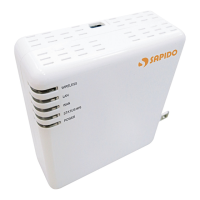
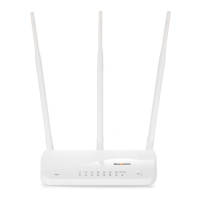
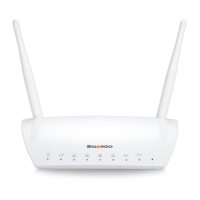
Describes the front panel of the SAPIDO GR-1733, including LED indicators.
Illustrates and labels the rear panel ports and buttons of the SAPIDO GR-1733.
Outlines the initial steps for establishing a network connection with the SAPIDO GR-1733.
Explains how to configure the device for Router Mode for internet connectivity.
Details configuration for Wi-Fi AP Mode for wireless LAN communication.
Lists the prerequisites for connecting the SAPIDO GR-1733 device.
Guides through the network setup process after initial connection.
Displays system information like uptime and firmware version.
Shows current wireless settings such as mode, band, and SSID.
Details the LAN interface configuration, including IP address and subnet mask.
Displays WAN interface status and configuration details.
Describes the automatic internet connection setup for supported devices.
Guides on sharing internet connection from smartphones via USB.
Configures the WAN connection using an Ethernet port for various access types.
Details how to set up a static IP address for the WAN interface.
Shows the WAN Setup page for DHCP Client configuration.
Details the WAN Setup page for PPPoE connection configuration.
Covers the WAN Setup page for PPTP connection configuration.
Describes the WAN Setup page for L2TP connection configuration.
Explains how to configure the WAN interface using a 3G USB dongle.
Outlines the WAN Setup page for Wireless WAN interface configuration.
Shows WAN setup options for Access Point mode, including wireless network scanning.
Describes how to configure the router in AP Mode for network bridging.
Guides on setting up the LAN interface for WiFi AP mode.
Details the configuration for WiFi AP mode, including default gateway and login.
Introduces methods for setting up wireless LAN connections.
Explains how to set up wireless LAN using the WPS button for secure connection.
Option to turn off the wireless service on the Access Point.
Selects the wireless frequency band, e.g., 2.4 GHz.
Sets the wireless operating mode like AP, Client, or WDS.
Allows selection of channel width for wireless communication.
Controls the router's use of lower or upper channels for wireless.
Enables selection of the wireless channel from available options.
Configures the router to act as both Station and AP for extended wireless coverage.
Selects the wireless encryption type for security, e.g., WEP, WPA.
Sets the authentication method for wireless network access.
Describes 802.1x authentication for enhanced network security.
Details configuration for Enterprise (RADIUS) authentication mode.
Manages access by blocking or allowing specific wireless clients using MAC addresses.
Network Address Translation settings for managing IP addresses and port forwarding.
Configures virtual servers by redirecting WAN port service to specific LAN IP addresses.
Automatically redirects network services to machines behind the NAT firewall.
Exposes a single local user to the internet for specific applications, opening all ports.
Quality of Service settings to classify and prioritize internet traffic for better experience.
Restricts or secures the local network by filtering data packets based on port addresses.
Blocks or filters LAN clients from accessing the internet based on their IP addresses.
Blocks computers from accessing the internet based on their MAC addresses.
Restricts user access to specific websites by blocking URLs containing certain keywords.
Assigns a fixed host and domain name to a dynamic Internet IP address for easier access.
Provides advanced, tunable 802.11 parameters for technically advanced users.
Configures Wireless Distribution System (WDS) for wireless bridge functionality.
Describes the PIN model for WPS setup, requiring a PIN from the device or web interface.
Allows users to set or change the username and password for web management access.
Guides on upgrading the router's firmware to the latest version.
Explains the process and risks associated with upgrading the router's firmware.
Allows creating a backup file of current router settings for restoration.
Synchronizes the router's clock using an NTP server and selects the correct time zone.
Enables or disables VPN Passthrough features like IPSec, PPTP, and L2TP.
Allows selection of the Web GUI language from a dropdown list.
Provides access to Network Config and Event Log status for monitoring.
Displays system information like uptime and firmware version.
Shows current wireless settings such as mode, band, and SSID.
Details the LAN interface configuration, including IP address and subnet mask.
Displays WAN interface status and configuration details.
Allows enabling and viewing system logs, including remote logging options.
Logs the user out of the router's web management interface.
Guides on using the router as a Samba server to share files from USB storage.
Explains Dynamic DNS and how to configure it for remote access via hostnames.
Manages services, view shopping cart, and active services after account confirmation.
Allows adding and managing hostnames for DDNS services.
Answers common questions regarding the installation of the XDSL router.
Troubleshoots issues related to the router's power and status LEDs.
Addresses issues with computer's online connectivity and configuration after connecting to the router.
Provides troubleshooting tips for slow wireless connection speeds.
Details the number of USB ports available on the SAPIDO GR-1733.
Lists compatible operating systems for the SAPIDO GR-1733.
Lists compatible web browsers for accessing the router's interface.
Advises consumers to contact the supplier for more information on regulations.
 General
| Brand | Sapido |
|---|---|
| Model | GR-1733 |
| Category | Wireless Router |
| Language | English |

 To Next Page