Need help?
Do you have a question about the Sapido BRF71n and is the answer not in the manual?
Device compliance with FCC rules and operational conditions.
Equipment compliance with FCC radiation exposure limits and installation distance.
FCC statement on testing and compliance for Class B digital devices.
Product compliance with Council Directive on Electromagnetic Compatibility.
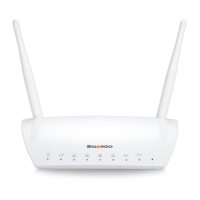
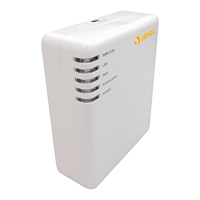
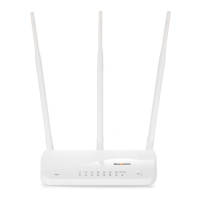
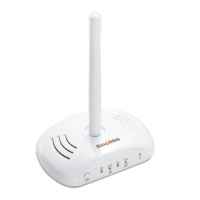
Overview of the device's physical appearance and LED indicators.
Administrator settings for WAN, LAN, Wireless Network, NTP, password, VPN, Firewall.
Steps and prerequisites for connecting the BRF71N router.
Configuring the router with proper network parameters for optimal operation.
Guide to configure network settings for Windows 2000.
Guide to configure network settings for Windows XP.
Guide to configure network settings for Windows Vista/7.
Method to find the router's IP address.
Steps to access and log into the router's web interface.
Steps to access the internet using the router as a broadband device.
Navigating the router's interface via the Home button menu.
Configuring the internet connection type for the router.
Configuration settings for PPPoE internet connection.
Configuration settings for DHCP internet connection.
Configuration settings for Static IP internet connection.
Configuration settings for PPTP internet connection.
Configuration settings for L2TP internet connection.
Configuration for using WiFi as an Internet Service Provider.
Configuration for 3.5G internet connection.
Configuration for connecting via smartphone.
Configuration for LTE internet connection.
Setting the router to Access Point mode using hardware switch.
Setting the router to WiFi Access Point mode using hardware switch.
Process for upgrading the router's firmware.
Automatic detection and installation of new firmware.
Manual process for upgrading router firmware.
Features for setting up parental controls on the network.
Restricting user access to specific websites.
Scheduling MAC address filtering for network access.
Configuring wireless network availability based on a schedule.
Network control features for office environments.
Configuring the router to act as multiple Access Points.
Managing wireless client access to the router.
Filtering network access based on IP addresses.
Reserving IP addresses for specific MAC addresses.
Quality of Service settings for traffic prioritization.
Accessing Samba storage and FTP server features.
Configuration for Samba file sharing.
Configuration for the FTP server feature.
Setup and configuration for the webcam server functionality.
Setting up and configuring a VPN server.
Denial of Service protection settings.
Configuring remote access to the router's GUI.
Viewing current network status and device information.
Displaying detailed information about the WAN connection.
Displaying detailed information about the LAN connection.
Information about connected network clients.
Information related to connected USB devices.
Resetting the router to its factory default settings.
Restarting the router.
Logging out from the router's web interface.
Selecting the internet connection mode.
Referencing the main internet setup section.
Referencing the Access Point mode setup.
Referencing the WiFi Access Point mode setup.
Referencing the WiFi ISP mode setup.
Configuration settings for IP addressing.
IP configuration for the WAN interface.
PPPoE IP configuration details.
DHCP IP configuration details.
Static IP configuration details.
PPTP IP configuration details.
L2TP IP configuration details.
3.5G IP configuration details.
Smartphone IP configuration details.
LTE IP configuration details.
Local Area Network interface setup.
Dynamic DNS configuration.
IPv6 configuration settings.
Wireless network configuration section.
Basic parameters for wireless LAN clients.
Advanced configuration for wireless network settings.
Wireless network security type and level settings.
Managing access control for wireless clients.
Wi-Fi Protected Setup configuration.
Wireless Distribution System configuration for wireless bridging.
Referencing wireless schedule settings.
Network Address Translation configuration.
Demilitarized Zone setup for exposing services to the internet.
Setting up virtual servers for port forwarding.
Filtering network access based on port numbers.
Referencing IP Filtering.
Referencing MAC Filter Schedule.
Referencing URL Filtering.
Referencing IP Binding.
Virtual LAN configuration.
System management features.
Configuring Wake-on-LAN functionality.
Changing the router's login password.
Referencing firmware upgrade.
Saving and loading router configuration profiles.
Referencing remote management.
Setting the router's time zone.
Universal Plug and Play configuration.
Configuring routing tables.
Configuring VPN passthrough settings.
Enabling automatic detection of WAN connection type.
Frequently asked questions about router installation.
Questions regarding the router's LED indicators.
Questions about IP address configuration and troubleshooting.
Questions related to operating system settings for connectivity.
Setup issues and troubleshooting for BRF71N.
Troubleshooting wireless LAN connectivity.
Support information, including IP address limits.
Miscellaneous questions about router operation.
List of supported operating systems.
List of supported web browsers.
Information on communication regulations.
 General
| Wireless Standards | IEEE 802.11b/g/n |
|---|---|
| Frequency Band | 2.4 GHz |
| Wireless Speed | Up to 150 Mbps |
| WAN Ports | 1 x 10/100Mbps |
| LAN Ports | 4 x 10/100Mbps |
| Security | WEP, WPA, WPA2 |
| Antenna Gain | 3 dBi |
| Firewall | NAT, SPI |
| Weight | 180 g |
| Antenna | 1 x external, detachable |
| Power Supply | 5V DC, 2A |

 To Next Page