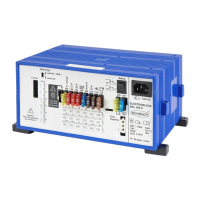
Operating Instruction Manual of Energy Management System
EBL 208 S, Art.-No. 911.470 Seite 4 / 7
note: operating instruction manual is intended for the owner and has to come with the EBL
Schaudt GmbH - Elektrotechnik & App.-bau - 88677 Markdorf - Germany 13.12.2001
3.2 Relay Functions
battery cut-off relay This relay seperates the starter and living-area battery when the engine is
not running and if there is no voltage on terminal 'D+'.
Both batteries are connected in parallel and therefore simultaneously char-
ged while engine is running.
main-switch relay This relay is controlled by the push-button switch on the instrument panel
bistable '12V EIN/AUS'. It switches off all 12V load, except the automatic step and
the AES-refrigerator.
awning-light relay The awning-light is operational only with turned on main-switch and if the
engine is not running with no voltage on terminal 'D+'.
refrigerator cut-off relay This relay controls the power supply of the refrigerator.
The refrigerator gets its power from the starter battery only if the engine is
running and if there is a voltage on terminal 'D+'.
An AES refrigerator is provided from the living-area battery when the
engine is not running.
charging relay battery 1 This relay automatically provides a 2A trickle-charge to
(starter battery) the starter battery if mains supply is on.
3.3 Battery Monitor Module
The battery monitor compares the voltage of the living-area battery with a reference voltage.
As soon as the battery voltage is lower than 10.5V all 12V load will be switched off.
Only the automatic step and a AES-refrigerator are still provided with power. Short falls (< 2 sec )
below the threshold voltage, due to high inrush currents of connected load do not affect the
automatic cut-off function.
If the automatic shut-down has been triggered due to overload or an insufficiently charged battery
all non-essential load should be switched off.
By actuating the '12V on/off' push-button switch on the instrument panel it may be possible to
reactivate the 12V system for a short period of time.
However, the 12V System can not be switched on if the battery voltage stays under 11.0V.
In any case the living-area battery should be fully recharged as soon as possible.
4. Transport, Storage, Installation
4.1 Transport, Storage
* The energy system should be stored and transported in a suitable packing and in a dry
environment only.
* Storage temperature range : - 10°C to + 50°C.
4.2 Installation
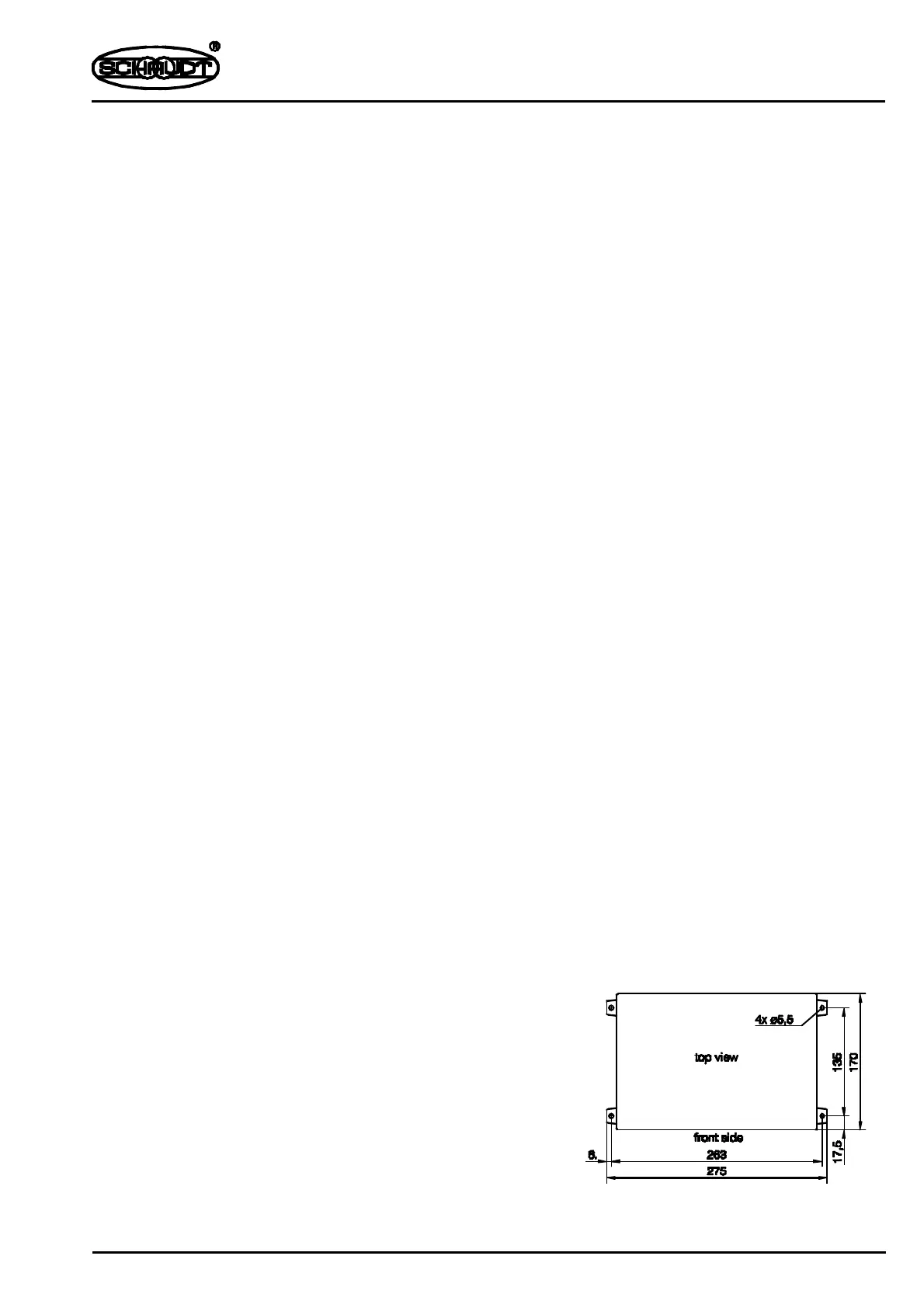
* The energy system has been designed for wall and floor
mounting.
* It has to be fitted onto a stout and level surface by use of
the four provided mounting sockets.
* The energy system is designed for use in a dry and sufficiently
ventilated environment within a temperature range
of - 10°C to + 45°C.



 To Next Page
 Loading...