4. LED’s
4.2 PTC-IIpro
Send
Traffic
Idle Compress 2
Tracking
MARQ-OK Connected
MaxSpeed
DQPSKRequest
Error
CHO
Compress 1
Phasing
MARQ-IN
DBPSK
Mail
HiSpeed
DSP Multimode PACTOR-Controller
PR 1
PR 2
PTT
PTT
Connected
Connected
Carrier
Carrier
PTC-IIproSCS
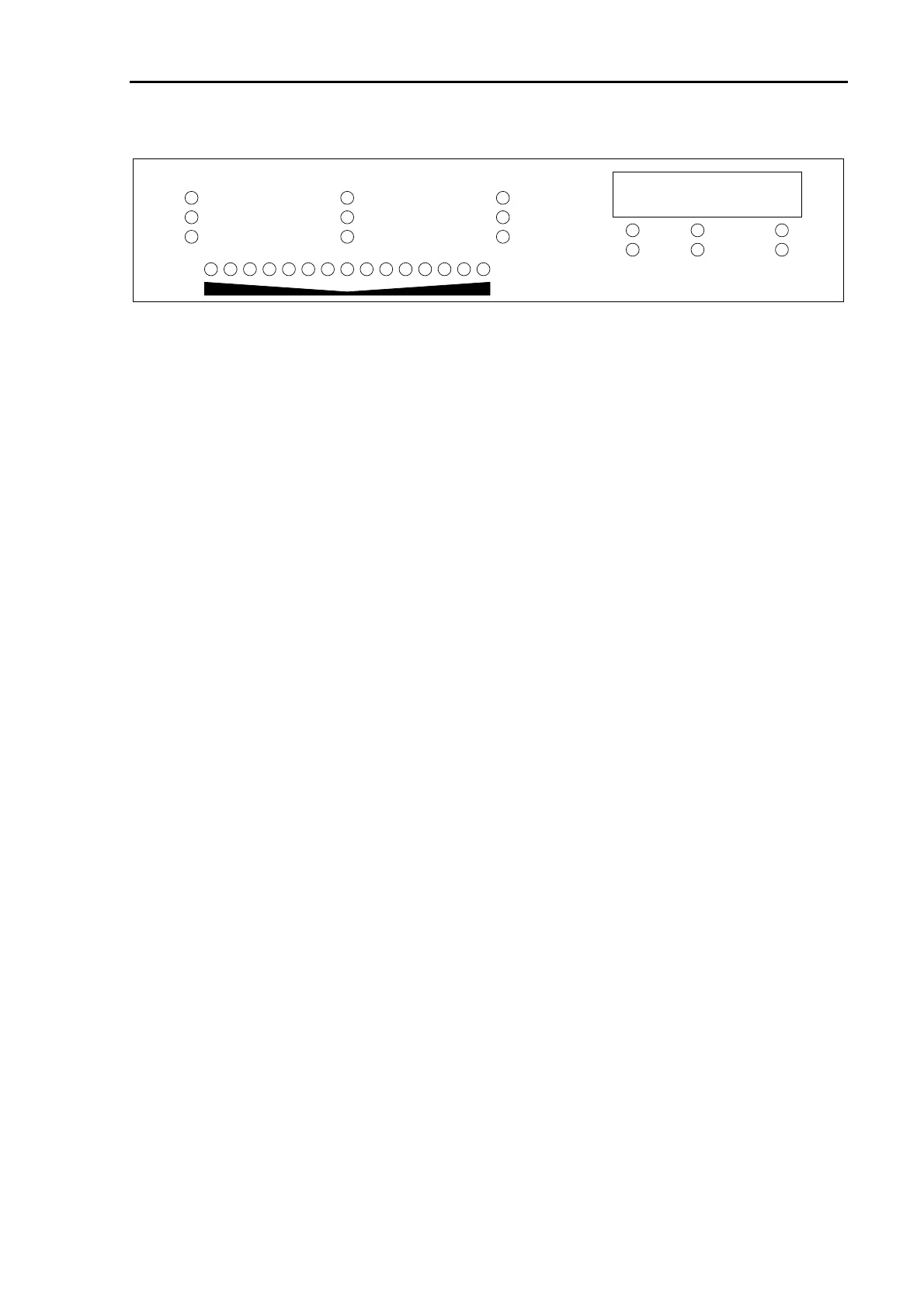
Figure 9: The PTC-IIpro front
The SCS PTC-IIpro is equipped with 15 LED´s to display status information, a fifteen LED
tuning indicator and a ten character alphanumeric LED display to show the operating mode.
The meaning of the LED´s is shown below.
Idle/Request:
When Idle lits, then it means that at least one “filler” character (idle) is contained in the present
packet. If Request lits, then the other station has requested a repeat of the last sent data or
control packet.
Traffic/Error:
When Traffic lits, the system transfers data and the HF-channel is operating. In STBY
condition (not in Listen mode) the Traffic-LED shows when the channel is occupied (channel
busy). If Error lits, the packet or control signal had bit errors and cannot be decoded.
Send/CHO:
Send shows that the PTC is the actual packet sender. The CHO lits in the moment a change
over (change of transmit direction) occurs and goes off when it is finished.
Compress2/Compress1:
Displays the compression method currently used. Compress 1 is Huffman coding, Compress 2
is pseudo-Markow coding. If the LED is off, then the actual packet is an uncompressed packet.
Tracking/Phasing:
Tracking lits for a short while when the PTC changes the carrier frequency during a PACTOR-
II link. Phasing is active if a new phasing takes place in AMTOR (ARQ & FEC).
MARQ-OK/MARQ-IN:
MARQ-OK lits when the actual packet was reconstructed using memory ARQ. MARQ-IN
shows that the current packet is accumulated for reconstruction.
DQPSK/DBPSK:
These are activated (also during Unproto and Listen mode) depending on the modulation
currently being used, DQPSK or DBPSK.
MaxSpeed/HiSpeed:
MaxSpeed lits during 16-DPSK packets (also with Unproto and Listen modes). HiSpeed lits
during PACTOR-I packets which are 200 baud (also with Unproto and Listen), and when
PACTOR-II packets with 8-DPSK are used.
49



 To Next Page