38
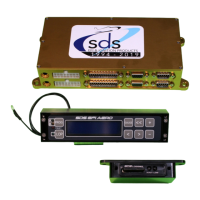
Dual board ecu’s, Duplicating values into the Backup Ecu.
We generally recommend that you duplicate all values in both ECUs with a few exceptions:
Magnet Position: This value will be different in the Backup ecu vs. the Primary ecu.
On 4cyl engines: In the backup ecu set the Acc Pump Sense to 1, Acc Pump Lo RPM and Acc Pump
Hi RPM to zero, due to the backup ecu not being connected to the Throttle Position sensor.
Fuel ECU Switch
When running dual ECU boards, this toggle switch activates relays which switch operation of the
injectors from one ECU board to the other. In normal operation, one board is always firing the top
spark plugs, the other fires the bottom plugs. The ECU select switch only switches the injector
connection over to the other board. If one ECU board fails, you’ll lose one set of plugs but the engine
should continue to run.
The recommended ECU checking procedure is to start the check on the backup ECU. At idle, Switch
the ECU selector switch from Backup to Primary. If the engine continues to run, both ECUs are
working. Now you can switch coil power off on the #1 coil pack. Switch that one back on and then
switch off #2 coil pack power. If the engine continues to run, both coil packs are working. Be sure to
check that both coil power switches are back on prior to takeoff.
Default Protection Values (Important)
You may have noticed that there are some strange values entered in your ECU(s) at the far ends of
the MAP and temp sensor ranges. These are there to allow the ECU to continue to run the engine at
near full power in the event of a shorted or open MAP or temp sensor failure. Do not change these
values! These are in ranges that the ECUs will never operate in during normal circumstances and will
not affect day to day running of the engine. These are zeroes at the coldest Engine Temperature
range, and 100’s in the bottom few Manifold Pressure ranges.
RPM, MAP, Fuel Delivery, Duty Cycle, Injector concerns
If your mixture still leans out under high power conditions no matter how large your MAP and RPM
values are, the system is not at fault. Check for fuel delivery problems. Check the duty cycle first in
gauge 2 mode at full power. If it's over 100%, you have a problem with the injectors, pump or
regulator. If your fuel pressure does not keep up with demand, the engine will not run correctly
no matter how you program the system. If your injectors are too small, the same thing applies. At
full throttle and high rpm, the mixture should be fairly rich- around 11.5 to 12.5 AFR.
If your values go all over the place with huge steps or deviations, you are probably doing something
very wrong. Most well mapped engines have smooth transitions from one step to the next. Look at the
sample maps in your manual. If you are really stuck, send us your values, and we can usually suggest
some constructive changes.
END OF BASIC TUNING INFORMATION SECTION
**************************************************************************************************************



 To Next Page
 Loading...