The Sennheiser All-Day Clear Slim OTC Hearing Aids (Model: ADCS1) are designed for individuals aged 18 years or older with perceived mild to moderate hearing loss. These over-the-counter hearing aids amplify and transmit sound to the ears to compensate for hearing loss. The device is intended for personal use only.
Important Warnings and Cautions:
- Age Restriction: Not for use by individuals younger than 18. Those under 18 with hearing loss should consult a doctor, preferably an ENT, for medical testing and management.
- Medical Consultation: See a doctor (preferably an ENT) if you experience:
- Blood, pus, or fluid from the ear in the past 6 months.
- Pain or discomfort in the ear.
- Excessive ear wax or a foreign body in the ear.
- Dizziness or vertigo.
- Sudden hearing change in the past 6 months (worse then better, or worse in one ear).
- Ringing or buzzing in only one ear.
- A birth defect, unusual shape, injury, or deformity of the ear.
- Pain/Discomfort: The hearing aid should not cause pain upon insertion. Remove if pain or discomfort occurs. If pain persists, contact the manufacturer or a hearing healthcare professional. Report adverse events to the FDA.
- Hearing Protection: This device is not hearing protection. Remove it in overly loud environments and use appropriate hearing protection (e.g., earplugs).
- Sound Output: The sound output should not be uncomfortable or painful. Reduce volume or remove the device if it's too loud. Consistent need to reduce volume may indicate a need for device adjustment.
- Stuck Parts: If any part (e.g., eartip) gets stuck in your ear and cannot be easily removed with fingers, seek medical help immediately. Do not use tweezers or cotton swabs, as this can push the part further in and cause serious injury.
- Professional Consultation: If you remain concerned or struggle with your hearing after trying the device, consult a hearing healthcare professional.
- Hearing Aid Expectations: Hearing aids do not restore normal hearing and may not eliminate all difficulty hearing over noise. They do not prevent or improve medical conditions causing hearing loss. Adaptation may take several weeks, and training or counseling can enhance benefits.
- Bilateral Hearing Loss: Using hearing aids in both ears can be more beneficial, especially in noisy environments.
- FDA Reporting: Report any problems (adverse events) involving the hearing aid to the FDA, including skin irritation, injury (cuts, scratches, burns from overheated battery), stuck pieces, or sudden worsening of hearing loss. Instructions for reporting are available at http://www.fda.gov/Safety/MedWatch or by calling 1-800-FDA-1088.
Function Description:
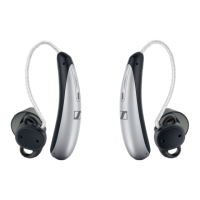
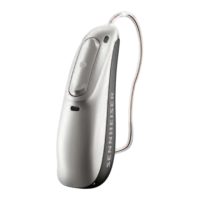
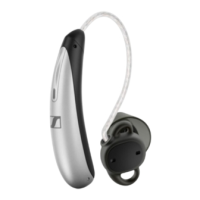
The All-Day Clear Slim hearing aids are designed to be worn behind the ear, with an eartip inserted into the ear canal. They feature a push button for control, an indicator light, a forming wire, an earpiece, an eartip, a receiver, microphones, and serial number/charging contacts. L/R markings indicate left or right hearing aid.
The accompanying charging case is used to charge the rechargeable hearing aids. It includes an indicator light for power, a USB-C port for charging, a space for a drying capsule (sold separately), a cleaning brush, and charging slots with L/R indicators.
The All-Day Clear App (for iOS 14+ or Android 8.0+ smartphones with Bluetooth®) allows users to set up and adjust the hearing aids, control volume, change sound modes, and access advanced settings like equalizer and wind noise reduction.
Important Technical Specifications:
- Power Supply Output Voltage: 5 VDC +/-5%, current 1 A
- Charger Input Voltage: 5 VDC +/-5%, current 500 mA
- USB Cable Specifications: 5 V min. 1 A, USB-A to USB-C, maximum length 3 m
- Battery Type: Built-in, non-removable, rechargeable lithium-ion battery.
- Charging Time: Up to 3 hours for a full charge.
- 30 min charge: ~30% battery
- 60 min charge: ~50% battery
- 90 min charge: ~80% battery
- Battery Life: Up to 16 hours, including 2-3 hours of streaming (varies with usage).
- Low Battery Warning: Two beeps, approximately 60 minutes before needing a charge.
- Operating Temperature Range:
- Charging case: +10° to +42° Celsius (50° to 107.6° Fahrenheit)
- Hearing aids: +5° to +40° Celsius (41° to 104° Fahrenheit)
- IP Rating: IP68 (water and dust resistant, suitable for rain but not full submersion or chlorinated/salt water exposure).
- Bluetooth®: Enabled smartphone running at least iOS 14 or Android 8.0.
- Radio Information:
- Antenna type: Differential dipole
- Operation frequency: 2.4 GHz – 2.48 GHz
- Modulation: GFSK, Pi/4 DQPSK, GMSK
- Radiated power: < 2.5mW
- Bluetooth® Range: ~1m
- Bluetooth®: 4.2 Dual-Mode
- Profiles supported: HFP (Hands-free profile), A2DP
- Maximum Output Limit (OSPL90): 109 dB SPL (ANSI S3.22 2014)
- Maximum Output (OSPL90) curve: See Figure 1 in manual
- Full On Gain Value (@50 dBSPL input): 32 dB (ANSI S3.22 2014)
- Frequency Response Curve: See Figure 2 in manual
- Output Distortion:
- 100dB SPL Out: 1.5% (ANSI/CTA 2051 2017)
- 70dB SPL Out: 4.0% (ANSI/CTA 2051 2017)
- Input Distortion @ 100dB SPL In: 1.0% (ANSI/CTA 2051 2017)
- Self Generated Noise value: 26 dB SPL (ANSI/CTA 2051 2017)
- Latency Value: 6.5 ms (milliseconds) (ANSI/CTA 2051 2017)
- Upper and Lower Cut-off Frequencies for Bandwidth: 100 Hz to 8000 Hz (ANSI/CTA 2051 2017)
- Electromagnetic Emissions: Group 1 (IEC60601-1) for RF emissions. Class B (CISPR 11) for RF emissions.
- Electromagnetic Immunity:
- Electrostatic discharge (+/- 8 kV contact, +/- 15 kV air): Failed on contact, +/- 15 kV air.
- Radiated RF Electro-magnetic field immunity test (61000-4-3): 10 V/m 80 MHz – 2.7 GHz 80% AM at 1 kHz.
- Proximity Magnetic Field (61000-4-3): 9 V/m; 710, 745, 780 MHz; Pulse modulation 18 Hz. 9 V/m; 5240, 5500, 5785 MHz; Pulse modulation 217 Hz. 28 V/m; 385 MHz; Pulse modulation 18 Hz. 28 V/m; 450 MHz FM +/- 5 kHz deviation; 1 kHz sine. 28 V/m; 810, 870, 930 MHz; Pulse modulation 18 Hz. 28 V/m; 1720, 1845, 1970, 2450 MHz; Pulse modulation 217 Hz.
Usage Features:
- First-Time Setup:
- Download the All-Day Clear App.
- Create an account or log in.
- Accept the Data Collection Agreement.
- Select "set up new hearing aids" and indicate if they were programmed by a professional.
- Plug the charging case into power and insert hearing aids (indicator lights blink).
- Remove hearing aids (indicator lights blink green for pairing).
- Follow in-app pairing for hands-free calls, wireless music/podcasts/audiobooks, and app connectivity.
- Wear hearing aids, ensuring clean hands/ears and comfortable eartip size. Adjust forming wire for optimal fit.
- Set up sound profile in a quiet space, rating volume, sound clarity, and balance.
- Allow notifications for helpful tips.
- Wearing the Hearing Aids:
- Select the proper eartip size (S, M, L) for a snug, comfortable fit.
- Hold the hearing aid by the forming wire with the eartip facing the ear. Gently insert the eartip.
- Tuck the body of the hearing aid over the top and behind the ear.
- Gently wiggle the eartip into the ear canal; it's not meant to sit too deeply.
- Adjust the bendable wire for comfort, retention, and visibility.
- To remove, lift the body from behind the ear and gently wiggle the eartip out.
- Push Button Controls:
- Turning ON: Press and hold for 4 seconds until the indicator light turns green (a melody will play if on the ear).
- Turning OFF: Press and hold for 4 seconds until the indicator light turns red.
- Automatic ON: Hearing aids turn on automatically when removed from a powered charging case or when the charging case's power supply is disconnected.
- Volume Control (Both Hearing Aids):
- Increase: Quickly press the push button (<2 seconds) on the right hearing aid (short beep).
- Decrease: Quickly press the push button (>2 seconds) on the left hearing aid (short beep).
- Can also be controlled via the All-Day Clear App.
- Sound Mode Change: Quickly press the push button (<2 seconds) on either hearing aid to cycle through modes (Automatic, Live Music, TV Connector). A beep indicates the current mode. Can also be changed via the All-Day Clear App.
- Accepting Incoming Calls: Quickly press the push button (>2 seconds) on either hearing aid.
- Rejecting Incoming Calls: Press the push button (<2 seconds) on either hearing aid.
- Ending a Call: Press the push button (<2 seconds) on either hearing aid.
- Phone Call Management: Can manage calls via smartphone; audio will stream through hearing aids.
- Feedback (Whistling): If using a landline phone, slightly tilt the phone away from your ear.
- All-Day Clear App Controls:
- Sound Control: Adjust volume, change sound modes, access equalizer, and wind noise reduction.
- Split Volume: Control volume on each hearing aid separately.
- Sound Mode Selection: Choose from available sound modes designed for different environments.
- Advanced Fine Tuning: Access equalizer and wind noise reduction. Balance adjustments can be made when streaming audio or connected to a TV Connector.
- Settings Menu: Access general account information, hearing aid settings (sound profile, usage data), support materials, and feedback options.
- Connecting to Other Devices:
- TV Connector (Optional Accessory): Wirelessly connect hearing aids to a TV or other audio source.
- Adjust TV volume: Press the right hearing aid button to increase TV volume and decrease ambient sounds. Press the left hearing aid button to decrease TV volume and increase ambient sounds.
- Connecting to a Second Bluetooth Device (e.g., laptop):
- Turn off Bluetooth on your smartphone.
- Restart your hearing aids.
- Find and connect to the hearing aids on the second Bluetooth device.
Maintenance Features:
- Charging:
- Charge for 3 hours before first use.
- Ensure hearing aids and charging case are dry and clean before charging.
- Charge hearing aids nightly.
- If charging case is unplugged during charging, hearing aids automatically turn on.
- Turn off hearing aids before storing in a disconnected charging case.
- Close the lid when charging in a humid environment.
- If unplugging the charging case while hearing aids are inside, turn them off to prevent discharge.
- Charge regularly during long-term storage.
- Protecting Your Hearing Aids:
- Remove before using hair care products or cosmetics to prevent microphone clogging.
- Do not wear in bath/shower or immerse in water.
- Be diligent during exercise to avoid excessive sweat impact.
- Store in the charging case for protection when removed.
- Use the provided carrying case when on the go; avoid loose storage in bags/pockets.
- If wet, do not dry in oven/microwave or adjust controls; visit a professional.
- Avoid storing in high humidity areas (e.g., bathroom).
- For long-term storage, use a drying capsule (sold separately) in a well-ventilated box.
- Protect from excessive heat (hair dryer, vehicle glove box, dashboard).
- Do not twist or squeeze wires when placing in the case.
- Completely dry hearing aids after use.
- Ensure hearing aids, charging case, and charger inserts are dry and clean before charging. Never use household detergents or soap for cleaning.
- Do not touch charging case contacts when powered.
- Hearing aids are water, sweat, and dust resistant if cleaned and dried after exposure and maintained as described.
- Cleaning Your Hearing Aids:
- Use a soft, lint-free cloth daily.
- Use the supplied cleaning brush regularly to maintain sound quality.
- Do not rinse with water.
- Regularly clean to prevent ear wax buildup, which can reduce sound or stop function.
- Periodically replace the wax guard (every 3-4 months).
- Do not use sharp tools or household items to dislodge ear wax.
- Cleaning Your Eartips:
- Gently clean with the supplied cleaning brush and/or a soft, lint-free cloth, removing debris or ear wax.
- Eartips should be replaced every 3-6 months or when they become stiff, brittle, or discolored.
- Additional eartips can be purchased at www.sennheiser-hearing.com/alldayclear.
- Cleaning Your Wax Guard:
- Wipe with a soft, lint-free cloth using a gentle back-and-forth motion.
- Do not wipe with a rotating motion.
- Never use water, sharp objects, or brushes to clean the wax guard.
- Replacing Your Wax Guard:
- Remove the eartip from the earpiece. Gently wipe wax and debris off the eartip.
- Remove the old wax guard using the removal side of the wax guard tool. Insert into the black ring of the receiver opening. Click to attach, then remove.
- Install a new wax guard using the replacement side of the tool. Insert into the receiver opening in the earpiece. Press until secure. Discard the used wax guard tool.
- Replace the eartip onto the earpiece.
- Additional wax guards can be purchased at www.sennheiser-hearing.com/alldayclear.
- Battery Warnings: Contains a Pincell lithium-ion battery. Hazardous if swallowed or placed inside any part of the body. Seek immediate medical attention if suspected.
- Air Travel: Rechargeable hearing aids with lithium-ion batteries can be taken onto airplanes as carry-on luggage. Hearing aids cannot be placed in checked baggage.
- Modifications: Changes or modifications not explicitly approved by the manufacturer are not permitted and may damage the ear or hearing aids.
- Authorized Personnel: Only authorized personnel are allowed to open the charging accessory.
- Hearing Restoration: Hearing aids do not restore normal hearing or prevent/improve hearing impairment from organic conditions.
- Explosive Areas: Do not use hearing aids or charging accessories in explosive areas (mines, industrial areas with danger of explosions, oxygen-rich environments, or areas where flammable anesthetics are handled). The hearing aid is not ATEX certified.
- Electronic Equipment: Do not use hearing aids in areas where electronic equipment is prohibited.
- Ear Irritation/Wax: If you feel pain in or behind your ear, or if skin irritation and accumulated ear wax occur, check with your hearing professional or physician.
- Stuck Eartip/Cerumen: In rare cases, if an eartip/dome or cerumen stop becomes stuck in the ear canal, it is strongly recommended to see a physician for safe removal.
- Ear Wax: Ear wax is natural. If buildup occurs, contact your licensed professional.
- Directional Microphone Mode: Hearing programs in directional microphone mode reduce background noises. Be aware that warning signals or noises from traffic, cars, etc., may be partially or entirely suppressed.
- Small Parts: The hearing aid is a small device and contains small parts. Keep out of reach of children and individuals with cognitive impairment unsupervised. Swallowed parts can cause choking.
- Drying Capsule: If a drying capsule is swallowed, consult a physician or hospital immediately.
- External Audio Sources: Do not make a wire connection from your hearing aids to any external audio sources like radio, as this can cause injuries or electric shock.
- Medical Examinations: Remove hearing aids before MRI/NMRI scans. Hearing aids don't need to be removed when passing security gates (airports, etc.). If X-ray is used, it will be in very low doses and will not affect the hearing aids.
- Implants: Patients with externally programmable CSF shunt valves may experience unintended changes in valve setting when exposed to strong magnetic fields. Keep a distance of 5 cm (approx. 2 inches) or more between the magnets and the site of the implanted shunt valve.
- Adjacent Equipment: Use of this equipment adjacent to or stacked with other equipment should be avoided unless operation is verified.
- Charging Case/Power Supply: Only use the charging case and power supply provided by the manufacturer. Otherwise, the device(s) may be damaged.
- Accessories/Transducers/Cables: Use of accessories, transducers, and cables other than those specified or provided by the manufacturer may result in increased electromagnetic emissions or decreased electromagnetic immunity.
- Frequency Range: Your hearing aids operate in the frequency range of 2.4 GHz–2.48 GHz. If flying, check if flight operator requires devices to be switched into flight mode (more information on product support webpage).
- Portable RF Communications Equipment: Portable RF communications equipment (including peripherals such as antenna cables and external antennas) should be used no closer than 30 cm (12 inches) to any part of the hearing aids, including cables specified by the manufacturer. Otherwise, performance could be degraded.
- Electromagnetic Interference: The device has not been tested for known sources of electromagnetic interference such as wireless power transfer systems, 5G cellular signals, security systems (e.g., electromagnetic anti-theft systems, metal detectors), Magnetic Resonance Imaging (MRI), Computerized Tomography (CT), diathermy, and radio frequency identification (RFID) systems.
- Earpiece/Receiver: All-Day Clear Slim hearing aids should only be used with the designated earpiece and receiver.
- USB Port: The USB port of the charging case is to be used for the described purpose only.
- Domes/Eartips/Wax Protection Systems: Hearing aids should not be fitted with domes/eartips/wax protection systems when used by people with perforated eardrums, inflamed ear canals, or otherwise exposed middle ear cavities. If any part remains in the ear canal, seek a physician for safe removal.
- Lithium-ion Batteries: Your hearing aids contain lithium-ion batteries with a Watt hour rating <20 Wh, tested according to UN 38.3 of the “UN Manual of Tests and Criteria” and shipped in accordance with all rules and regulations on the safe shipment of lithium-ion batteries.
- Microphone Inputs: Never wash the microphone inputs. Doing so could cause it to lose its special acoustic features.
- Charger: For charger, use only IEC 60950-1*, IEC 62368-1 or IEC 60601-1 certified equipment with an output rating of 5 VDC. Min. 500 mA.
- Cables/Cords: Cables and cords wrapped around the neck may cause strangulation. Do not leave the device and its components unattended with children, individuals with cognitive impairment or pets.
- Medical/Dental Examination: Medical or dental examination with X-ray (also CT scan).
- Charging Accessories: Do not place charging accessories close to an induction cooking surface. Conductive structures inside the charging accessories could absorb inductive energy resulting in thermal destruction.
- Charger/Power Supply: Charger and power supply must be protected against shocks. If damaged, the devices must not be used anymore.
- Battery Ingestion: If a battery is swallowed, consult your physician immediately.
- Smartphone Security: Ensure smartphones are up-to-date with OS updates. Enable automatic updating. Keep installed app version up-to-date. Only use genuine Sonova apps from official stores. Use strong passwords and keep credentials secret. Lock phone with PIN and/or biometric. Ensure installed apps have necessary permissions. Avoid creating a Bluetooth pairing with your hearing aids in a public area. Do not use a jailbroken or rooted phone.

 Need help?
 General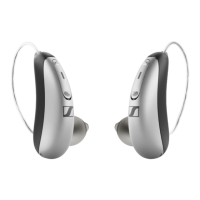



 To Next Page