When the electrode
touch the work piece.
There is no electric
spark.
1.The high frequency cord are not connected or not
connected well. Connect/ Reconnect the high
frequency cord.
2.Something wrong with the high frequency cord.
Contact us immediately.
The processing speed
is good but the hole is
not very deep, and the
electrode consumption
is very large.
1.The polarity of the high frequency is reverse.
Adjust the polarity of the high frequency cord.
2.The machining parameter is unsuitable.
Adjust
the machining parameter.
3.The diameter of the electrode is too small while
the electric current is very large.
Adjust the current
switch and the servo knob to reduce the
current.
The processing is
unstable, pointer of
the ammeter swing
back and forth with a
large amplitude.
1.The servo knob is not at the best position. Adjust
the servo knob.
2.The work piece or electrode are not clipped well.
Replace the work piece stably and clamp the
electrode tightly.
3.The water is not flowing at the best position. And
the water is not enough. Adjust the position of
water pipe.
4.The processing comes into a certain depth. The
amplitude of swing is large which cause the current
unstable. Lift up the work head and reprocess.
Adjust the position of work piece. Change the
electrode and make sure the vertical machining.
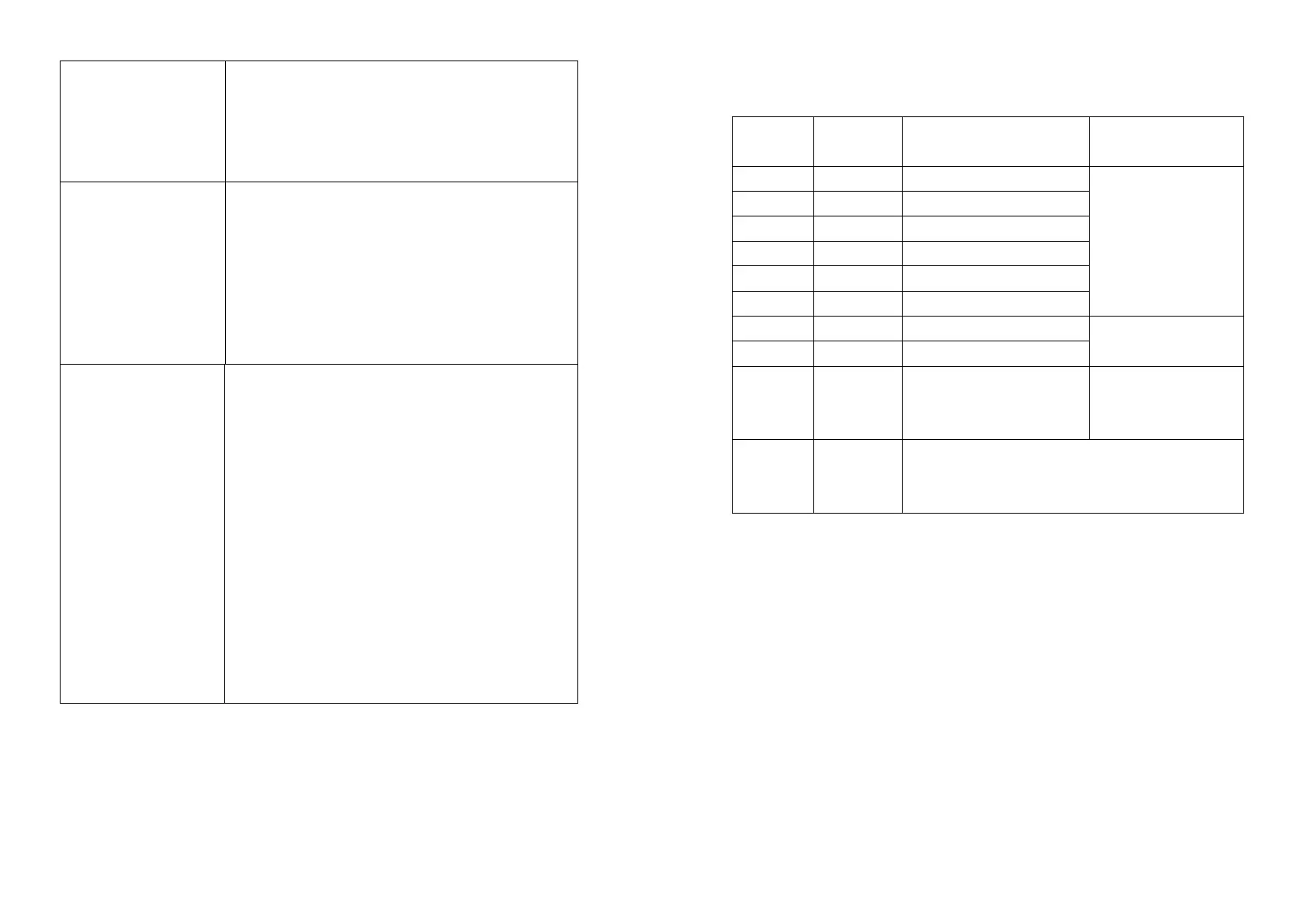
VIII. Selection of Electrode Size
Selection of electrodes for removing general broken objects could refer
following table:
Electrodes
Recommended(mm)
For the electrodes,
the shorter, the
better.
(there will be less
jitter with short
electrode)
Taps above M20 can
be processed by
several times.
Method Recommended: drill a straight,
triangular, square or hexagonal groove, and
remove it with matching tools.
VIIII. How to remove broken tap, drill, screw etc. out
The common ground of tap, drill, etc. tools is that the central part is
solid. So the tap or drill could be removed out by smashing the central part.
Before processing, please clean up the rust or oxide layer. When processing
deep hole or work piece in deep channel, hollow electrode and high pressure
water pump could help increasing the pollution discharge speed. (Figure 3)
Tap smaller than M12 can be removed out by smashing the central part.
For the tap that diameter is too big, it can be divided into two parts or
four parts by sheet electrodes. In practical use, after process for a while, you
could use a chisel to knock the debris down and then use a tweezers or
magnet to remove the debris, and restart the processing again. In this way, it
Electrode discharge area is generally about 0.5mm diameter larger than
themselves. For example, an electrode of 3mm diameter could process a hole
of 3.5 diameter. The electrode should be chosen according to the actual
processing conditions to avoid injury to thread and the discharge area should
be considered.
11
12


 To Next Page
 Loading...