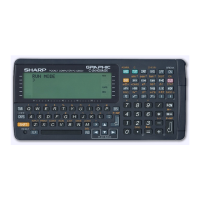
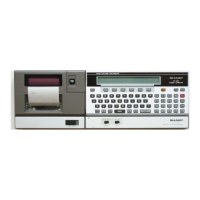
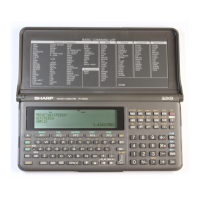
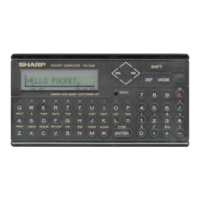
1. Connection test: The PC-G850V(S) sets DATAOUT to HIGH and checks, whether
DATAIN is going HIGH as well. So both signals have to be connected, otherwise
the ICSP-protocol will not be activated!
2. This is the ICSP-phase, entered by MCLR# = 12,5V, CLK = LOW, DATA = LOW.
a. Writing the assembled 14-bit word (PIC-op-code)
b. Verification (read) of the last programmed PIC-op-code
c. Increment the PIC program counter. If the PIC-program consisted of more
than one word, there would be a 2a/b/c loop for every other word.
d. Writing the PIC-configuration word
e. Verification of the PIC-configuration word
This diagram is a zoom-in of phase 2a:
&
PIC-ICSP commands are 6-bit wide (see specification of your PIC). A command can be followed by a data
word – writing or reading. Data words are 14-bit wide, but they are framed by a start- and a stop-bit, so that
there are 16-bit in total. Transmission is done always with the least significant bit first (LSB-first). All bits are
latched/provided at the falling edge of the CLK-pulse, as already mentioned.
&
1. PIC-ICSP command „Load Data for Program Memory“ (0x02).
2. Data transmission for the „Load Data for Program Memory“-command. So in this
example the 14-bit op-code compiled by the PIC-assembler is 0x2800.
3. PIC-ICSP command „Beginn Programming Cycle“ (0x08). This command has no
data parameter and starts the PIC-internal burning process for the latched 14-bit
word.
&



 To Next Page