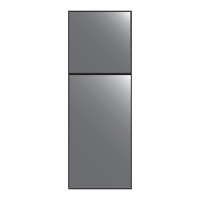
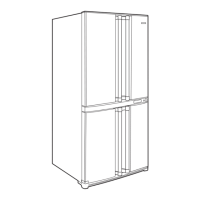
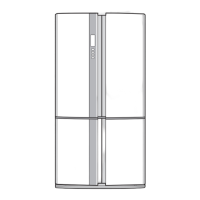
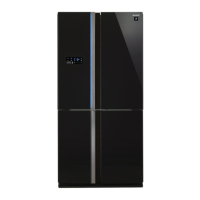
This document describes the SJ-FTB01ITXWE-EU, SJ-FTB01ITXLE-EU, and SJ-FTB01ITXSE-EU series of fridge-freezers, providing essential information on their function, technical specifications, usage, and maintenance.
Function Description
These appliances are designed for household use, specifically for cooling and storing fresh and frozen foods. They feature a combined refrigerator and freezer compartment, allowing for versatile food storage. The Less Frost technology, incorporating a wrap-around evaporator, aims to provide more efficient cooling, reduce the need for manual defrosting, and offer more flexible storage space.
The refrigerator compartment is intended for short-term storage of fresh food and beverages. It automatically defrosts during operation, with the defrost water collected in an evaporating tray and then evaporated. The freezer compartment is designed for long-term storage of frozen foods and for making ice cubes. It requires periodic manual defrosting, typically at least twice a year.
Important Technical Specifications
- Power Supply: The fridge-freezers require a 220-240V, 50Hz mains supply. It is crucial to ensure that the voltage and connected load information on the data plate matches the mains electricity supply before connecting the appliance.
- Refrigerant: The appliance uses R600a (isobutene), an eco-friendly refrigerant. This substance is flammable and explosive if ignited in enclosed conditions, so care must be taken during transport and installation to avoid damaging the cooler gas circuit.
- Climate Class: The appliances are designed to operate within specific ambient temperature ranges:
- T (Tropical): 16 °C to 43 °C
- ST (Subtropical): 16 °C to 38 °C
- N (Temperate): 16 °C to 32 °C
- SN (Extended Temperate): 10 °C to 32 °C
Operating the fridge-freezer outside these specified temperature intervals is not recommended for optimal cooling efficiency.
- Altitude: The appliance is not intended for use at altitudes exceeding 2000 m.
- Adjustable Thermostat: The thermostat automatically regulates the internal temperature of both compartments. It can be adjusted from position 1 (warmest) to 5 (coldest). It is important not to rotate the knob beyond position 1, as this will stop the appliance from working.
- Super Freezing Function: This feature is used for maximum freezing capacity. It should be activated 24 hours before placing fresh food in the freezer and typically kept on for 24 hours after food placement. To save energy, it should be turned off after this period.
- Temperature Indicator: Located in the coldest area of the refrigerator compartment, an "OK" message indicates that the temperature is set correctly for optimal food storage. If "OK" does not appear, the temperature setting may need adjustment.
- Spare Parts Availability: Original spare parts for specific components are available for a minimum of 7 or 10 years, depending on the component type, from the date the last unit of the model was placed on the market.
Usage Features
- Initial Setup: Before first use, the fridge-freezer should be kept in an upright position for at least 3 hours before plugging it into the mains to ensure efficient operation and prevent compressor damage. A slight odor may be noticed initially, which is normal and will dissipate as the appliance cools.
- Food Placement:
- Refrigerator: Liquids should be stored in sealed containers to prevent frost buildup. Warm or hot food should be cooled to ambient temperature before being placed in the fridge. Raw meat and fish should be stored in suitable containers in the coldest area (just above the crisper) to prevent contact with or dripping onto other foods. Fruits and vegetables can be placed in the crisper without packaging.
- Freezer: For fresh food freezing, ensure maximum contact with the cooling surface. Avoid placing fresh food next to already frozen food to prevent thawing. Divide fresh food into portion sizes before freezing. Do not place warm food directly into the freezer.
- Temperature Adjustment: The ambient temperature, the temperature of freshly stored food, and the frequency of door openings all affect the internal temperature. Adjust the thermostat setting as needed. For short-term freezer storage, positions 1-3 are suitable, while 3-4 are recommended for long-term storage.
- Door Reversal: The possibility of reversing the door opening direction depends on the specific model. It is not possible if handles are attached to the front of the appliance. If the model does not have handles, door reversal is possible but must be performed by authorized personnel.
- Power Interruption Delay: The fridge-freezer has a 5-minute built-in delay function to prevent compressor damage during power fluctuations or after being unplugged and re-plugged. Normal operation will resume after 5 minutes.
- Food Contamination Prevention: Avoid prolonged door openings, regularly clean surfaces in contact with food and drainage systems, and store raw meat and fish separately from other foods. If the appliance is left empty for extended periods, it should be switched off, defrosted, cleaned, dried, and the door left open to prevent mold.
Maintenance Features
- Cleaning:
- Always disconnect the appliance from the mains supply before cleaning.
- Do not pour water directly onto the fridge-freezer.
- Use a warm, soapy cloth or sponge to clean both the interior and exterior.
- Shelves and drawers should be carefully removed, washed with soapy water, rinsed, and dried. They should not be washed in a washing machine or dishwasher.
- Avoid using solvents, abrasive cleaners, glass cleaners, or all-purpose cleaning agents, as these can damage plastic surfaces and other components.
- The condenser at the back of the fridge-freezer should be cleaned at least once a year with a soft brush or vacuum cleaner to maintain energy efficiency and productivity.
- Defrosting:
- Refrigerator Compartment: Defrosting is automatic. The evaporating tray and defrost water drain hole should be cleaned periodically to prevent water accumulation.
- Freezer Compartment: Frost accumulation should be removed periodically using the provided plastic scraper. The freezer compartment should be cleaned and defrosted at least twice a year. To facilitate defrosting, set the thermostat to "5" the day before to fully freeze foods, then to "•" or unplug the unit and leave the door open. Warm water basins can be placed inside to accelerate the process. After defrosting, dry the interior thoroughly and set the thermostat to MAX.
- LED Lighting Replacement: If the fridge-freezer has LED lighting, contact Sharp customer service for replacement, as this should only be done by authorized personnel.
- Troubleshooting: The manual provides a troubleshooting guide for common issues such as the appliance not working, not cooling sufficiently, or being noisy. It advises checking power supply, thermostat settings, door closure, and condenser cleanliness before contacting service.
- Energy Saving Tips: Always allow foodstuffs to cool before storing, and thaw frozen food in the fridge compartment to save energy.

 Need help?
 General

 To Next Page