Need help?
Do you have a question about the Shindaiwa EB240 and is the answer not in the manual?
Explains the meaning of special statements like WARNING, CAUTION, IMPORTANT, and NOTE.
Emphasizes reading the manual, wearing protective gear, and following operational safety rules.
Details essential PPE, safe posture, and awareness of the blower's discharge stream.
Covers safe distances from bystanders, debris awareness, and environmental considerations.
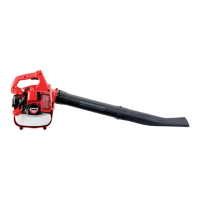
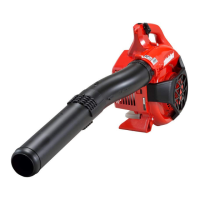
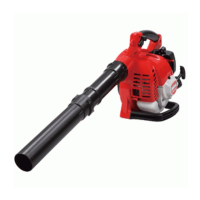
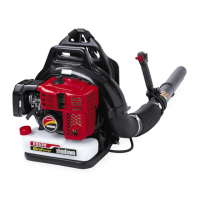
Identifies and illustrates the main parts of the Shindaiwa EB240 blower.
Details how to attach and lock the blower tube to the blower discharge port.
Explains how to attach and lock the nozzle to the blower tube.
Provides guidelines on using unleaded gasoline and the correct 50:1 fuel/oil mixture for the engine.
Outlines the process for safely filling the fuel tank, including pre-checks and post-refueling actions.
Step-by-step instructions for starting the Shindaiwa EB240 blower, including ignition and choke settings.
Instructions for troubleshooting and starting an engine that has been flooded with fuel.
Explains how to adjust the engine's idle speed using the adjustment screw.
Details the correct procedure for stopping the engine, including warm-up and using the ignition switch.
Lists daily checks including cleaning exterior, checking cooling fins, and inspecting for leaks or loose parts.
Outlines maintenance tasks recommended every 10 hours or more frequently in severe conditions, focusing on the air filter.
Instructions for removing, cleaning, gapping, and reinstalling the spark plug.
Guidance on cleaning the fuel filter and cooling system components.
Steps to prepare the blower for storage, including draining fuel, lubricating the cylinder, and cleaning the air filter.
Detailed steps for removing, cleaning, and reinstalling the spark arrester screen and muffler components.
Guides users through diagnosing and resolving engine starting issues based on common problems.
Addresses causes and remedies for low engine power, rough running, and knocking.
Covers troubleshooting for poor acceleration, engine stopping, shutdown difficulties, and excessive vibration.

 To Next Page

 General