38
Before You Ride
1. Clean the outside of your shock with soap and water and wipe dry with a soft dry rag. Do
not use a high pressure washer on your shock.
2. Inspect entire exterior of shock for damage. The shock should not be used if any of the
exterior parts appear to be damaged. Please contact your local dealer for further inspec-
tion and repair.
3. Check that quick-release levers (or thru-axle pinch bolts) are properly adjusted and tight-
ened.
4. Check headset adjustment. If loose, adjust according to manufacturer’s recommendations.
5. Check that brake cables or hoses are properly fastened.
6. Check that the front and rear brakes operate properly on flat land.
Setting Sag
To set sag:
1. Measure sag, and compare it to the recommended sag setting shown in the Air Spring Set-
ting Guidelines table below. Continue if the sag is not to specification.
2. Locate the Schrader air valve on the shock and remove the air valve cap.
3. Screw the High Pressure Pump onto the air valve until the pump shows pressure on the
gauge. Do not over-tighten.
4. Add air pressure until desired pressure is shown on the gauge. Refer to the Air Spring Set-
ting Guidelines table below for the proper sag setting.
5. Unthread the pump from the air valve and measure sag.
6. Repeat steps 2-5 until proper sag is achieved, then replace the air valve cap.
Adjusting Rebound
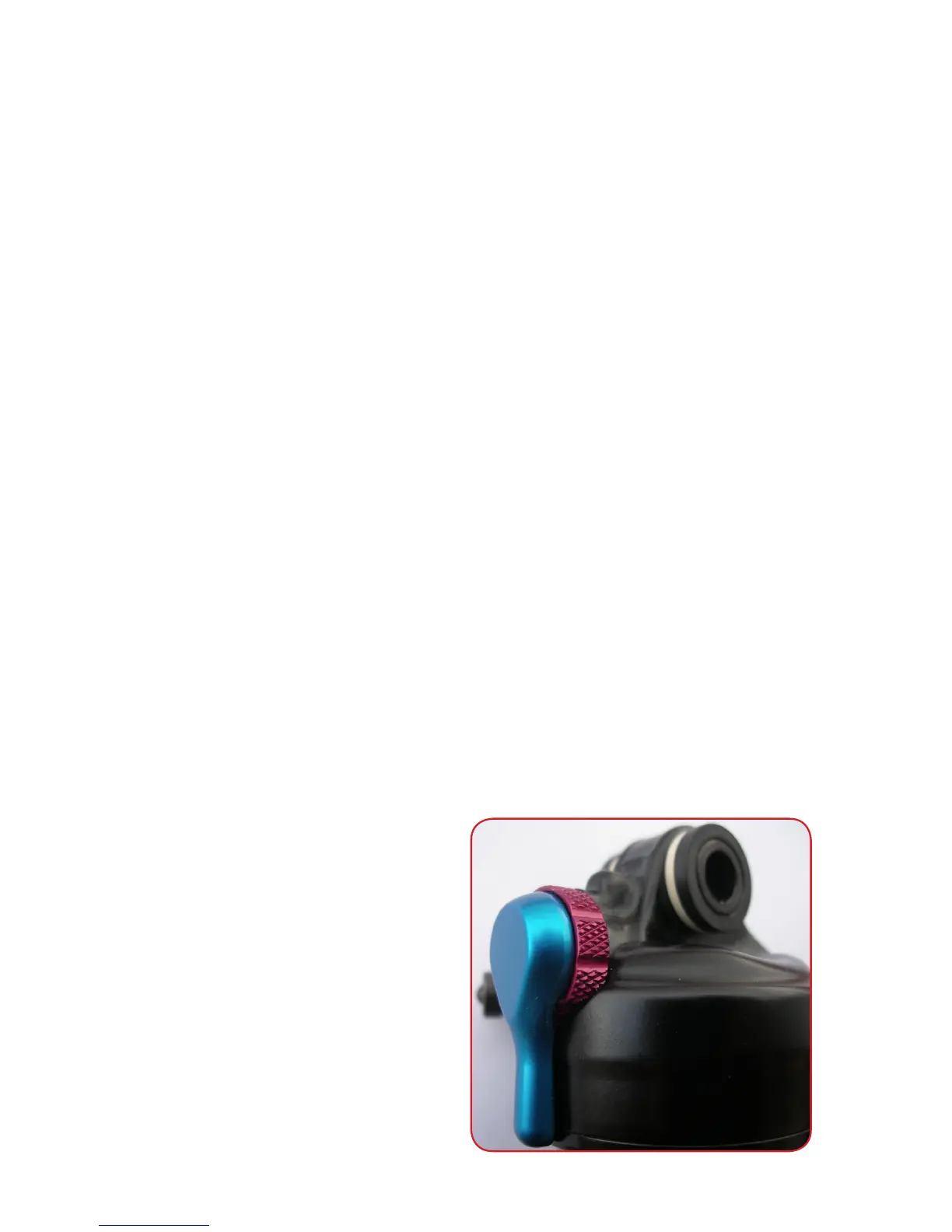
Rebound controls the rate at which your
shock returns after it has been compressed.
The proper rebound setting is a personal
preference, and changes with rider weight,
riding style and conditions. A rule of thumb
is that rebound should be as fast as possible
without kicking back and pushing the rider
o the saddle.
The rebound knob has 8-10 clicks of adjust-
ment.
For slower rebound, turn the red adjuster
knob clockwise.
For faster rebound, turn the red adjuster
knob counterclockwise.



 To Next Page