26
CATALYTIC SELF CLEAN PANELS
Catalytic Self Clean Panels are available as an optional accessory.
Operation
Catalytic self clean panels are coated with a specially formulated enamel coating, over a base of
regular enamel. This enamel coating has a rough surface which is also porous. During normal cooking,
fats and other food spatter is partially absorbed into the surface and then oxidises away.
This oxidisation of the fat works best if the oven is set at high temperatures. Users will find that if
they do a lot of lower temperature baking, say around the normal 180°C, then the cleaning process
may not be complete. Every now and then the user should turn the oven on to 260°C for around one
hour to completely remove the soil.
Cleaning
Should the panels become heavily soiled, they will need to be taken out of the oven and cleaned
by hand. They should be soaked in warm, soapy water for at least 2 hours and then wiped clean with
a soft cloth. Solid cleaning powders, creamy cleansers, caustic oven cleaners, steel wool or other
scourers will ruin the catalytic surface and must NEVER BE USED.
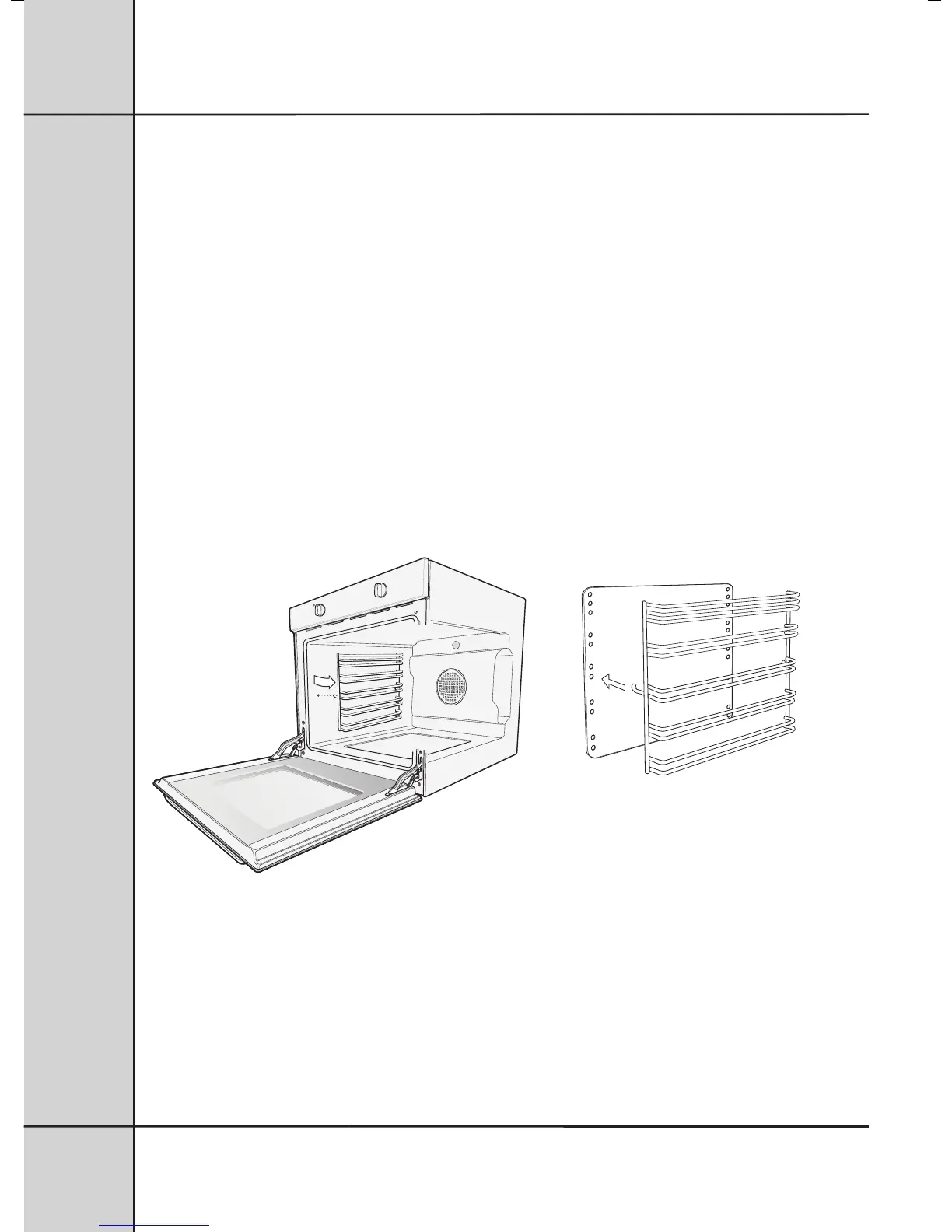
Removing the catalytic liners
• Grasp the shelf supports at the front.
• Pull them inwards.
• Separate the catalytic liners from the shelf
supports.
Installing the catalytic liners
• Align the shelf support to the catalytic liner by
aligning the rails with the corresponding holes.
• Ensure the catalytic surface is facing the shelf
support.
• Clip the shelf support to the catalytic liner.
• Fit the liner and shelf support assembly to the
oven inserting the rear hook to the rear hole in
the oven. Then locate the front peg into the front
hole and push in firmly.
• A Catalytic liner kit can be ordered under Part
No. CKCLK1.
3



 To Next Page