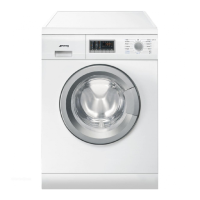
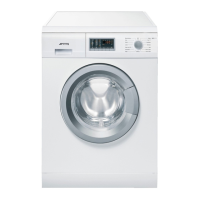
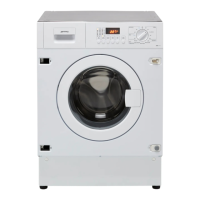
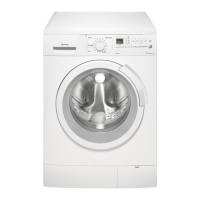
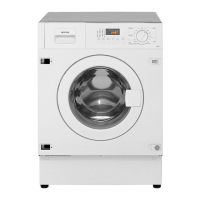
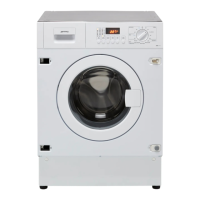
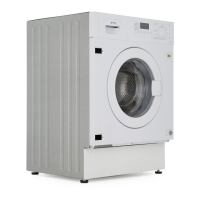
This document is an instruction manual for a washing machine, providing comprehensive guidance on its safe use, installation, operation, and maintenance.
Function Description:
The washing machine is designed for domestic use, specifically for washing and drying clothes or fabrics suitable for machine washing, as indicated on their labels. It operates by filling with water, adding detergent, agitating clothes to clean them, rinsing, and then spinning to remove excess water. The appliance offers various washing programs tailored to different fabric types and soil levels, allowing users to optimize cleaning performance and energy consumption. It also includes options such as prewash, intensive wash, easy iron, water plus, extra rinse, and flexi time to customize washing cycles. A child lock function ensures safety by preventing accidental changes to settings during operation. In case of a power failure, an emergency release lever allows manual opening of the door.
Usage Features:
The washing machine features a control panel with a display that shows settings like washing temperature, spin speed, cycle status, flexi time, child lock on/off, and maximum recommended weight. Users can modify these settings using dedicated buttons. A program selector knob allows for switching the machine on/off and selecting programs.
Before using the appliance, it is crucial to prepare items for washing by subdividing them by fabric type and colorfastness. White and colored items should be washed separately, and new colored items should be washed alone for the first time. Labels with washing instructions, including symbols for washing, bleaching, ironing, dry cleaning, and drying, should be followed carefully. Users are advised not to wash unhemmed or torn items, to empty pockets, turn items inside-out, and remove wheels from curtains or wrap them in a mesh bag. Small items should be placed in a white canvas bag, and press-studs and zips should be fastened. For stain removal, modern detergents and correct washing temperatures are usually sufficient, but difficult stains may require pre-treatment.
For optimal energy saving, it is recommended to wash complete loads of various fabric types. The washing machine can be loaded with up to 7kg of washing. The door should be closed securely, ensuring no items are trapped between the door and the rubber gasket. Overloading should be avoided as it negatively affects washing results.
Detergent and additives are added to a three-compartment internal tray. One compartment is for prewash detergent, another for main wash detergent (with a tang for liquid detergent), and the third for fabric conditioner, starch, or other additives. Liquids should not be filled above the maximum level to prevent premature emptying. Dense additives should be diluted with water. Only low-foam detergents suitable for washing machines should be used. The amount of detergent depends on water hardness, load type, and soil level, with recommended doses often provided on detergent packs. Liquid detergents are suitable for main wash in programs without prewash. Descalers can be added to prewash and main wash compartments as recommended by producers.
To start a washing program, users turn the program knob, select the desired program, and then press the Start/Pause button. The display will show the remaining time and the Start/Pause symbol. During the program, symbols for prewash, wash, rinse, and final spin phases will light up. The "Time to End" option allows users to select a delay time for the program to end. The child lock function can be activated by pressing and holding the Options button Confirm and then the Child Lock button, preventing changes to settings during a cycle.
At the end of a program, the word "END" appears on the display. Users should switch off the appliance, unload laundry, leave the door ajar to dry the interior, and turn off the water intake tap. If the "no spin" mode was selected, the display will show "STOP" and the spin light will be on, requiring manual pump-out or spin selection.
Maintenance Features:
Regular cleaning and maintenance are essential for the appliance's longevity and performance. Before any cleaning or maintenance, the appliance must be disconnected from the power supply.
The exterior of the appliance should be cleaned with soap and water, then dried with a soft cloth. Plastic parts can be wiped with a damp cloth. Abrasive substances, solvents, or pointed objects should not be used, and the machine should never be sprayed with water jets.
Rust marks on the drum can be removed with a stainless steel cleaner or fine sandpaper. For descaling, only brand-name descalers with anti-corrosion agents suitable for washing machines should be used, following the producer's instructions. After descaling or rust removal, a few rinse cycles should be run to remove acid residues. Solvents should never be used for cleaning the drum due to fire and explosion risks.
The door gasket should be regularly checked for foreign objects like paper clips, buttons, nails, or pins.
The drain pump needs cleaning if it becomes blocked and water is not being pumped out. This involves removing the mains plug, extracting the drain hose to drain water into a shallow container, unscrewing the pump cover, cleaning the pump and removing foreign bodies, and ensuring the impeller turns freely. The cover is then screwed back on, and the drain hose secured. Access to the pump varies by model, requiring either removal of plugs and turning down the plinth for built-in models, or inserting a screwdriver into slits and leveraging the plinth for free-standing models.
The detergent drawer should be kept clean by removing all solid deposits. It can be fully removed by pulling it out, pressing the "PUSH" zone, and then detaching it. The siphon and all parts should be cleaned with hot water and re-inserted correctly.
The water intake filters, located in the fitting on the intake hose connected to the tap, should be cleaned if the machine is not taking in enough water. This involves disconnecting the appliance from electricity, turning off the water tap, unscrewing the intake hose fitting, cleaning the filter with water and a small brush, and ensuring correct filter positioning when re-screwing the hose.
The manual also includes a troubleshooting section to address common issues before contacting After-Sales Service, such as the appliance not starting, no water filling, water not pumping out, strong vibrations, excessive foam, or water on the floor. Error codes displayed on the machine provide specific problem identification, guiding users to appropriate solutions or indicating when professional service is required.



 To Next Page
 General