When we look at STBs that can watch one channel and record a different one, we need to duplicate this process, using an additional coax
cable from the set top box to the LNB. This all works fine, but these days two tuners are not considered sufficient, but adding more and more
coax cables is impractical.
New wideband LNB
The new LNBs have done away with the low band / high band 22kHz system. Instead they have just horizontal and vertical polarities and the
new tuners can now receive all of the band at once. They have one fixed local oscillator set around 10.4 GHz. This converts all of one polarity
down to a coax friendly 300MHz to 2.3GHz. This will introduce new challenges for the installer, particularly for communal systems. By using
two coax cable
s that may already be installed, the STB can now “see” all of the channels at the same time. So a tuner inside the STB is free
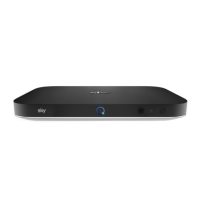
to select any channel without the need for any voltage switching or tones. This opens up the world of multiple tuners. The new Q box has
twelve tuners all operating simultaneously. In theory, this method allows for an infinite number of tuners
.
Domestic Installations
A standard domestic system usually has two coax cables from the dish to the STB. Most are either CT100 type or CT63 – some may even
have budget cable. The new LNB frequency range will mean the losses at the higher frequencies will have even more loss, but the typical
cable lengths are less than 15m and this should not cause a problem. The tuners in the new boxes have a better dynamic range and will
cope with the now substantial slope effect of lower loss at the lower frequencies and much higher losses at the top frequencies. However,
if a budget cable has been used, it is possible that higher frequency attenuation may make installation quite a challenge.
Wall Plates
Most domestic installations have no wall plates at all; the cable passes through the wall, directly to the set top box. If any form of wall plate
has been used, this may introduce a problem. If the wall plate is a simple f coupler, this should not be an issue. However, if the plate uses
any form of diplex or triplex (allowing terrestrial signals to share the satellite cable) this will filter out the lower channels on the new LNB,
making the install fail. These plates will need to be replaced and a separate terrestrial cable installed. Today, terrestrial channels are transmitted
between 470MHz and 790MHz, overlapping the new LNBs. So Q box systems can no longer share coax with Freeview.
4G Interference
There has been a lot of publicity regarding 4G mobile phone transmitters causing interference on TV systems. There have been quite a
number of problems caused to terrestrial TV, but little regarding Sky TV. This may be due to the fact that until the introduction of Sky Q, Sky
signals sit outside of 4G transmissions. This will change with Sky Q. There are two main areas of potential problems. The first is the leakage
of 4G signals into the coax or other parts of the installation, especially in IRS systems. If inferior cable has been used, or if an install runs near


 To Next Page
 Loading...