the FCC RF Exposure limits under mobile exposure conditions (antennas
are greater than 30 cm from a person’s body). Details of the authorized
configurations can be found at
https://fjallfoss.fcc.gov/oetcf/eas/reports/GenericSearch.cfm by entering
the FCC ID number on the device.
United States of America authorized channels
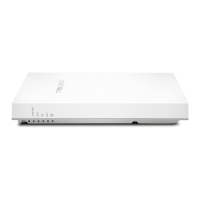
SonicWall declares that the APL44‐0CF (FCC ID: 2AKCZ‐0CF) when sold in the USA is
limited to CH1‐CH11 by specified firmware controlled in the USA.
CAUTION: This device is restricted to indoor use due to its operation in the
5.15GHz to 5.25GHz frequency range. The FCC requires this product to be
used indoors for the frequency range 5.15GHz to 5.25GHz to reduce the
potential for harmful interference to co‐channel Mobile Satellite systems.
High power radars are allocated as primary users of the 5.25GHz to 5.35GHz and
5.65GHz to 5.85GHz bands. These radar stations can cause interference with this
device or can cause damage to this device, or both.
The APL44‐0CF device has been designed to operate with an internal antenna.
Antenna is not user accessible.
Dynamic Frequency Selection (DFS) is required on all Wireless LAN Master devices
(usually Access Points) and Wireless LAN Clients (usually Wireless NICs) that operate
within 5470MHz – 5725MHz. SonicWaves that have these frequencies and channels
enabled in this range comply with North American and International DFS
requirements. Some frequencies are blocked, and cannot be selected by the user
per each specific regional approval.
Specific to the USA, at the urging of the Federal Communication Commission (FCC)
user/installers should avoid operation frequencies near Terminal Doppler Weather
Radar (TDWR) systems frequencies 5600‐5650 MHz when installing a SonicWave
within 35km of line‐of‐site of TDWR sites. If TDWR is within 35km the SonicWave,
frequencies should be set to at least 30MHz above or below any TDWR system
frequency at that site. TDWR locations and specific frequencies used can be found
at http://spectrumbridge.com/udrs/home.aspx. Detailed current and background
information can be found at http://www.wispa.org/?page_id=2341.
FCC, Class B
This equipment generates, uses, and can radiate radio frequency energy and, if not
installed and used in accordance with the manufacturer's instruction manual, may
cause interference with radio and television reception. This equipment has been


 To Next Page