EasyManua.ls Logo

Sony HT-DDW685 - User Manual

Sony HT-DDW685
64 pages
Print Icon
To Next Page IconTo Next Page
Loading...
©2007 Sony Corporation
2-898-426-11(2)
Home Theatre
System
Operating Instructions
Owner’s Record
The model and serial numbers are located on the rear of the unit. Record the
serial number in the space provided below. Refer to them whenever you call
upon your Sony dealer regarding this product.
Model No.
Serial No.
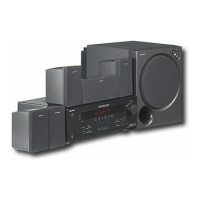
HT-DDW790
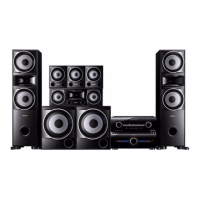
HT-DDW685

Table of Contents

Other manuals for Sony HT-DDW685

Questions and Answers

  • T
    tcooperAug 19, 2025
    Why is there no sound from my Sony HT-DDW685 Home Theater System?
    • M
      Mr. James BryantSep 12, 2025
      If you are experiencing a lack of sound or very low sound from your Sony Home Theater System, there could be several reasons: * Ensure speakers and components are correctly and securely connected. * Verify that both the receiver and all components are powered on. * Check that MASTER VOLUME is not set to “VOL MIN”. * Confirm that headphones are disconnected. * Deactivate the muting function by pressing MUTING. * Select the correct component using the input buttons. If the protective device on the receiver has been activated, turn off the receiver, resolve any short-circuit issues, and then turn the power back on.
  • N
    Nathan HartmanAug 21, 2025
    What to do if my Sony HT-DDW685 Home Theater System remote does not function?
    • Z
      zachary97Aug 21, 2025
      If the remote for your Sony Home Theater System isn’t working, try these steps: * Make sure to point the remote directly at the remote sensor on the receiver. * Ensure there are no obstructions between the remote and the receiver. * Replace the batteries in the remote with new ones if they are weak. * Verify that you have selected the correct input on the remote. Note that the VIDEO 3 button on the remote is not available for receiver operation.
  • R
    Rebecca MossAug 23, 2025
    What to do if there is no sound from one of the front speakers on my Sony HT-DDW685?
    • M
      michaelmcclureAug 23, 2025
      If you are not getting sound from one of the front speakers of your Sony Home Theater System: * Connect headphones to the PHONES jack to check if sound is outputting correctly. * Ensure all cords are fully inserted into the jacks on both the receiver and the component. * Check the connection of the front speaker that isn't producing sound. * Make sure you've connected to both the L and R jacks of an analog component, not just one.
  • J
    josephdannyAug 26, 2025
    Why is there severe hum or noise coming from my Sony HT-DDW685 Home Theater System?
    • J
      Jose SnyderAug 26, 2025
      If you're experiencing severe hum or noise with your Sony Home Theater System, consider the following: * Ensure the speakers and components are securely connected. * Keep connecting cords away from transformers or motors, and at least 3 meters (10 feet) from TVs or fluorescent lights. * Move your TV farther from the audio components. * Clean dirty plugs and jacks with a cloth slightly moistened with alcohol.
  • K
    Karen PerezAug 28, 2025
    How to fix unbalanced or reversed left and right sounds on Sony Home Theater System?
    • J
      jennifer04Aug 28, 2025
      If the left and right sounds are unbalanced or reversed on your Sony Home Theater System: * Check that the speakers and components are connected correctly and securely. * Adjust the balance parameters using the LEVEL menu.
  • U
    upierceAug 30, 2025
    What to do if there is no sound from a specific component connected to my Sony HT-DDW685 Home Theater System?
    • C
      Christina HayesAug 30, 2025
      If there is no sound from a specific component connected to your Sony Home Theater System: * Ensure the component is correctly connected to the appropriate audio input jacks. * Verify that the connecting cords are fully inserted into the jacks on both the receiver and the component. * Confirm that you have selected the correct component on the receiver.
  • T
    Trevor BarberSep 1, 2025
    Why is there hum, interrupted noise, or distortion from components connected to VIDEO 1 IN/ PORTABLE AUDIO IN/AUTO CAL MIC jack on my Sony HT-DDW685 Home Theater System?
    • T
      Tasha VazquezSep 1, 2025
      If you notice severe hum, interrupted noise, or distortion from a component connected to the VIDEO 1 IN/ PORTABLE AUDIO IN/AUTO CAL MIC jack on the front panel of your Sony Home Theater System: * Ensure the components are securely connected. * Check that the cord used for the connection is fully inserted into the jacks on both the receiver and the component. This may not be a malfunction and could depend on the connected component.
  • M
    Maxwell StephensSep 3, 2025
    What to do if Dolby Digital or DTS Multi Channel sound is not reproduced on Sony Home Theater System?
    • L
      Lori ThomasSep 3, 2025
      If Dolby Digital or DTS Multi Channel sound isn't being reproduced on your Sony Home Theater System: * Check that the DVD or other media you're playing is recorded in Dolby Digital or DTS format. * When connecting the DVD player or another component to the digital input jacks of the receiver, verify the audio settings (settings for the audio output) of the connected component.
  • A
    Ashley SmithSep 5, 2025
    Why is there no sound, or only a very low-level sound from the center/ surround speakers on my Sony Home Theater System?
    • C
      campbellderrickSep 5, 2025
      If you experience no sound or very low sound from the center or surround speakers on your Sony Home Theater System: * Select a CINEMA STUDIO EX mode. * Adjust the speaker level.
  • C
    campbellcalebSep 7, 2025
    Why is there no sound from the sub woofer on my Sony Home Theater System?
    • I
      Isaac MillerSep 7, 2025
      If there is no sound from the subwoofer of your Sony Home Theater System, check that the subwoofer is connected correctly and securely.

Summary

Owners Record

Model and Serial Number Recording

Instructions for recording the model and serial number for future reference.

Safety Warnings

General Warnings and Precautions

Important safety warnings related to fire, electric shock, and proper handling of the apparatus.

United States Specific Information

Specific regulatory information and cautions for users in the United States.

About This Manual

Manual Scope and Components

Details the models covered, use of illustrations, and lists receiver/speaker system components.

European Disposal Guidelines

Guidelines for environmentally sound disposal of old electrical and electronic equipment in Europe.

Remote Control Notes

VIDEO 3 Button Functionality

Clarifies that the VIDEO 3 button on the remote is not available for receiver operation.

Getting Started

Receiver Description and Parts

Identifies and explains the function of front panel controls and indicators on the receiver.

Display Indicators Explained

Explains the meaning of various indicators displayed on the receiver's front panel.

Rear Panel Connections

Details the various input and output terminals on the rear panel of the receiver.

Remote Commander Overview

Introduces the remote commander and its main function buttons.

Speaker Installation Guide

Provides instructions and tips for correctly installing the speaker system on surfaces and stands.

Connecting Speakers to Receiver

Guides users on how to correctly connect the speaker system to the receiver terminals.

Connecting Audio;Video Components

Outlines the process for connecting external audio and video sources to the receiver.

Connecting Antennas

Instructions for connecting the supplied AM loop and FM wire antennas for tuner reception.

Receiver and Remote Preparation

Covers initial setup steps like setting voltage and connecting the power cord.

Automatic Calibration (AUTO CALIBRATION)

Explains how to use the D.C.A.C. technology for automatic speaker setup.

Error and Warning Codes

Lists and explains error and warning codes that may appear during auto calibration.

Manual Speaker Level Adjustment (TEST TONE)

Describes how to manually adjust speaker levels and balance using the test tone feature.

Playback Operations

Selecting a Component for Playback

Guides on choosing an input source and starting playback from connected components.

Playing Audio Sources (CDs)

Instructions for playing Super Audio CDs or CDs, including recommended sound fields.

Watching Video Sources (DVDs)

Steps for watching DVDs, including setup and playback instructions.

Amplifier Menu Operations

Navigating Amplifier Menus

Explains how to navigate the receiver's menu system for adjustments.

Overview of Menu Parameters

Summarizes the available settings and parameters within each menu.

Adjusting Speaker Levels and Balance (LEVEL Menu)

Details how to adjust individual speaker levels and the front speaker balance.

Adjusting Speaker Tone (TONE Menu)

Explains how to adjust the bass and treble levels for the front speakers.

Selecting Surround Sound Fields (SUR Menu)

Guides on choosing desired sound field effects for surround sound.

Tuner and Audio Settings (TUNER;AUDIO Menus)

Covers FM/AM station tuning modes and digital audio input priority settings.

System Settings (SYSTEM Menu)

Explains how to configure system parameters like speaker distance and position.

Auto Calibration Menu (A. CAL Menu)

Refers to the automatic calibration process for optimal sound settings.

Enjoying Surround Sound

Dolby Digital and DTS Surround Sound (AUTO FORMAT DIRECT)

Introduces A.F.D. mode for high-fidelity sound and multi-channel decoding.

Types of A.F.D. Mode

Describes the different A.F.D. modes and their effects on audio playback.

Selecting Pre-programmed Sound Fields

Explains how to choose from various sound fields for movies and music.

Available Sound Field Options

Lists available sound fields for movies, music, and headphones with their respective effects.

DCS and CINEMA STUDIO EX Modes

Explains DCS technology and CINEMA STUDIO EX modes for enhanced movie audio.

Using 2 CH STEREO and Resetting Sound Fields

Details using front speakers only and resetting surround sound settings to defaults.

Tuner Operations

Listening to FM;AM Radio

Instructions for tuning into FM and AM radio broadcasts.

Direct Station Tuning

Guides on entering specific frequencies to tune into radio stations.

Presetting and Naming Radio Stations

Explains how to store favorite stations and assign custom names.

Radio Data System (RDS)

Describes how to use RDS to display station and program information.

Displaying RDS Information

Details how to cycle through and view RDS data while receiving a station.

Other Operations

Naming Input Jacks

Allows users to assign custom names to input jacks for easier identification.

Changing Display Information

Explains how to cycle through different display modes for input and tuner information.

Using the Sleep Timer

Instructions for setting the receiver to automatically turn off after a specified time.

Changing Remote Button Assignments

Guides on reassigning remote control buttons to operate different components.

Additional Information

Glossary of Terms

Defines technical terms and concepts related to audio processing and the receiver.

Precautions and Safety Guidelines

Covers important safety, placement, operation, and cleaning precautions for the receiver.

Troubleshooting Common Issues

Provides solutions for common audio, tuner, and remote control problems.

Technical Specifications

Lists detailed specifications for audio output, power, and physical dimensions.

Speaker System Details

Provides specifications and dimensions for the front, center, surround speakers, and subwoofer.

Supplied Accessories List

Lists all the items included in the product package.

Sony HT-DDW685 Specifications

General IconGeneral
BrandSony
ModelHT-DDW685
CategoryHome Theater System
LanguageEnglish

Related product manuals