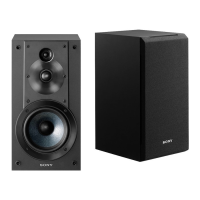
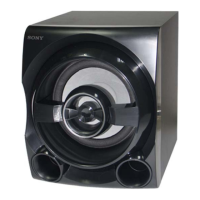
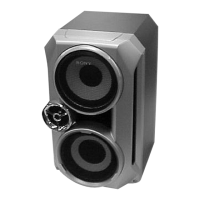
The Sony SS-G9 is a high-fidelity, four-way speaker system designed for both full-range and multi-amplification use, offering a robust and versatile audio experience. This "E Model" speaker system is built with a focus on powerful sound reproduction and user-adjustable audio control.
Function Description:
The SS-G9 functions as a comprehensive audio output device, capable of delivering a wide frequency range through its four distinct driver units: a woofer, a low mid-range driver, a high mid-range driver, and a tweeter. It supports two primary modes of operation: full-range use, where a single amplifier drives all drivers through an internal crossover network, and multi-amplification use, where separate amplifiers can be connected to each driver unit for enhanced control and performance. The system incorporates a bass reflex enclosure for improved low-frequency response and features user-adjustable attenuators for fine-tuning the output levels of the low mid-range, high mid-range, and tweeter drivers.
Important Technical Specifications:
- Speaker System: Four-way speaker system with a bass reflex enclosure.
- Drivers:
- Woofer: 38 cm (15 inches), cone type
- Low Mid-range: 20 cm (8 inches), cone type
- High Mid-range: 8 cm (3½ inches), cone type (balanced-drive type)
- Tweeter: 3.5 cm (1½ inches), cone type (balanced-drive type)
- Crossover Frequencies: 300 Hz, 1.2 kHz, 5 kHz
- Nominal Impedance: 8 Ω
- Power Handling Capacity:
- Nominal: 120W (DIN 45500)
- Maximum: 300W (DIN 45500)
- Sensitivity:
- 94 dB (1W, 1m)
- 1.6W (96 dB, 1m) DIN 45500
- Frequency Range: 30 – 22,000 Hz (±3 dB DIN)
- Enclosure Volume: 160 liters
- Dimensions (including front grille):
- Approx. 600 (w) x 1080 (h) x 455 (d) mm
- Approx. 23 5/8 (w) x 42 5/8 (h) x 18 (d) inches
- Weight:
- Approx. 87 kg (192 lb) net (including front grille)
- Approx. 99.5 kg (220 lb) in shipping carton
- Finish: Genuine walnut veneer
Usage Features:
- Adjustable Controls: The SS-G9 features continuously adjustable controls for the low mid-range (from +3 dB to -47 dB), high mid-range (from +2 dB to -48 dB), and tweeter (from +0 dB to -50 dB). These controls allow users to precisely tailor the sound output to their listening environment and preferences.
- Input Options: The speaker system offers both full-range inputs for standard amplifier connections and four-way multi-amplification inputs. The multi-amplification inputs provide flexibility for advanced audio setups, allowing dedicated amplifiers for each frequency band (woofer, low mid-range, high mid-range, and tweeter).
- Multi-Amplification Connection: For multi-amplification use, the protector cover needs to be removed, and the terminal board (B) slid up. Lugs supplied with the system are soldered to driver cords and installed on the eight bottom-line terminals, which serve as inputs for each driver unit. It is crucial to ensure correct signal supply to each driver to prevent damage, especially to the tweeter, which has a protective capacitor but can still be overloaded by low frequencies. When setting up multi-amplification, it is recommended to set the low-level control at maximum as a reference, then adjust the low mid-range, high mid-range, and high-level controls in that order to equalize the driver output.
- Full-Range System Restoration: To revert to full-range operation, the protector is removed, all twenty-seven terminal screws are loosened, driver cord lugs are removed, and the terminal board (B) is slid down. After fastening all screws firmly, the speaker cord is connected to the FULL RANGE input terminals.
- Removable Front Grille: The speaker includes a removable cloth grille, allowing users to choose between an exposed driver aesthetic or a more discreet look. The grille is installed by pushing it up slightly and inserting pins, and removed by pulling it off.
Maintenance Features:
- Disassembly for Servicing: The manual provides detailed instructions for disassembly, including the removal of the front grille, network holder, tweeter, high mid-range, low mid-range, woofer, and attenuators. This systematic approach facilitates access to internal components for inspection, repair, or replacement.
- Network Check/Repair: The network holder can be removed to access the crossover network for checking or repairing. It is advised to support the network holder with a strong wire during this process to prevent cutting lead wires.
- Driver Replacement: Instructions are provided for removing individual drivers (tweeter, high mid-range, low mid-range, and woofer) by unscrewing hexagon socket screws. Specific notes on driver orientation (e.g., "Set the letters 'SONY' on the speaker toward the bottom of the enclosure" for mid-range and woofer drivers) ensure correct reassembly.
- Attenuator Removal: Attenuators can be removed by loosening a set screw with an L-shaped wrench, allowing for maintenance or replacement of these level controls.
- Heavy Construction: The SS-G9 is a substantial unit, weighing approximately 87 kg (192 lb) net. The manual emphasizes that it should be handled by at least two persons when moving it, even for short distances, to prevent injury or damage. It suggests using the corner holes for short-distance moves and grasping the rear portion after bringing up the bottom for greater distances.
- Component List: A comprehensive electrical parts list is included, detailing reference numbers, part numbers, and descriptions for coils, capacitors, resistors, speakers, and miscellaneous accessories. This list is invaluable for identifying and sourcing replacement parts during repairs.

 Need help?
 General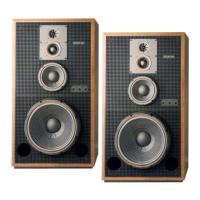

 To Next Page