107
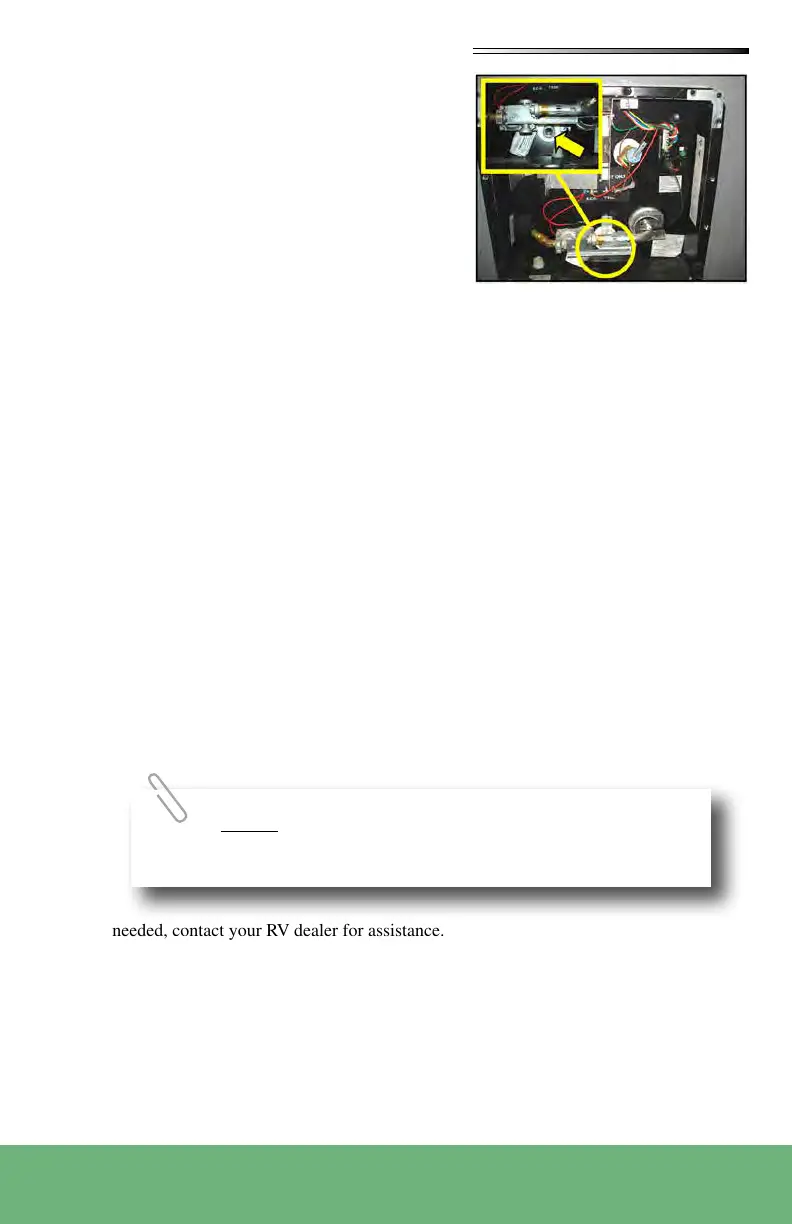
4. Water heater should be empty after perform-
ing Step 2. Water heater bypass valves (if so
equipped): supply valves OFF, bypass (center)
valve ON. Remove water heater drain plug (ar-
row in photo).
5. Make sure the “fresh water tank drain” and
“low point drains” are closed.
6. Close the fresh water tank shuto valve “D”
(if so equipped). Valve should be located in the
vicinity of the water pump.
7. Open the siphon valve at the water pump (
1). Insert the clear tubing on the siphon valve into a container of antifreeze.
8. Winterizing will require approximately 2 gallons of RV antifreeze. To assist the siphon-
ing process, put the container on a at surface approximately two feet above ground
level.
9. Make sure the water tank shuto valve is turned OFF so antifreeze cannot travel into
the fresh water tank ().
10. Turn the water pump ON. Antifreeze will be drawn into the water lines.
11. Open the hot water line faucets; kitchen/bath sinks, shower (if so
equipped) until RV antifreeze begins to ow continuously.
12. Close the hot water line faucets and outside shower and repeat with the cold water line
faucets.
13. Flush the toilet several times until you see antifreeze in the bowl.
14. Turn the water pump OFF. Turn siphon valve OFF. Remove the siphon hose from the
container of RV antifreeze. Leave the water tank shuto valve closed to keep antifreeze
out of the fresh water tank.
15. Pour 1 cup of RV antifreeze into any/all drain P traps (sinks and bathtub).
16. To prevent staining, wipe the RV antifreeze out of the sinks, shower (or tub), and toilet
using a soft, dry cloth.
If needed, contact your RV dealer for assistance.
In the spring when ushing antifreeze out of the water lines
make sure to turn the fresh water tank shutoff valve back ON.



 To Next Page