EasyManua.ls Logo

Stark 61014 - User Manual

Stark 61014
11 pages
Print Icon
To Next Page IconTo Next Page
Loading...
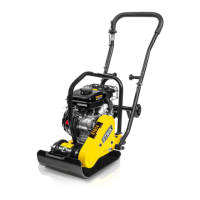
FORWARD PLATE COMPACTOR 79CC 2000LBS
ITEM: 61014
SAVE THIS MANUAL: KEEP THIS MANUAL FOR SAFETY WARNINGS, PRECAUTIONS, ASSEMBLY,
OPERATING, INSPECTION, MAINTENANCE AND CLEANING PROCEDURES. WRITE THE PRODUCT’S
SERIAL NUMBER ON THE BACK OF THE MANUAL NEAR THE ASSEMBLY DIAGRAM (OR MONTH
AND YEAR OF PURCHASE IF PRODUCT HAS NO NUMBER)
OWNER’S MANUAL AND SAFETY INSTRUCTIONS
FOR QUESTIONS PLEASE CALL OUR CUSTOMER SUPPORT: (909) 628 4900 MON-FRI 9AM TO 3PM PST
Question and Answer IconNeed help?

Do you have a question about the Stark 61014 and is the answer not in the manual?

Summary

Owners Manual and Safety Instructions

Customer Support Information

Contact details for customer support and operating hours.

Important Safety Information

General Safety Warnings

Crucial safety precautions including carbon monoxide, fire hazards, and operational guidelines.

Operational and Environmental Safety

Details safety for operation, maintenance, lifting, and environmental concerns like vibrations.

Operation Guide

Material Compaction and Preparation

Discusses suitable materials, moisture content, and site preparation for compaction.

Starting and Controlling the Compactor

Explains how to start the engine, adjust speed, steer, and maintain footing.

Pre-Operation Checks and Preparations

Details essential checks like cleaning, tightening fasteners, oil levels, and fuel before starting.

Engine Starting and Maintenance

Starting the Gasoline Engine

Step-by-step guide for starting the gasoline engine, including choke and throttle settings.

Shutdown and Transportation Procedures

Instructions for safely shutting down the engine and transporting the compactor.

Daily and Weekly Maintenance Tasks

Outlines routine checks and cleaning for air cleaner, spark plug, and oil.

Maintenance Details and Specifications

Monthly Service and Storage

Covers monthly maintenance, oil changes, and procedures for long-term storage.

Vibrator Oil Check and Change

Detailed instructions for checking and changing the oil in the vibrator assembly.

Machine Specifications and Finish

Provides technical specifications and details about the machine's finish and bearings.

Troubleshooting and Parts Information

Troubleshooting Common Issues

Lists common symptoms and their potential solutions for the plate compactor.

Parts List and Diagram

A comprehensive list of parts with quantities and an exploded view diagram.

Important Notes and Support

Repair Disclaimers and Qualifications

States the manufacturer's position on user repairs and required qualifications.

Customer Support Contact Information

Reiteration of customer support contact details and operating hours.

Overview

This document describes the STARK Forward Plate Compactor 79CC 2000LBS, Item: 61014, an owner's manual and safety instructions guide for a plate compactor.

Function Description

The STARK Forward Plate Compactor is designed for the compaction of various materials, primarily bituminous and granular materials such as granular soils, gravels, and sands, or mixtures of these. It can also be used for cohesive soils like silt and clay, which are best compacted using the impact force produced by a vibrating rammer. The machine's vibratory motion provides a self-propelling action, making it suitable for preparing sites by grading and leveling before compaction. Proper moisture content in the soil is crucial for effective compaction, as water acts as a lubricant for soil particles to slide together. Too little moisture leads to inadequate compaction, while too much moisture creates water-filled voids that weaken the soil's load-bearing ability.

Important Technical Specifications

The plate compactor is powered by an Air-cooled, 4-cycle, single-cylinder Petrol, CARB Loncin 152F engine. Key specifications include:

  • Power: 1.5 KW (2.0 HP)
  • Weight: 52 KG (115 LB)
  • Frequency: 5210 VPM (Vibrations Per Minute)
  • Centrifugal Force: 8.5 KN
  • Compaction Depth: 20 CM (8 IN)
  • Travel Speed: 25 CM/S (9.8 IN/S)
  • Efficiency: 250 M2/HR (2691 FT2/HR)
  • Plate Size: 43X30 CM (17x11.8 IN)
  • Dimension: 72.5X41X60 CM (28.5X16X24 IN)

The machine's bearings are sealed, with the centrifugal clutch being grease-lubricated and the vibrator being oil bath lubricated. The finish includes gold equipment enamel for the machine, black baked enamel for the handle, and zinc electroplated exposed metal surfaces for corrosion protection.

Usage Features

The compactor is operated by starting the motor using a recoil starter. If an on/off switch is present, it must be turned to "ON" first. The fuel cock should be open, and the speed control lever set to 1/3 to 1/2 of the way towards the high-speed position. The choke lever should be adjusted based on engine temperature (closed for cold, open for warm). After starting, the engine should be warmed up for 2-3 minutes, especially in winter. The speed control lever is then gradually moved from LOW to HIGH. The centrifugal clutch engages when the engine speed reaches approximately 2,300-2,600 RPM. Slow increases in engine speed can cause clutch slippage.

When compacting asphalt, it is advisable to paint the bottom face of the vibrating plate with gas fuel to prevent sticking. The machine is controlled by grasping the handle with both hands and applying restraint to control forward motion, steering by moving the handle sideways. Operators must maintain good footing to prevent slipping and loss of control.

Safety Warnings and Precautions are paramount:

  • Carbon Monoxide Hazard: NEVER use the compactor indoors or in partially enclosed areas due to deadly carbon monoxide exhaust. ONLY use outside and far away from windows, doors, and vents.
  • Flammable Vapors: The engine emits highly flammable gasoline vapors. DO NOT operate near open flames, smoke, or refuel while the engine is hot or running. Allow at least 2 minutes for cooling before removing the fuel cap, loosening it slowly to relieve pressure.
  • Fuel Handling: DO NOT overfill the tank; allow for expansion. Clean up spilled fuel immediately. Empty the fuel tank before storing or transporting.
  • Hot Surfaces: DO NOT touch hot surfaces during or immediately after operation. Allow the unit to cool down.
  • Moving Parts: KEEP hands and feet clear of rotating and moving parts.
  • Vibration Exposure: Exercise care as exposure to vibration or repetitive work actions can be harmful to hands and arms.
  • Operating Environment: Operate on flat, level surfaces only. Ensure trench walls are stable before compaction. Verify the area does not contain "live" electrical cables, gas, water, or communication services that could be damaged by vibration.
  • Personal Protective Equipment (PPE): Always wear proper protective clothing, shatter-proof ANSI-approved glasses, steel-toed boots, and other protective job site devices. Wear proper respiratory, hearing, and eye protection.
  • General Safety: DO NOT operate under the influence of medication, drugs, or alcohol. DO NOT allow children or non-qualified persons to operate.
  • Engine Speed: DO NOT increase the governed no-load motor speed above 3,500 r/min, as this can cause personal injury and machine damage.
  • Transportation: Stop the engine, secure the fuel tank cap, and close the fuel valve. Fix the machine securely to prevent movement. Drain fuel for long-distance or off-road transport.
  • Shutdown: For emergencies, turn the stop switch to OFF. For normal shutdown, set the speed control lever to LOW, allow the engine to run for 2-3 minutes, then turn the stop switch to OFF and close the fuel cock.

Maintenance Features

Regular maintenance is essential for the longevity and safe operation of the plate compactor.

Prior to Operation:

  • Remove all dirt, mud, etc., from the unit, especially from the vibrating plate, cooling air inlet, carburetor, and air cleaner.
  • Check all bolts and screws for tightness.
  • Check the V-belt for tightness (normal slack: 10-15mm or 1/2"). Excess slack can decrease impact force or cause erratic vibration.
  • Check engine oil level and refill if low, using the recommended motor oil grade (SAE 30 for Spring/Summer, SAE 20 for Winter, SAE 10W-30 for below 15°F).
  • Check vibrator oil level by removing the oil plug; the level should be up to the plug. Replace vibrator oil every month or 200 hours of operation.
  • Use regular grade gasoline and ensure the fuel filter is used when filling the tank.

Daily Service:

  • Remove mud, dirt, etc., from the unit.
  • Clean the bottom face of the vibrating plate.
  • Check and clean the air cleaner element if necessary.
  • Check all nuts, bolts, and screws for tightness and re-tighten.

Weekly Service:

  • Air Cleaner Service: A dirty air cleaner element can cause starting difficulty, power loss, engine malfunctions, and shorten engine life.
    • Urethane Foam Element: Remove, wash in kerosene or diesel fuel, then saturate in a mixture of 3 parts kerosene/diesel fuel and 1 part engine oil. Squeeze out excessive oil and re-install.
    • Urethane Foam Dual Structure: Clean and re-install as described above.
  • Spark Plug: Remove, clean, and adjust the spark plug gap to 0.6-0.7mm (0.02-0.03 in.).
  • Engine Oil Change: Drain and replace engine oil with new specified oil. The first oil change should be made after 20 hours of operation for new engines.

Monthly Service:

  • Change the oil in the vibrator assembly.
  • Storage: For long periods of storage, thoroughly drain fuel from the tank, fuel pipe, and carburetor. Pour a few drops of motor oil into the cylinder (after removing the spark plug) and rotate the engine several times by hand to coat the cylinder interior. Clean the outer surface of the machine with an oil-moistened cloth. Cover the unit and store in a humidity-free, dust-free area.
  • Preventative Maintenance: Check motor crankcase oil level daily. Check vibrator oil level weekly. Inspect rubber anti-vibration mounts for wear. Clean the underside of the plate regularly.

Troubleshooting: The manual includes a troubleshooting guide for common issues:

  • Motor will not start: Check ON switch, fuel supply, crankcase oil level, spark plug ignition lead, carburetor jet and bowl.
  • Motor stops: Check fuel supply, fuel cock, air filter.
  • Motor lacks power: Check air filter, spark plug.
  • Insufficient vibration: Check for slipping or missing V belt, motor speed (should be 3,500 r/min).
  • Machine does not move freely: Check the underside of the plate for material build-up.

For customer support, contact (909) 628-4900 Monday-Friday 9 AM to 3 PM PST or email info@starktoolsusa.com.

Stark 61014 Specifications

General IconGeneral
BrandStark
Model61014
CategoryPower Tool
LanguageEnglish

Related product manuals