43
RF Power Transmission with the SteppIR Yagi
The RF power is transferred by brushes that have 4 contact points on each element that results in a very
low impedance connection that is kept clean by the inherent wiping action. The brush contact is .08 in
thick and has proven to last over 2 million band changes. The copper beryllium tape is .545 inches wide
and presents a very low RF impedance. The type of balun we are using can handle tremendous amounts
of power for their size because there is almost no flux in the core and they are 99% efficient. That
coupled with the fact that our antenna is always at a very low VSWR means the balun will handle much
more than the 3000 watt rating, how much more we don't know. Jerry Sevicks book "Transmission
Transformers" (available from ARRL) has a chapter (Chap. 11) that discusses the power handling ability
of ferrite core transformers.
WARNING: WHEN OPERATING WITH MORE THAN 200 WATTS, DO NOT TRANSMIT
WHILE THE ANTENNA IS CHANGING BANDS. A MISMATCH AT
ELEVATED WATTAGES MAY CAUSE DAMAGE TO THE DRIVEN
ELEMENT.
Balun / Matching System
The SteppIR has a matching system that is included in the 2 element, 3 element, 4 element and MonstIR
Yagi (a balun is available as an option on the dipole). Our antenna designs are all close to 22 ohms at all
frequencies, so we needed a broadband matching system that would transform 22 ohm to 50 ohm. We
found an excellent one designed by Jerry Sevick, that is described in his book “Building and Using Bal-
uns and Ununs”.
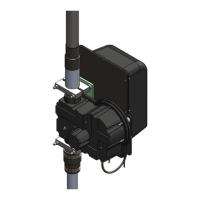
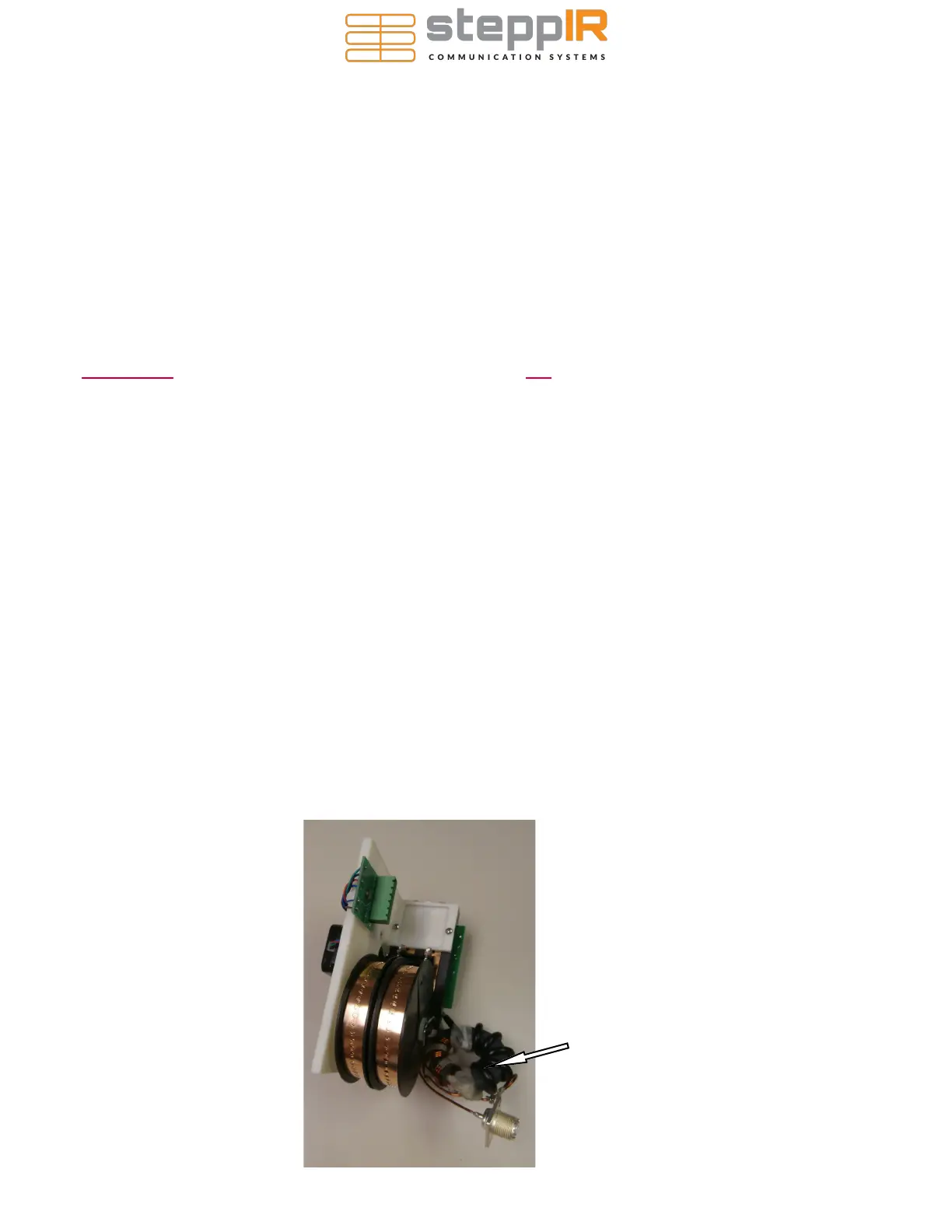
Our matching network is a transmission line transformer that is wound on a 2.25 inch OD ferrite core
that operates with very little internal flux, thus allowing it to function at very high power levels. The
transformer includes a 22 ohm to 50 ohm unun and a balun wound with custom made, high power, 25
ohm coax for superior balun operation. Jerry has espoused these transformers for years as an overlooked
but excellent way to match a Yagi, he would probably be proud to know they are being used in a com-
mercial Yagi. This matching network does not require compressing or stretching a coil, or separating
wires to get a good match – something that can easily be bumped out of adjustment by birds or installa-
tion crews.
Balun


 To Next Page
 Loading...