18
AUS
AFTER SALES SUPPORT
MODEL: STR-E15BGD PRODUCT CODE: 708548 10/2022
1300 112 534
tempo.org/support
Instructions
Pulling an espresso
The secret to a great-tasting espresso is all about achieving a perfect balance of
taste, temperature and mouthfeel. To help you achieve that perfection, make sure
all parts of your machine (including the pumping system) are clean and preheated,
the water tank is filled with fresh, cold tap water, and your coffee is fresh and
appropriately roasted and ground for espresso.
NOTE: See the coffee guide included with this espresso machine for more on how
to create the perfect coffee.
Step-by-step coffee-making instructions
1. Fill the water tank with the desired amount of cold tap or filtered water,
ensuring it is above the MIN and below the MAX marking in the tank (see
page 13). (You should have enough water in the tank for the coffee plus a first
blank shot for preheating.) Close the lid.
NOTE: When the water tank is empty, the error code "E9" will appear on the
screen, and the START/STOP button will flash. Press the START/STOP button
to refill the water. Once the machine is refilled the E9 error code will disappear.
2. Connect the machine. Plug the espresso machine into an appropriate
electrical outlet.
3. Preheat your cup(s). Place the empty cup(s) you are going to use on the cup-
warming plate on top of the espresso machine.
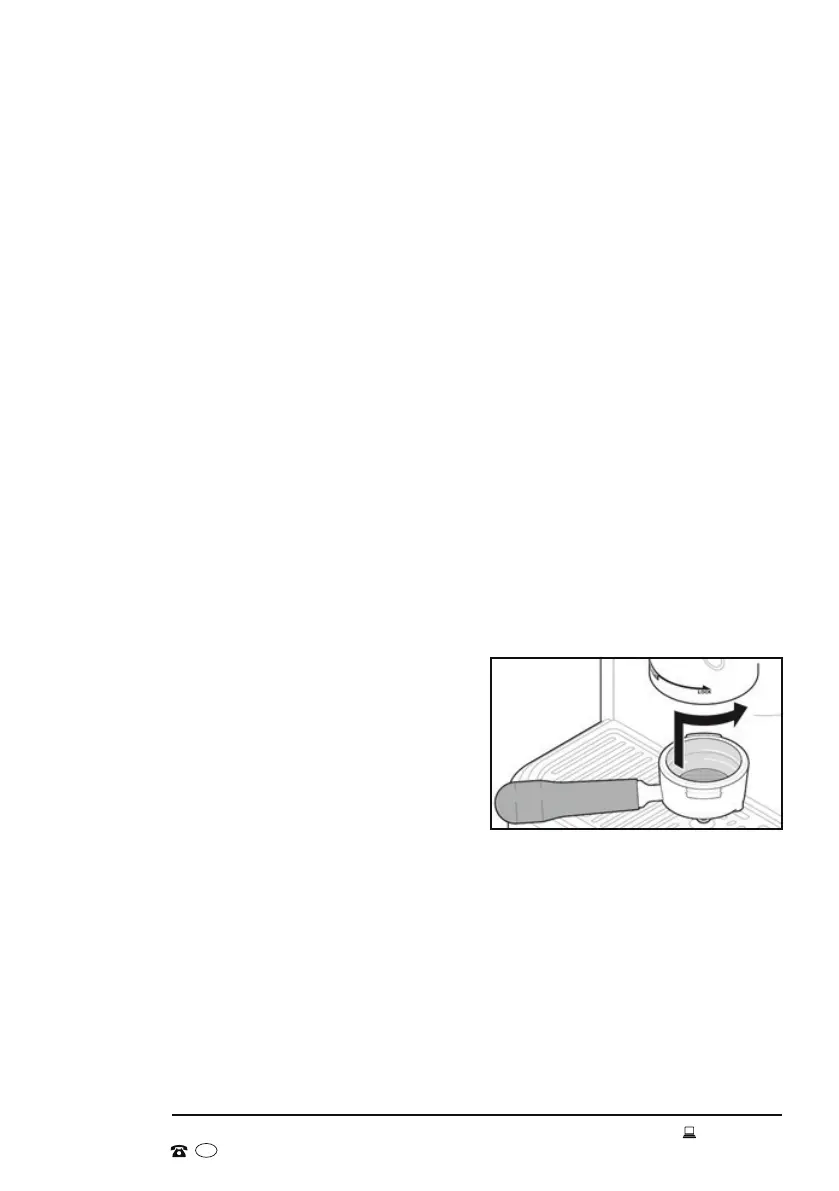
4. Choose the filter basket and insert it firmly
into the portafilter.
5. Engage the portafilter onto the group
head. Align the portafilter handle with the
INSERT mark on the group head, then turn
the handle anticlockwise (to the right) until
the portafilter handle is facing the front and
lined up with the LOCK mark (Fig. 11). Make
sure the portafilter is sealed and locked securely into its place.
6. Place your cup(s) on the drip tray draining plate, ensuring the espresso
spouts are pointing into the cup.
7. Press the POWER button to turn the machine on. When the appropriate
temperature has been reached, the POWER button on the control panel will be
illuminated steadily.
Fig. 11


 To Next Page