
 To Next Page
K
Karl ScottSep 7, 2025
What to do if Stone Rhino 43 Construction Equipment has a sulfated or worn out battery?
- TTeresa ConnerSep 7, 2025
If your Stone Construction Equipment has a sulfated or worn-out battery, replace it.

What to do if Stone Rhino 43 Construction Equipment has a sulfated or worn out battery?
If your Stone Construction Equipment has a sulfated or worn-out battery, replace it.
Why Stone Construction Equipment engine emits black or gray exhaust smoke?
If your Stone Construction Equipment engine emits black or gray exhaust smoke, it is likely due to using the improper type of fuel. Ensure that you use the proper fuel.
Why Stone Construction Equipment has high fuel consumption?
High fuel consumption in your Stone Construction Equipment could be due to using the improper type of fuel. Make sure to use the proper type of fuel.
What to do if Stone Construction Equipment has Improper type of fuel?
Use proper type of fuel.
What to do if Stone Construction Equipment engine is hard to start?
If your Stone Construction Equipment engine is hard to start, will not start, or starts but does not keep running, it could be due to several reasons. There might be air in the fuel line, which requires bleeding the fuel line. In cold weather, use a cold weather starting aid. If the crankcase oil is too heavy, switch to oil with the proper viscosity. Ensure you're using the correct type of fuel for the operating conditions by consulting your fuel supplier. If there's water, dirt, or air in the fuel system, drain, flush, fill, and bleed the system. You may also need to replace the filter element. Try turning the key switch to “OFF” then to “ON.” For diesel engines, dirty fuel injectors may need servicing or replacement, or the injection pump may be drawing in air, requiring you to check the...
What to do if Stone Rhino 43 has a battery charging rate too high?
If the battery charging rate is too high on your Stone Construction Equipment, test the charging system.
What to do if Stone Rhino 43 Construction Equipment brake stays on?
If the brake stays on in your Stone Construction Equipment, check the pump for proper charge pressure.
What to do if Stone Rhino 43 Construction Equipment has no release pressure?
If your Stone Construction Equipment has no release pressure, check the pump for proper charge pressure, which should be between 220-260 psi.
What to do if Stone Construction Equipment has a faulty hydraulic pump or drive motor?
Test hydraulic pressure for 500psi at full load on drive motor with engine at full RPM. Check charge pressure 220-260 psi with engine at full RPM. Replace pump if pressure is not in specified range in hydraulic motor circuit. Check drive motors case, drain flow .5GPM max. drum, tires blocked, engine running.
What to do if Stone Construction Equipment air filter dirty?
If the air filter in your Stone Construction Equipment is dirty, clean and/or replace it.
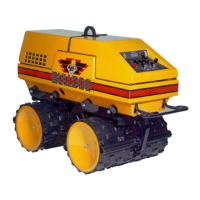
Details the different configurations of the Stone Rhino roller.
Specifies the proper applications and intended use of the machine.
Detailed specifications for the Rhino 43 models.
Detailed specifications for the Rhino 54 models.
Provides essential machine data including fluids, engine, and capacities.
Identifies and explains the various operator controls on the machine.
Illustrates the physical dimensions of the Rhino 43 models.
Illustrates the physical dimensions of the Rhino 54 models.
Identifies all safety decals present on the machine and their meanings.
Provides essential guidelines for safe operation and maintenance.
Details crucial safety rules for operating the roller.
Recommends appropriate protective clothing for operators.
Warns about hot surfaces on the machine.
Guidelines for performing maintenance safely.
Highlights safety precautions for hydraulic system work.
Guidance on the proper disposal of waste materials.
Safety instructions for handling fuel.
Advice on preparing for emergency situations.
Safety procedures and precautions for battery charging.
Instructions for inspecting the roller upon delivery.
Guidelines for the initial break-in period of the roller.
Checks and preparations required before starting the machine.
Procedure for warming up the engine before full operation.
Information and warnings regarding fuel type and handling.
Instructions for checking the hydraulic oil level and conditions.
Procedure for checking the engine coolant level.
Guidance on cleaning the machine and avoiding damage.
Step-by-step instructions for starting the machine.
Procedures for starting the machine in cold weather conditions.
Instructions on how to operate the roller for movement and speed.
Guidelines and warnings for operating the roller on slopes.
Safe procedures for shutting down the machine.
Proper procedures for parking the roller safely.
Overview and daily checks of machine safety features.
Details on seat adjustment and seat belt usage.
Explanation of the steering control system.
Detailed descriptions of all operator controls and their functions.
Explanation of the various gauges and their readings.
Checking the air cleaner system for proper function.
Advice and recommendations for effective compaction.
Instructions for using the locking bar for transport.
Guidelines for safely loading and transporting the machine.
Proper methods and points for securing the roller for transport.
Procedures for towing the roller in emergency situations.
Instructions for storing the roller properly.
Crucial notice regarding authorization and understanding for maintenance tasks.
Comprehensive chart detailing maintenance tasks and intervals.
Procedure for changing engine oil and filter.
Procedure for changing hydraulic oil and filter.
Inspection and maintenance of the engine cooling system.
Procedure for replacing the engine coolant.
Inspection and cleaning of the air cleaner.
Procedure for replacing the air cleaner element.
Inspection and replacement of the in-line fuel filter.
Procedure for cleaning and replacing the engine fuel filter.
Steps to bleed air from the fuel system.
Inspection and tensioning of the fan/alternator belt.
Procedure for greasing fittings.
Lubrication of frame hinges.
Servicing and maintenance of the battery.
Safe procedures for charging or jump-starting the battery.
Information and diagnostics for fuel injectors.
Procedure for testing fuel injection nozzles.
Inspection and maintenance of hydraulic hoses and connections.
Procedure for adjusting the forward/reverse neutral linkage.
Checking and changing the eccentric housing oil.
Checking and tightening engine mounting hardware.
Information on the use of Loctite for hardware.
Adjusting and replacing scrapers.
Procedures for inspecting and maintaining ROPS and seat belts.
Troubleshooting steps for when the engine will not start.
Troubleshooting for when the engine cranks but won't start.
Troubleshooting for difficult engine starting or stalling.
Diagnosing and addressing high fuel consumption.
Identifying and resolving engine overload conditions.
Diagnosing and addressing high engine oil consumption.
Troubleshooting low engine oil pressure.
Diagnosing and resolving issues with unit power loss.
Troubleshooting steering problems.
Troubleshooting brake system issues.
Troubleshooting why the battery is not charging.
Troubleshooting why the starter motor will not crank.
Instructions for using the maintenance log to track service history.
Details the warranty periods for different equipment types.
Form for registering Parker hose/connector warranty claims.
 General
| Brand | Stone |
|---|---|
| Model | Rhino 43 Series |
| Category | Construction Equipment |
| Language | English |