Combustion air inlet
The stove requires air for combustion.
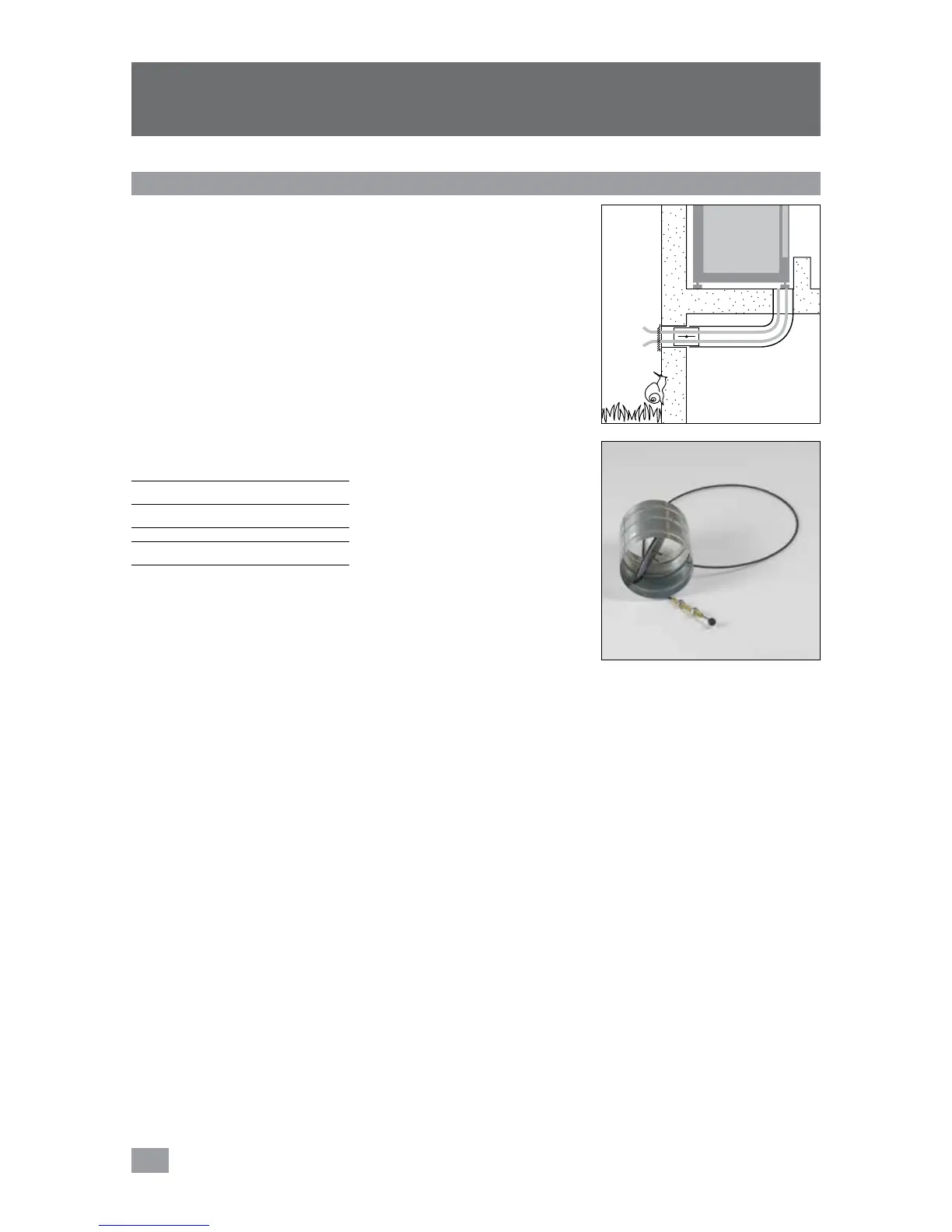
A sufficient air inlet (see table) should
ideally be created under the stove, at
the front.
This air inlet comes from a ventilated
empty space, a ventilated room
(cellar) or from outside (mandatory
regulation in some countries)
[diagram1].
The figures given in the table below
are for information purposes only.
Please take account of applicable
local and national standards and
regulations.
Stûv 21/125 min. 2 dm²
Stûv 21/135 min. 2 dm²
Stûv 21/125 DF min. 2 dm²
The duct carrying this air...
... will be protected on the outside
by a grill the free passage section of
which is at least equivalent to the
section of the air inlet. Please note
that the infiltration of water and the
effect of the wind can damage the
system.
... will be as short as possible to
prevent pressure loss and to prevent
making the house cold.
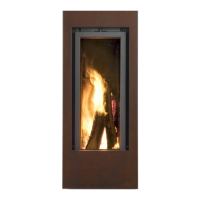
... will ideally be fitted with a closure
valve [photo 2] to prevent the room
from becoming cold when the stove is
not in use. It should ideally be located
as close as possible to the outside
wall. It can be controlled from inside
if it is not too far away from the stove
(cable length= 120cm).
If it is not possible to bring in
outside air near the stove
(most unfavourable case)...
...ensure there is sufficient
replenishment of air in the room when
the stove is in use.
Please note
Be careful with air extraction systems
(kitchen hoods, air conditioning,
mechanically-controlled ventilation,
other stoves) in operation in the same
space or in an adjacent room. They
also use lots of air and can cause a
depression in the room and prevent
the stove from operating correctly
(risk of draughtback). They can affect
the operation of the stove even if it is
connected to an outside air inlet.
PREPARATION OF THE AREA



 To Next Page