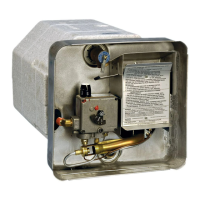
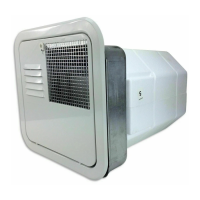
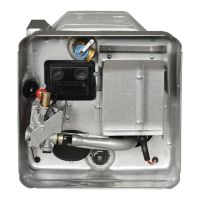
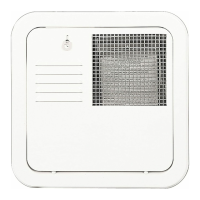
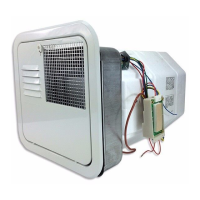
This document provides installation and operation instructions for the Suburban Direct Vent Gas Water Heater, designed for use in recreational vehicles and mobile housing. The manual covers various models including SW6P, SW6PE, SW6D, SW6DM, SW6PR, SW6PER, and SW6DE.
Function Description:
The Suburban Direct Vent Gas Water Heater is an appliance designed to provide hot water in recreational vehicles and mobile housing. It utilizes gas as its primary fuel source, with some models also featuring an electric heating element for dual-fuel operation. The direct vent design ensures that combustion products are safely vented outside the living area. The heater incorporates safety features such as a high-temperature limit switch and a pressure relief valve to prevent overheating and over-pressurization.
Important Technical Specifications:
- Models Covered: SW6P, SW6PE, SW6D, SW6DM, SW6PR, SW6PER, SW6DE.
- Installation: Designed for flush-mount or hinged door installation in framed openings. Minimum clearances are specified for safe operation.
- Gas Connection: Requires a 3/8" gas supply line connected to a 3/8" flare fitting at the gas valve. Proper caulking of the grommet and gas line is critical to prevent moisture and flue products from entering the living area.
- Electrical Connections:
- 12 Volt D.C.: Applicable to models SW6D, SW6DE, and SW6DM. Wiring must conform to local codes and ANSI/NFPA No. 70 or CSA C22.2 No. 148/Z240.6.2 (Canada).
- 120 Volts A.C.: Applicable to models SW6PE, SW6PER, and SW6DE. Requires a fused safety switch or circuit breaker. Wiring must conform to local codes and ANSI/NFPA No. 70 or CSA C22.1 (Canada). The electric element is 1000 watts, 60 cycle, single phase.
- Safety Devices:
- High-Temperature Limit Switch: All models are equipped with a high-temperature limit that trips if the water temperature exceeds 180°F. A manual reset button is provided to reactivate the burner or electric element once the temperature drops below 100°F.
- Pressure Relief Valve: Designed to open if water temperature reaches 210°F or water pressure reaches 150 pounds, preventing over-pressurization in the closed RV water system.
- Anode Protection: The tank is protected by a magnesium or aluminum anode rod to prolong its life.
- Motor Aid Heat Exchanger: Some models (e.g., SW6DM) can be connected to a motor aid heat exchanger to utilize engine heat for water heating.
Usage Features:
- Lighting Instructions (Pilot Models - SW6P, SW6PE):
- Turn gas cock to "OFF" and temperature indicator to lowest setting.
- Turn off all electrical power.
- Wait five minutes for gas to clear.
- Turn gas cock to "pilot" position, press reset button, and light pilot. Hold until pilot remains lit.
- Turn gas cock to "ON" position.
- Set temperature dial to desired setting.
- Lighting Instructions (Re-ignitor Models - SW6PR, SW6PER):
- Place re-ignitor control in "OFF" position.
- Turn gas cock to "OFF" and temperature indicator to lowest setting.
- Turn off all electrical power.
- Wait five minutes for gas to clear.
- Turn gas supply on.
- Turn on electrical power.
- Turn gas cock to "pilot" position, press reset button, and switch electric re-ignitor module to "ON". Spark will ignite the pilot. Hold reset button until pilot remains lit.
- Turn gas cock to "ON" position.
- Set temperature dial to desired setting.
- Re-ignitor Alarm: Re-ignitor models include an alarm that sounds if the pilot flame is extinguished or LP gas supply is turned off, reminding the user to turn off the re-ignitor.
- Turning Off Water Heater:
- Turn temperature dial to the lowest setting.
- Turn off electrical power (for electric/gas models) or re-ignitor (for re-ignitor models).
- Turn gas cock to "OFF".
- Freeze Warning: Heater must be drained if subject to freezing temperatures to prevent damage.
- Odor from Hot Water System: Provides instructions for addressing "sulphur water" odor, which can be caused by chemical action or bacteria, typically involving heavy chlorination of the water system.
Maintenance Features:
- Main Burner Adjustment: Air shutters are pre-set but can be adjusted to maintain a blue or orange-blue flame. Yellow flames indicate incomplete combustion and require immediate correction by a qualified service agency.
- Pilot Flame Inspection: The pilot flame should engulf the tip of the thermocouple.
- Soot Inspection: Periodically inspect for soot, which indicates incomplete combustion. Check for obstructions in the burner or flue box, foreign material on the door screen, and proper air shutter adjustment.
- Gas Inlet Grommet: Frequently check the gas inlet grommet for a tight seal.
- Wiring Inspection: Periodically check wiring and connections for damage, fraying, and tightness.
- Anode Rod Replacement: The magnesium or aluminum anode rod deteriorates over time and should be replaced yearly under normal use. More frequent replacement may be needed in areas with high iron and/or sulfate levels in the water. Operating without proper anode protection voids the tank warranty.
- Draining and Storage: Instructions for draining the water heater for winter storage or when not in use to prevent freezing. This involves turning off electrical power and gas supply, opening hot and cold faucets, and removing the anode rod.
- Motor Aid Heat Exchanger (if applicable): Annual inspection of heater hoses and connections for deterioration.

 Need help?
 General

 To Next Page