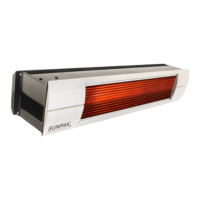
Sunpak® Infrared Heaters
4
Heater Layout and Design
Sunpak
®
heaters were specifically designed to provide
heated comfort in an outdoor environment. They have been
used on outdoor patios across the United States and
Canada for over 20 years. When properly integrated into a
patio design, Sunpak
®
heaters generally increase the
comfort level 5 to 10 degrees Fahrenheit outdoors. The
heating effectiveness will depend on air temperature, wind
velocity and other factors. Whenever possible other local
Sunpak
®
installations should be reviewed to determine the
effectiveness for regional environments.
The environments in which Sunpak
®
heaters are utilized
vary greatly. As an outdoor rated heater it has passed basic
wind and rain tests. This does not mean the heater cannot
be damaged by the environment or when operated in very
windy conditions. For this reason it is strongly suggested
that heaters be inspected and if necessary repaired
annually or before each heating season.
The variable environments in which Sunpak
®
heaters are
applied means that these general guidelines are generated
by necessity and may need to be refined for local
conditions. These guidelines are to be used in combination
with the installation instructions.
Patio Design Consideration
Heater placement is critical for effective and efficient
patio heating. If heaters are placed too close together or
mounted too low, people become uncomfortable. If heaters
are placed too far apart on a breezy, wind-swept patio the
patio may never get warm.
Sunpak
®
heaters work best if they are placed in areas of
the greatest heat loss, such as the open side of a semi-
protected patio area. The Sunpak
®
heater may be mounted
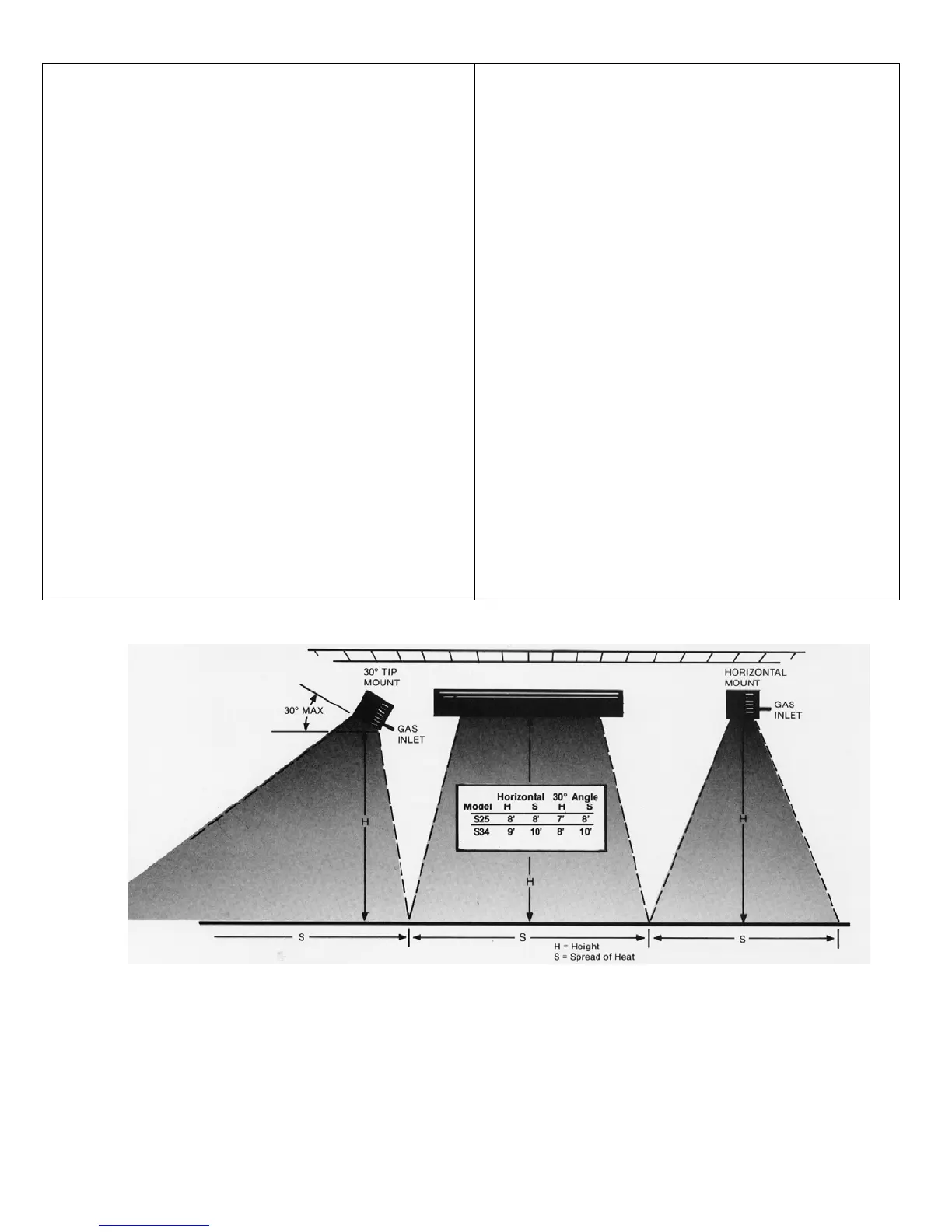
at up to a 30 degree angle or face down. Note that the top
clearances required from combustible material increases
when heaters are at any angle. The heater must always be
horizontal to the floor.
Breezy conditions must be considered when heating any
patio. Windbreaks can be extremely effective in increasing
comfort and reducing heating costs. Windbreaks must be
designed in such a way to allow for the necessary fresh air
and ventilation for proper heater operation (see ventilation
of installation section).
Sunpak heaters must always be operated in a location
that allows uniform air pressure around the heater. If only
part of the heater is located in a wind protected zone
damage to the heater may occur. Time should be taken to
observe how the wind will affect the heaters under local
conditions.
MINIMUM CLEARANCE FROM COMBUSTIBLE MUST BE MAINTAINED (see chart opposite page)
SUNPAK will raise the comfort level 5-10º Fahrenheit
outdoors. The above coverage table was based on still
breeze conditions. Under windy conditions more heat
will be required. It is recommended that a windswept
patio be designed with wind breaks to stabilize the patio
environment. Wind breaks shall NOT interfere with the
ventilation of combustion air requirement of the
heater(s).
ANGLE MOUNTING: Most models of the SUNPAK
heater may be angle-mounted to a maximum of 30º
to accommodate mounting the heaters around the
edges of the patio. Note that the top clearance to
combustibles increase when heater is tipped from
the horizontal.
NOTE: Local codes may have special requirements
regarding head clearance requirements. Some local
codes require all portions of overhead radiant
heaters to be located at least 8 foot above the floor.


 To Next Page
 Loading...