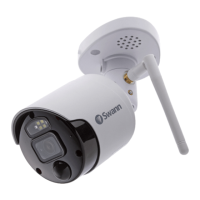
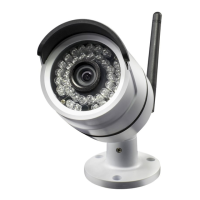
1. Take into consideration what you want to monitor
and where you’ll get the best view of it.
2. The amount of energy the camera’s solar panel
can produce depends on several factors: average
sun exposure, weather conditions, tilt angle, and
dust or debris.
3. Choose a location for your solar panel that gets
plenty of sunlight - try to avoid spots that are in the
shade for a significant portion of the day.
4. Mount your camera facing true south (in the
northern hemisphere) or true north (in the south-
ern hemisphere) and tilt it to the appropriate angle
for your latitude.
5. Wipe the panel every few months to remove dust
or debris that might affect the solar energy-har-
vesting efficiency. Don’t use abrasive materials.
6. Place your camera as close to the area of in-
ter¬est as practicable. The best position is from
about 13ft/4m above looking slightly down, keeping
in mind the details you are looking for.
7. Make sure your camera has minimal sky in it as
the light in daylight can make the foreground of the
image darker.
8. Think about the most likely way a potential of-
fend¬er may approach your home, use your camera
to give you the best coverage of these areas.
9. The camera’s casing is resistant to different
weather conditions and tampering. It would take an
over¬whelming event to damage the housing.
10. Even though the camera is weather and wa-
ter-resistant, prolonged exposure to adverse
weather conditions such as excessive moisture,
may eventually damage the internal components of
the camera and adversely affect its performance.
Camera Location Tips5


 To Next Page
 Loading...