EasyManua.ls Logo

Syntace P6 - User Manual

Syntace P6
3 pages
Print Icon
To Next Page IconTo Next Page
Loading...
Syntace GmbH · Dammweg1 · 83342 Tacherting · Germany · Tel. +49 (0)8634-66666 · Fax: +49 (0)8634-6365 · E-Mail: syntace@syntace.de · www.syntace.de
D
\\ Anleitung.
20190923
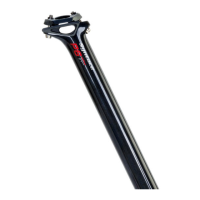
P6 SEATPOST
CARBON & ALU
CONGRATULATIONS ON THE PURCHASE OF YOUR NEW SYNTACE
P6 SEATPOST. Please carefully read all instructions as we have
included some important information and helpful tips. Your Syntace
seatpost has been carefully designed and constructed. However, it is
necessary that you follow all the instructions provided in this manual.
Please retain this manual and provide it to the new owner should
your seatpost ever find a new owner.
Please note that the responsibility of checking the product regularly
to determine if it needs repair or replacement, lies with the end
consumer. Please be aware that all the components of your bicycle
related to your safety have a “memory like an elephant,” they re-
member any damage (crashes, overloading, etc.) which can add up
to a shorter lifespan of the component. We at Syntace have built in a
proper amount of “Overload Safety” into all our components.
A regular replacement schedule (ie: Every two years), of Syntace
seatposts is, at this writing, not necessary. However, after any crash
or impact, especially to your stem or handlebars, check for signs of
fatigue (ie, discoloration, cracks, dents.), and to determine if the stem
or handlebars have bent. At the slightest sign of damage replace your
components!
Damaged components should under no circumstance be straight-
ened or repaired, but immediately replaced. Otherwise the compo-
nent may fail and a crash with serious injury could result.
Proper Use of Components
The Syntace P6 seatposts are for use with mountain bikes and road
bikes. Syntace P6 seatposts can be used for on-road and off-road use
up to a rider weight of 130kg.
Installation & Compatibility
Makes sure that the seatpost has the correct diameter for your
frame.
If necessary, ask your dealer, if the diameter of the seatpost is
correct for your bike frame. The internal diameter of the seat
tube should be at least 0.1mm and at most 0.3mm larger than the
seatpost diameter.
Please do not use a reduction shim shorter in length than the
minimum insert length of the P6 seatpost. If the frame requires a
greater minimum insert, use this as the valid length.
Preparation
• Before installation, read your bike‘s manual.
Check the seat tube for sharp edges and burrs - not only at the
upper edge but also along the clamping slot.
Deburr all sharp edges, especially at the upper edge of the seat
tube, with a file and fine sanding paper.
Note: Sharp edges, especially at the end of the seat tube, can cause
damage leading to breakage of the seatpost.
Check (as described in Installation & Compatibility) the diameter
of the seat tube. An ill fit of seatpost and seat tube can lead to
damage and/or breakage of the seatpost.
Remove all chips and other residue with a cloth and compressed
air. Turn your bike upside down if needed.
Installation of seatpost
TIP: FOR CARBON-FIBER SEATPOSTS
Do not use grease for installation. Remove grease from seat tube if
necessary. Special friction pastes abrade the finish after a while.
Spray a little silicon spray into seat tube. Be assure that it does not
reach your brake rotors (watch the wind direction!).
Carefully insert seatpost into seat tube with height markers poin-
ting forward. If too much force is needed, the seat tube may require
reaming.
Question and Answer IconNeed help?

Do you have a question about the Syntace P6 and is the answer not in the manual?

Summary

Installation & Compatibility

Seatpost Diameter Check

Ensure seatpost diameter matches frame tube internal diameter within 0.1-0.3mm. Consult dealer if unsure.

Seatpost Insert Length

Ensure minimum insert length is not less than specified. Adjust using shims if required.

Preparation and Installation Steps

Seat Tube Preparation

Check seat tube for sharp edges and burrs. Smooth with file and sandpaper to prevent damage.

Carbon Seatpost Installation

Use friction paste for carbon. Avoid grease. Insert carefully with markers forward.

Aluminum Seatpost Installation

Apply a little mounting paste onto seatpost for easier insertion and to prevent sticking.

Seatpost Usage and Maintenance

Correct Seatpost Insertion

Insert seatpost at least to the 'minimum insert' marking for safe operation.

Maintenance and Care

Clean seatpost regularly with water and mild soap. Avoid harsh cleaning agents.

General Precautions

Do not use grease on carbon seatposts. Avoid contamination. Check for damage regularly.

Warranty Information

Oval Seat Rail Compatibility

Oval rails up to 11mm height are compatible. Check thread engagement for bolts.

Product Warranty Terms

Syntace offers a 10-year warranty on material and manufacturing defects.

Reporting a Warranty Case

Send faulty components with written explanation to Syntace GmbH for assessment.

Overview

The Syntace P6 Seatpost is a bicycle component designed for both mountain bikes and road bikes, capable of supporting a rider weight of up to 130kg. It is available in both carbon and aluminum versions, with specific installation and maintenance considerations for each material.

Function Description:

The primary function of the Syntace P6 Seatpost is to connect the bicycle saddle to the frame, allowing for height and angle adjustment of the saddle to suit the rider's preference and optimize pedaling efficiency. The seatpost's clamp is designed to accommodate standard 7mm saddle rails, as well as carbon rails with an oval cross-section up to 11mm in height. This versatility ensures compatibility with a wide range of saddles. The design emphasizes durability and safety, incorporating "Overload Safety" into its components to withstand typical stresses of cycling.

Important Technical Specifications:

  • Material: Available in Carbon and Aluminum.
  • Rider Weight Limit: Up to 130kg.
  • Saddle Rail Compatibility: Standard 7mm rails; Carbon rails with oval cross-section up to 11mm height.
  • Seat Tube Diameter Compatibility: The internal diameter of the seat tube should be at least 0.1mm and at most 0.3mm larger than the seatpost diameter.
  • Minimum Insert Length: The seatpost must be inserted at least to the "minimum insert" marking. If the frame requires a greater minimum insert, that length becomes the valid minimum.
  • Clamping Torque: The clamping screws for the saddle should be tightened alternately and in steps up to a torque value of 6 to max. 8 Nm.
  • Warranty: 10 years from the date of purchase on all material and manufacturing defects, provided components are installed and used as outlined in the owner's manual.

Usage Features:

  • Installation:
    • Preparation: Before installation, users must read their bike's manual. The seat tube should be checked for sharp edges and burrs, which must be deburred with a file and fine sanding paper to prevent damage to the seatpost. All chips and residue should be removed from the seat tube.
    • Diameter Check: It is crucial to ensure the seatpost has the correct diameter for the frame. An ill-fitting seatpost can lead to damage or breakage.
    • Carbon Seatposts (Specifics): For carbon seatposts, grease should not be used for installation. Instead, a little silicon spray can be applied to the seat tube, ensuring it does not reach brake rotors. The seatpost should be carefully inserted with height markers pointing forward. If excessive force is needed, the seat tube may require reaming.
    • Aluminum Seatposts (Specifics): For aluminum seatposts, a little mounting paste can be applied to prevent sticking.
    • Clamping Mechanism: Both clamping screws should be loosened until the threads disappear in the nuts. The tilt and horizontal position of the seat should be adjusted first. The clamping screws are then tightened alternately and in steps to the specified torque (6 to 8 Nm). After 1-2 hours of use, the screws should be re-tightened to the prescribed torque, and tightness should be checked regularly.
    • Carbon Seatpost Clamp Compatibility: It is critical to ensure that the frame's seatpost clamping mechanism is suitable for carbon seatposts. Clamping mechanisms that apply asymmetrical clamping force or those that touch the seatpost directly are not permitted, as they can damage or break the carbon post. Syntace recommends models like the Syntace SuperLock if there is any doubt.
  • Shortening Seatpost: The seatpost can be shortened to save weight, but only after determining the maximum seatpost height and ensuring the minimum insert length is maintained.
    • Procedure: Measure the minimum insert length and the distance from the top of the seat tube to the bottom of the top tube of the frame. The larger of these two values is the effective minimum insert length. The excess length can be sawed off.
    • Sawing: Place the post in a vice with V-clamps (preferably clamping the end to be removed). Use a fine metal saw blade for carbon posts and deburr with fine sandpaper. A clear coat or superglue can protect the cutting surface from fraying.
    • Safety Note (Carbon): Fine carbon particles are a health hazard. Do not breathe them in or vacuum with a vacuum cleaner. Clean up with a wet paper towel. The metal saw blade used for carbon should not be used for metal again.

Maintenance Features:

  • Regular Checks: The end consumer is responsible for regularly checking the product for signs of wear, damage, or the need for repair or replacement.
  • Post-Crash/Impact Inspection: After any crash or impact, especially to the stem or handlebars, check for signs of fatigue such as discoloration, cracks, or dents. Replace components at the slightest sign of damage. Never attempt to straighten damaged components.
  • Moisture Removal: Regularly check the inside of the Syntace seatpost for moisture and remove it if found.
  • Dirt Prevention: To prevent dirt from entering the seat tube, Syntace recommends using a seatpost clamp with a wiper seal (e.g., Syntace SuperLock) and/or an additional wiper device (e.g., Syntace Little Joe).
  • Torque Checks: Regularly check screws for proper torque.
  • Brake Fluid Warning: Brake fluid can attack epoxies, resins, and coatings used in carbon components. If brake fluid comes into contact with any carbon component, thoroughly clean the affected area with water to prevent damage.
  • Wear Limit: The seatpost has a wear limit. Frequent height adjustments in muddy or dusty conditions cause material wear on both the seat tube and seatpost. Wear on carbon seatposts is higher than on alloy seatposts due to the coated resin matrix/fibers. To minimize wear, remove and clean the seatpost and the inside of the seat tube after every ride in wet/muddy conditions.
  • Diameter Check: Periodically check the diameter of the seatpost. If the diameter at any point along the post becomes less than 0.2mm than the nominal specified diameter, the seatpost must be replaced to prevent frame crushing, deformation, or cracking in the clamping area.
  • Replacement Schedule: A regular replacement schedule (e.g., every two years) for Syntace seatposts is not necessary, but components should be replaced if damaged or worn beyond the specified limits.

Syntace P6 Specifications

General IconGeneral
BrandSyntace
ModelP6
CategoryBicycle Accessories
LanguageEnglish