Installation Guidelines
Positioning
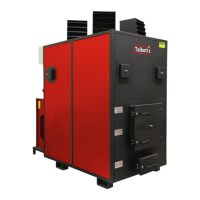
Position of the heater is as important as any other part of the installation.
Consideration must be given to the following points:
• The heater must stand on a completely level non-combustible base capable
of supporting its full weight.
• On warm air appliances distribution of heat is best effected if the heater is
positioned centrally within an area, alternatively, the heater will need to be
positioned to the best advantage of its air distribution heads or a ducting
system may have to be employed.
• The position of the heater must allow for the fitting of a flue.
• If you require the heater to continue burning waste during the summer
months, a position must be chosen that will allow a duct to be taken
horizontally through an outside wall or vertically through the roof.
• If the heater is to be positioned adjacent to any walls, etc. a minimum of
600 mm must be allowed for access and removal of panels for servicing.
• If the heater is to be installed in a boiler house it must be fire and weather
proof and must confirm to building regulations, also adequate return air
must be circulated back to the heater to ensure maximum efficiency.
• Ensure that adequate air is available for combustion.
Note
ENSURE THAT THE FAN IS NOT RUNNING IN REVERSE. TO CORRECT THIS
CHANGE ANY TWO PHASES CONNECTED TO THE ISOLATOR.
Important
IT IS ESSENTIAL THAT ELECTRICAL POWER IS CONNECTED TO THE HEATERS
BEFORE THEY ARE FIRED. IF ALL ELECTRICAL POWER IS TURNED OFF AT
NIGHT THE HEATER MUST BE CONNECTED TO A SEPARATE PERMANENT
SUPPLY.
NEVER RUN A HEATER WITH THE POWER TURNED OFF OR RE-STOKE DURING
A POWER SUPPLY FAILURE AS DAMAGE COULD RESULT.
Flue Installation


 To Next Page
 Loading...