This document is a quick start guide for the TCL L7 mobile phone, providing essential information on its physical features, basic setup, and core functionalities.
Device Overview
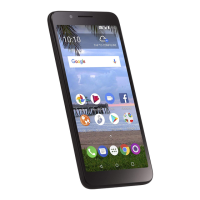
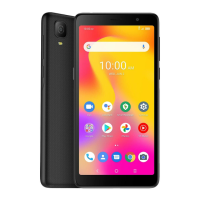
The TCL L7 is a smartphone with a standard candy bar form factor. It features a front camera, a rear camera with flash, and a range of physical buttons and connectors for user interaction and connectivity.
Physical Features and Connectors
The device's physical layout is designed for ease of use:
- Headset connector: Located at the top of the device, this 3.5mm jack allows for the connection of headphones or external audio devices.
- Front camera: Positioned on the front face, typically at the top, for selfies and video calls.
- Volume up/down keys: Located on the side of the device, these buttons control the audio output level.
- Power key: Also on the side, this button is used to turn the device on/off, lock/unlock the screen, and access power options.
- The Google Assistant Button: A dedicated button on the side for quick access to Google Assistant, enabling voice commands and smart features.
- Micro-USB connector: Located at the bottom, this port is used for charging the device and connecting it to a computer for data transfer.
- Back camera: Situated on the rear of the phone, this is the primary camera for taking photos and videos.
- Back flash: Adjacent to the rear camera, this LED flash provides illumination for photos in low-light conditions.
- Back button: A capacitive or on-screen button that navigates back to the previous screen or action.
- Recent button: A capacitive or on-screen button that displays a list of recently used applications for quick switching.
- Home button: A capacitive or on-screen button that returns the user to the main home screen from any application.
Getting Started
The guide outlines the initial setup steps for the TCL L7:
- Removing or installing the back cover: The back cover can be removed to access the battery and SIM/microSD card slots. This typically involves prying it off gently from a designated notch.
- Installing or removing the battery: The battery is user-removable and can be inserted or replaced by aligning it correctly within its compartment.
- Inserting or removing the microSD card: The device supports expandable storage via a microSD card. The card slot is located under the back cover, requiring the card to be pushed in or pulled out.
- Inserting or removing the SIM card: The TCL L7 supports one or two SIM cards (SIM 1 and SIM 2), allowing for dual network connectivity. The SIM card slots are also located under the back cover.
- Charging the battery: The device is charged using a Micro-USB cable connected to the Micro-USB port.
Software Features and Usage
The TCL L7 runs on an Android operating system, offering a range of standard smartphone functionalities:
- Home screen: The central hub for applications, shortcuts, and widgets. Users can customize it for quick access to frequently used items. The Home button always returns to this screen.
- Settings access: Swiping down from the top of the screen reveals the notification panel, where users can access quick settings and a full list of settings.
- Notification panel: Displays alerts and ongoing activities. Dragging down further reveals the Quick Settings menu for toggling common features like Wi-Fi, Bluetooth, and screen brightness.
- Phone call:
- Making a call: Users can dial a number from the keyboard and tap the call icon to initiate a call.
- Answering a call: When a call is received, users can swipe right to answer or swipe left to reject. There is also an option to reject a call with an SMS message.
- Contacts: The device allows users to view, create, and synchronize contacts with Gmail or other online accounts.
- Search: A search bar is available to quickly find contacts.
- Quick contact panel: Tapping on a contact opens a panel with options to call, message, or view contact details.
- Contact management: Users can touch and hold a contact to share or delete it.
- Adding new contacts: A dedicated button allows for the creation of new contact entries.
- Messaging: The TCL L7 supports SMS (Short Message Service) and MMS (Multimedia Messaging Service).
- Creating messages: Users can compose new text messages.
- MMS conversion: An SMS automatically converts to MMS when media files (images, videos, audio, slides), a subject, or email addresses are added.
- Sending messages: A send button is available after composing a message.
- Emoticons: Users can insert emoticons into their messages.
- Gmail: The device integrates with Gmail, allowing users to manage their email accounts.
- Account setup: Users can use an existing Gmail account or create a new one during initial phone setup.
- Options and settings: Access to various email settings and options.
- Archiving emails: Swiping right or left on an email in the inbox archives it.
- Composing emails: A dedicated button allows users to create new emails.
Maintenance and Support
The guide provides information on how to maintain the device and access support:
- Software updates: Users can check for and install software updates by navigating to
Settings > System > System Update.
- Personal data backup: It is recommended to back up personal data using
Settings > System > Backup > Back up to Google Drive.
- Factory reset: To reset the phone to its original factory settings, users can go to
Settings > System > Reset > Factory data reset > RESET PHONE > ERASE EVERYTHING. This action will delete all data on the device.
- Online support: The TCL website (tclusa.com and tcl.com/mx/es.html) offers tutorials, FAQs, and user manuals.
- Support Center application: Users can access support directly from the "Support Center" application on their smartphone or tablet.
- Call Center: A list of regional call center numbers is provided for direct assistance in Australia, Canada, Chile, Colombia, Ecuador, Mexico, New Zealand, Peru, Dominican Republic, USA, and Venezuela.
This quick start guide covers the essential aspects of the TCL L7, from its physical components and initial setup to its core software functionalities and support resources, ensuring users can quickly get acquainted with their new device.

 Need help?
 General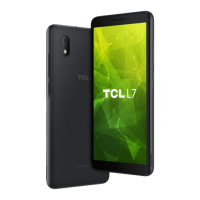

 To Next Page