1
TDW Pub No. 00-3795-0283
Revised March 2002
D-2000 Closure, 16"–30"
Instructions for Installation, Operation, and Maintenance
Section I: Introduction
1.0 Purpose
This manual provides instructions for the
installation, operation, and maintenance of the
TDW
®
D-2000 Clamp Ring Closure, 16"–30". This
closure is also available in other sizes.
2.0 Discussion
The TDW clamp ring closure is a quick-opening
closure easily operated by one person. It is
equipped with a pressure warning lock, in
accordance with UG-35 of ASME Sect. VIII, Div.
1, to alert the operator to the existence of internal
pressure prior to opening the closure.
The closure is designed primarily for horizontal
installation, meaning that the door swings open on
the horizontal axis. However, the closure can be
installed on a vertical installation. In the latter case,
a counterbalance, not addressed in this instruction,
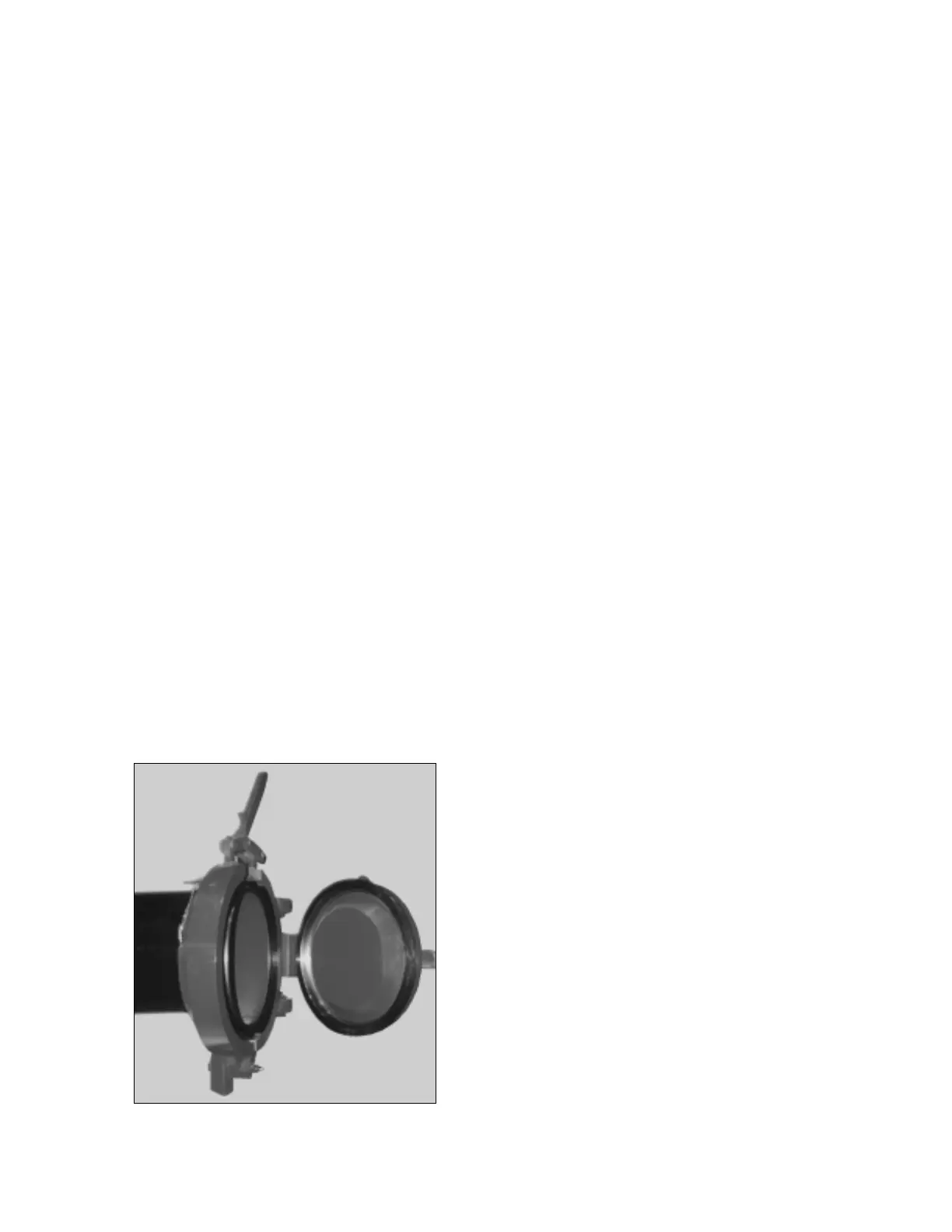
can be provided to facilitate opening. Figure 1
shows the clamp ring closure, installed horizontally.
Figure 1. TDW
®
D-2000 Clamp Ring Closure
3.0 Safety
3.1 General
TDW clamp ring closures are designed for fast,
easy, and safe operation. A closure may not
operate effectively if it has been subjected to
misuse or external damage or has been operated or
maintained contrary to TDW's printed instructions.
It is mandatory that correct procedures be followed
in the care and use of TDW closures to maintain
their safety features, efficiency, and ease of
operation.
The following reminders are useful in ensuring that
your TDW clamp ring closures operate properly:
1. Clean the O-rings and O-ring sealing
surfaces and coat them with a thin film of
grease before the closure is closed.
2. Inspect the O-ring for cuts, scratches,
deterioration, twisting, or swelling.
Replace O-rings if there is any sign of
abnormality.
3. Clean the interior surfaces of the clamp
ring, and apply a thin film of lubricant
before the closure is closed. This is
particularly important in corrosive
environments.
4. Lubricate all hinge points at regular
intervals.
5. Make sure that the door, clamp ring, and
pressure warning lock are fully closed and
secured before attempting to pressurize the
vessel.
• Never allow pressure to be applied to
any TDW closure that may be
inoperative.



 To Next Page