This document serves as a quick setup and installation guide for the Technomate TM-5500 and TM-5000 series satellite receivers, specifically covering models with D/CI/DA/DACI/CIP/DAPCI functionalities. The guide outlines various setup procedures for different satellite systems, channel management, and basic maintenance features.
Function Description
The Technomate TM-5500/5000 series receivers are designed for receiving digital and analogue satellite broadcasts. They are equipped with Common Interface (CI) slots, allowing for the use of Conditional Access Modules (CAMs) and viewing cards to decrypt scrambled channels. The receivers support various satellite dish configurations, including fixed systems, monoblock or DiSEqC switch setups (up to 4 LNBs/Dishes), and motorised systems using DiSEqC 1.2 or USALS protocols. For CIP and DAPCI models, a normal 36Volt 4-cable positioner setup is also supported, enabling dual-axis, incline/decline, and East/West motor positioning. The devices come pre-tuned with 23 satellites and over 3500 channels, simplifying initial setup for many users.
Important Technical Specifications
While specific technical specifications like power consumption, tuner type, or video/audio codecs are not detailed in this quick setup guide, the document implies several key capabilities:
- Satellite Reception: Supports reception from at least 23 pre-tuned satellites.
- Channel Capacity: Capable of storing over 3500 channels.
- Common Interface (CI): Features CI slots for CAMs, essential for decoding scrambled ($D) channels.
- DiSEqC Support:
- DiSEqC Switch: Supports up to 4 LNBs/Dishes (DiSEqC 2 or 4-way switch).
- DiSEqC 1.2: For motorised systems, allowing the receiver to control dish movement to different satellite positions.
- USALS (Universal Satellite Automatic Location System): An advanced motorised system that automatically calculates satellite positions based on the user's longitude and latitude.
- Positioner Support (CIP/DAPCI models): Compatible with 36Volt 4-cable positioners for dual-axis motor control (East/West and Incline/Decline).
- Signal Quality: The setup procedures frequently refer to achieving a signal quality exceeding 50% for successful tuning.
- Software Version: The receiver's software version (e.g., HER 502) is mentioned as relevant for certain save operations. Users can check their software version and data version (e.g., 10.29.03 for American date, 29.10.03 for English date) via the STB information menu.
- Transponder List: A comprehensive list of transponders is provided, including satellite name, degree (longitude), frequency, symbol rate, and polarity (H/V). This list is crucial for manual tuning and troubleshooting signal issues. Examples include:
- PASS 3R-6B (45.0° W, 12573 MHz, 19846 Symbol Rate, H Polarity)
- HOTBIRD (13.0° E, 10892 MHz, 27500 Symbol Rate, H Polarity)
- ASTRA 2 (28.2° E, 11546 MHz, 27500 Symbol Rate, H Polarity)
- TURKSAT 1C (42.0° E, 12652 MHz, 22500 Symbol Rate, H Polarity)
- TV System: Supports PAL TV system, adjustable via UHF Tuning.
Usage Features
The Technomate receivers offer a range of user-friendly features for managing channels and system settings:
- Pre-tuned Channels: Receivers come with 23 satellites and over 3500 channels pre-tuned, allowing for immediate viewing of free-to-air (D) channels after connecting to a TV and selecting a satellite.
- Fixed System Tuning: Simple steps for tuning a single LNB/dish system, involving selecting a satellite from a list, auto-searching, and saving.
- Monoblock/DiSEqC Switch Setup: Detailed instructions for configuring multiple LNBs/dishes using a DiSEqC switch, requiring assignment of DiSEqC ports (A, B, etc.) to specific satellites.
- Motorised System Setup (DiSEqC 1.2 & USALS):
- DiSEqC 1.2: Involves manually moving the dish to find the highest signal quality for each satellite and then saving its position.
- USALS: Requires inputting the receiver's longitude and latitude, allowing the system to automatically calculate and move the dish to satellite positions. Users are advised to adjust longitude if signal quality is below 50%.
- 36Volt 4-Cable Positioner Setup (CIP/DAPCI models): Includes setting East/West limits, moving the positioner to find satellites, and saving positions. Supports dual-axis control for incline/decline adjustments.
- Auto Positioning and Motor Limit Setting: Allows for setting mechanical limits on the motor to prevent damage and offers an "Auto Navigation" feature for automatic searching and saving of active transponders.
- Password Protection: Users can set a password to protect access to certain settings or channels.
- Audio Language Settings: Adjustable via the UHF button, allowing selection of the TV system (e.g., PAL).
- Favourite Channels: Users can create and manage lists of favourite channels, categorising them (e.g., news, movie, drama).
- Parental Control (Lock/Unlock Channels): Channels can be locked with a password, preventing unauthorised viewing.
- Channel Editing:
- Edit Name: Allows renaming of channels.
- Move Position: Channels can be reordered within the channel list.
- Delete: Individual channels can be deleted from memory.
- Satellite Management:
- Rename/Edit Satellite: Allows users to rename satellites in the setup menu.
- Delete Satellite: If a satellite or its channels are not found or saved correctly, the satellite can be deleted and re-tuned.
- PID Editing: For advanced users, the ability to edit and save Program ID (PID) values for channels.
- Software Version Check: Users can easily check the current software and data versions of their receiver.
Maintenance Features
The guide touches upon several maintenance-related aspects, primarily focused on troubleshooting and system resets:
- Factory Reset (Delete All Channels): A "Reset (factory default)" option is available in the Main Menu to delete all channels and restore the receiver to its initial state. A master password may be required for this operation.
- Troubleshooting Signal Issues: The guide advises referring to the Transponder List (Page 9) and selecting an "Active TP" (Transponder) if no signal is found during motor movement or tuning. This helps in manually identifying strong transponders to aid in dish alignment.
- Software Updates: Users are directed to www.technomate.com and the Downloads page to obtain the latest software information, implying that software updates are available and can be applied to the receiver, although the method of updating is not detailed in this quick setup guide.
- Mechanical Limit Setting: For motorised systems, users are advised to set the mechanical limit on the motor first to avoid damages, referring to the motor's instruction manual for details.
- Deleting and Re-tuning Satellites: If satellites or channels are not found or saved correctly, the guide recommends deleting the problematic satellite from the Satellite Setup menu and then performing an auto-search to re-tune it.
Overall, this guide provides a comprehensive overview of the Technomate TM-5500/5000 series receivers' capabilities, focusing on installation and basic user operations. It empowers users to set up various satellite systems, manage channels effectively, and perform basic troubleshooting.

 Need help?
 General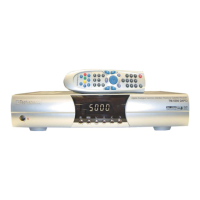

 To Next Page