Need help?
Do you have a question about the Tescom DS300 Series and is the answer not in the manual?
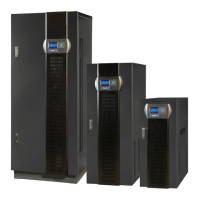
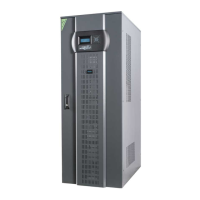
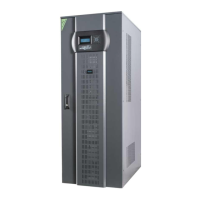
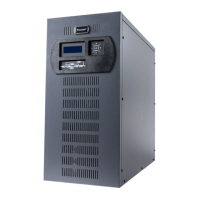
Overview of the DS300 Series UPS.
Explains the internal architecture and components.
Detailed breakdown of UPS functional blocks.
UPS operational modes and states.
Identifies front panel connections and controls.
Detailed electrical and environmental specs.
Introduces the installation chapter.
Procedures for unpacking the UPS unit.
Guidelines for selecting installation location.
Details on connecting power cables.
Importance and procedure for grounding.
Step-by-step guide for cable hookup.
Diagram and identification for power cables.
Procedures for connecting external batteries.
Overview of the front panel components.
Navigating and using the UPS menu system.
Monitoring various UPS parameters.
Viewing recorded alarm events.
Accessing UPS model and firmware details.
Configuring UPS settings and features.
Executing specific UPS commands.
Setting and viewing UPS time and date.
Accessing service-related information.
Service-only adjustments.
Managing user access and password.
Understanding different alarm types.
Interpreting codes for fault diagnosis.
Quick guide to resolving alarms.
General guide to UPS operation.
Procedures for running the UPS.
Step-by-step UPS startup process.
Safe UPS shutdown steps.
Transitioning to bypass mode.
Returning to normal from bypass.
UPS operation during power failures.
Routine tasks by service personnel.
Daily checks for UPS status.
Weekly maintenance and recording.
Recommended annual maintenance.
Guidelines for storing and moving UPS.
Systematic approach to fault diagnosis.
Pre-service checks to perform.
Connecting and using serial ports.
Details of RS232 connection cable.
Setting up remote control via modem.
Requirements for modem connectivity.
How remote modem control works.
Steps for programming the modem.
Specifics for Smart Modem setup.
Cable details for modem connection.
Using dry contact for monitoring/control.
Connecting a remote monitoring panel.
Definition and benefits of energy efficiency.
Importance of selecting correct device capacity.
Optimal electrical conditions for efficiency.
Ensuring compatible operating environment.
Suitability of the installation location.
How maintenance improves efficiency.
Using recycled materials for efficiency.
 General
| Model | DS300 Series |
|---|---|
| Category | UPS |
| Type | Line Interactive |
| Frequency | 50/60 Hz |
| Input Voltage | 220-240VAC |
| Output Voltage | 220-240VAC |
| Battery Type | Sealed Lead-Acid |
| Communication Interface | USB |


 To Next Page