MSGQ Module
Application Program Interface 2-233
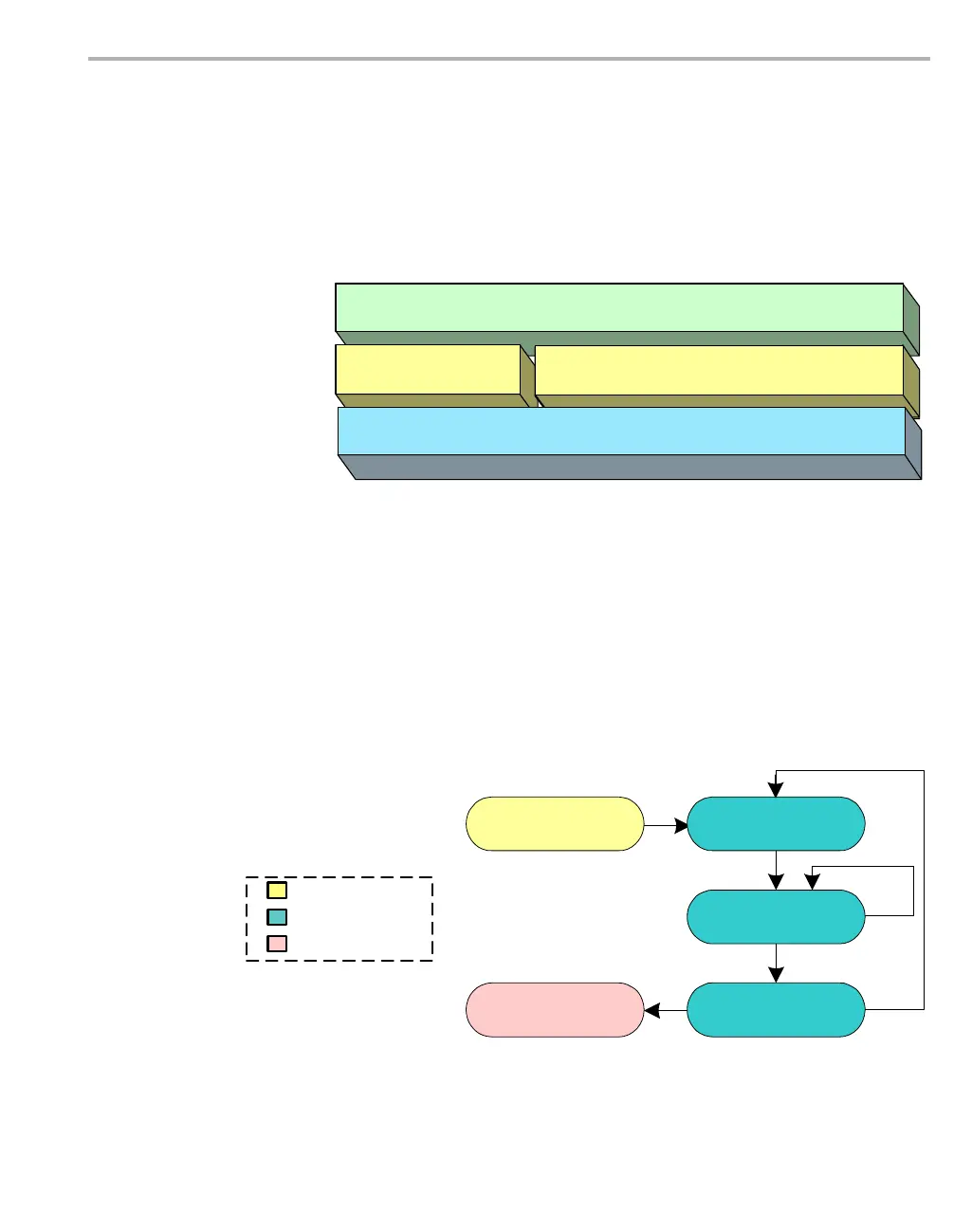
❏ Allocators. Messages sent via MSGQ must be allocated by an
allocator. The allocator determines where and how the memory for
the message is allocated. For more about allocators, see the
DSP/BIOS User’s Guide (SPRU423F).
❏ Transports. Transports are responsible for locating and sending
messages with other processors. For more about transports, see the
DSP/BIOS User’s Guide (SPRU423F).
Figure 2-5. Components of the MSGQ Architecture
For more about using the MSGQ module—including information about
multi-processor issues and a comparison of data transfer modules—see
the
DSP/BIOS User’s Guide (SPRU423F).
MSGQ APIs The MSGQ APIs are used to open and close message queues and to
send and receive messages. The MSGQ APIs shield the application from
having to contain any knowledge about transports and allocators.
The following figure shows the call sequence of the main MSGQ
functions:
Figure 2-6. MSGQ Function Calling Sequence
The reader calls the following APIs:
MSGQ APIs
Allocators
Drivers
Transports
MSGQ_open()
MSGQ_locate()
MSGQ_alloc()
MSGQ_close()
MSGQ_release()
MSGQ_free()
MSGQ_get()
MSGQ_put()
startup
run
termination




 To Next Page