EasyManua.ls Logo

THORLABS EDU-QOP1 - User Manual

THORLABS EDU-QOP1
166 pages
Print Icon
To Next Page IconTo Next Page
Loading...
EDU-QOP1(/M)
Quantum Optics Kit
User Guide

Table of Contents

Question and Answer IconNeed help?

Do you have a question about the THORLABS EDU-QOP1 and is the answer not in the manual?

Overview

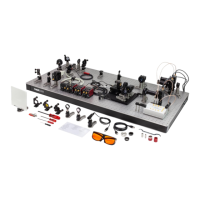
The EDU-QOP1(/M) Quantum Optics Kit is an educational system designed to allow students to investigate the quantum properties of light in an open and accessible environment. It focuses on demonstrating what constitutes a non-classical light source, specifically a heralded single photon source that generates pairs of 810 nm photons from a 405 nm pump laser using a type-I BBO crystal. The kit utilizes free-space optics and small single-photon detectors, enabling students to place detectors within the system and perform measurements at specific points. Modern time-tagging electronics are employed to analyze and correlate signals from three single-photon detectors.

Function Description:

The kit facilitates a range of quantum optics experiments, including:

  • Characterization of a Photon Pair Source: Students can verify that the BBO crystal generates photon pairs, observing coincidence counts significantly exceeding those expected from arbitrary/thermal light sources.
  • Proof of Non-Classical Light (Grangier-Roger-Aspect Experiment): This experiment demonstrates that when both photons of a pair are considered, the light in one arm exhibits non-classical properties, acting as a heralded single photon source.
  • Falsification of Attenuated Lasers as Single Photon Sources: Students can experimentally confirm that even a strongly attenuated laser does not behave as a single photon source, as its photon statistics remain classical (Poissonian distribution).
  • Single Photon Interference in a Michelson Interferometer: This experiment allows students to observe interference patterns with single photons, demonstrating wave-particle duality and determining the photon wavelength.
  • Malus’ Law for Single Photons: Students can investigate the polarization properties of single photons and confirm that their probability of passing through a linear polarizer follows Malus' Law, similar to classical electromagnetic waves.
  • Quantum Eraser Experiment: This advanced experiment demonstrates how "which-way" information, which destroys interference, can be "erased" by a suitable polarizer, thereby recovering the interference pattern.
  • Additional Experiments: The kit supports further investigations such as determining the coherence length of the SPDC source and exploring the "Three-Polarizer-Paradox" to understand quantum measurement. It also provides an optical implementation of the Deutsch-Jozsa algorithm for introductory quantum computing concepts.

Important Technical Specifications:

  • Laser Diode: Class 3B laser diode, L405P20, emitting more than 50 mW of optical power at 405 nm (±5 nm). It has an elliptical beam shape (3 mm x 1 mm) and a divergence in the mrad range.
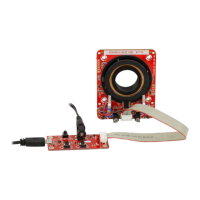
  • Single Photon Detectors (SPDMA): Operate in Geiger mode, with a spectral detection efficiency of approximately 45% at 810 nm and a maximum efficiency of 65% at 600 nm. They have a dead time of <35 ns and a maximum count rate of 20 MHz. Typical dark count rates are <300 Hz.
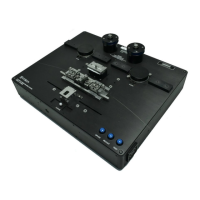
  • Time Tagger (EDU Time Tagger): Features four active channels with a jitter of <720 ps. It assigns precise timestamps to detector events, allowing for post-processing to calculate coincidences and time differences.
  • BBO Crystal: Type-I BBO crystal, 3 mm thick, with a cutting angle of 29.2° for optimal phase matching of 405 nm pump photons to 810 nm signal/idler photon pairs.
  • Michelson Interferometer Stage (NFL5DP20S(/M)): 5 mm travel translation stage with a differential drive and 20 µm closed-loop piezo driver, controlled by a KPZ101 K-Cube Piezo Controller and KSG101 K-Cube Strain Gauge Controller for precise mirror movement.
  • Polarizers: Includes LPNIRE100-B (Ø1") and LPNIRB050 (Ø1/2") linear polarizers. The LPNIRB050 polarizers have a parallelism of <0.5 arcmin, making them suitable for interferometer use.
  • Axicon: Ø1/2" axicon with a 3° half opening angle for the light cone, designed to emulate the photon pair emission from the BBO crystal.
  • Bandpass Filters: Ø1" bandpass filters with a center wavelength (CWL) of 810 ± 2 nm and a FWHM of 10 ± 1 nm for detector optics.

Usage Features:

  • Open Design: Allows students to directly observe and manipulate each component, fostering a deeper understanding of the experimental setup.
  • Free Space Optics: Avoids optical fibers, which simplifies alignment and allows for direct placement of detectors within the system.
  • Time-Tagging Software: User-friendly software for data acquisition, real-time display of count rates and correlation functions, delay adjustment, and saving results. It includes dedicated tabs for HBT, GRA, Malus' Law, and Michelson Interferometer experiments.
  • Alignment Aids: Includes various tools and procedures for precise alignment, such as alignment targets, irises, and detailed step-by-step instructions for collimating lasers, positioning optics, and fine-tuning detectors.
  • Safety Features: The laser driver is equipped with a key switch and safety interlock. Laser safety glasses (LG3) are included and recommended for use with the Class 3B laser. Piezo controller warnings highlight high voltage outputs and precautions.
  • Configurable Settings: Software settings can be customized and saved, including laser current, automatic laser control, and detection schemes. Default settings can be restored.

Maintenance Features:

  • Software Installation: The kit includes a USB stick with all necessary software installers (EDU-QOP1, Thorlabs Kinesis, Swabian Instruments Time Tagger, dotnet-runtime). Updates are available online.
  • Troubleshooting Guide: A comprehensive section addresses common issues such as pump laser malfunction, low count rates, and problems with specific experiments, offering solutions and tips for optimization.
  • Environmental Considerations: Recommendations for operating in a darkened room to minimize background light and suggestions for wavelength filtering enclosures to mitigate sunlight interference.
  • Thermal Stability: For Michelson interferometer experiments, it is noted that replacing the aluminum breadboard with stainless steel and housing the interferometer in a box can reduce thermal drift and air current fluctuations, improving signal stability.
  • Calibration Procedures: Detailed instructions for calibrating polarizers and the Michelson interferometer stage ensure accurate measurements.
  • Component Replacement: Information on how to contact Thorlabs Tech Support for replacement parts and assistance.
  • Return of Devices: Guidelines for returning devices for servicing, emphasizing the importance of original packaging.

THORLABS EDU-QOP1 Specifications

General IconGeneral
BrandTHORLABS
ModelEDU-QOP1
CategoryLaboratory Equipment
LanguageEnglish

Related product manuals