Need help?
Do you have a question about the Thornycroft 108 and is the answer not in the manual?
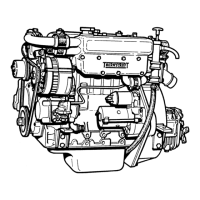
General description of Thornycroft 90 and 108 diesel engines, their features, and cooling systems.
Details power, torque, and speed ratings for Thornycroft 90 and 108 engines.
Explains horsepower ratings, transmission losses, and derating for tropical conditions.
Instructions on checking the maximum installed angle for the engine.
Procedure for marking the engine oil dipstick after filling.
Details the process of filling the engine with the correct amount of oil.
Recommendations for engine oil viscosity based on atmospheric temperature.
Specifies the type of oil required for different gearboxes.
Instructions on how to fill the gearbox with oil to the correct level.
Details anti-freeze/corrosion inhibitor use, concentrations, and coolant quantities.
Step-by-step guide to filling the engine's indirect cooling system.
Procedure to prime the oil system for 90/2R engines before starting.
Procedure to prime the oil system for 90 and 108 engines before starting.
Steps to bleed air from the injection pump using the bleed valve.
Procedure to bleed air from high-pressure injector pipes.
Steps to bleed air from the fuel filter head and fuel feed pipe.
Procedure to bleed air from the injection pump governor housing and high-pressure banjo bolt.
Steps to bleed air from high-pressure injector pipes for type 108 engines.
Steps for the very first start of the engine after filling and priming.
Standard procedure for starting the engine.
Guidelines for the initial 20 hours of engine operation for longevity and performance.
Safety precautions related to starting and gear selection.
Instructions for starting and operating the engine when cold.
Guidance on avoiding prolonged idling and engine shutdown recommendations.
Advice on coolant temperature limits and avoiding low temp operation.
Minimum oil pressures required at idle and full speed.
Clues indicating potential failures or need for service.
General safety advice for operating and maintaining the engine.
Routine checks required every 10 hours of operation.
Initial maintenance tasks after the first 25 hours of operation.
Scheduled maintenance tasks at intervals from 50 to 800 hours.
Procedure for draining and changing the engine oil.
Steps for removing and replacing the engine oil filter element.
Procedure for draining and changing the engine oil for type 108 engines.
Steps for removing and replacing the engine oil filter cartridge.
Detailed steps for replacing the fuel filter element.
Instructions for cleaning the fuel lift pump filter gauze and components.
Procedure for draining and refilling the gearbox with oil.
Steps to clean the air filter casing and gauze.
Procedure for adjusting the tension of the alternator drive belt.
Steps for replacing the alternator drive belt.
Procedure for adjusting the tension of the raw water pump drive belt.
Steps for replacing the raw water pump drive belt.
Procedure for checking and setting valve clearances when the engine is cold.
Procedure for retorquing cylinder head nuts after initial run-in.
Procedure for tightening cylinder head nuts after replacement or repair.
Steps for safely removing fuel injectors from the engine.
Procedure for correctly refitting fuel injectors, including torque specifications.
Instructions for removing and cleaning heater plugs.
Procedure for draining the engine coolant from the heat exchanger and cylinder block.
Steps to drain the raw water system, including the pump and cooler.
Notes on sea inlet strainer, sea cock operation, and checking raw water flow.
Warning against running the raw water pump dry and consequences of doing so.
Overview of the closed circuit fresh water system and filling considerations.
Details on the 12-volt alternator, voltage regulator, and maintenance.
Guidance on maintaining battery electrolyte levels and checking specific gravity.
Correct procedure for using jumper cables to start the engine.
Lists electrical and mechanical faults causing the starter to not crank.
Identifies electrical and mechanical causes for slow starter cranking.
Lists faults preventing engine start when the starter cranks normally.
Common fuel system faults that prevent fuel delivery to the injection pump.
Faults that occur when fuel reaches the injection pump but the engine doesn't start.
 General
| Cylinders | 6 |
|---|---|
| Fuel | Diesel |
| Configuration | Inline |
| Power Output | 108 bhp (81 kW) |
| Cooling System | Liquid-cooled |


 To Next Page