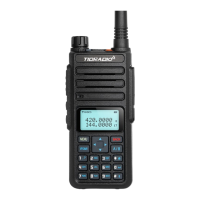
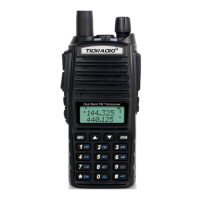
The TIDRADIO TD-H5 is a versatile dual-band GMRS radio, supporting both VHF and UHF frequencies. Designed for users who require extensive customization and control over their communication, this radio offers a robust set of features for both personal and professional use.
Function Description
The primary function of the TIDRADIO TD-H5 is two-way radio communication across GMRS frequencies. It boasts 250 memory channels, providing ample space for various communication needs. Users can program these channels to include alphanumeric names, making it easier to identify and manage different contacts or groups. A key capability is the ability to add or remove channels from the scanning list, allowing for focused monitoring of specific frequencies while excluding others.
The radio supports 22 modifiable GMRS two-way channels (channels 1-22) for both receive and transmit operations, along with 8 modifiable GMRS repeater channels (channels 23-30) for extended range. Additionally, it offers 24 modifiable repeater channels (channels 31-54), further enhancing its utility for repeater-based communication. Channels 1-54 have fixed RX and TX frequencies, ensuring compliance with GMRS regulations. For more flexible listening, channels 55-250 are designed for receive-only operations, allowing users to monitor additional frequencies without transmitting.
Programming the TD-H5 is primarily done via computer software, which unlocks its full potential for customization. This includes setting channel names, adjusting power levels (High/Low), and configuring CTCSS/DCS codes for selective signaling. The software also allows for the configuration of various operational parameters such as channel spacing (Wide/Narrow), PTT-ID settings, and scan add/remove options.
Usage Features
The TD-H5 offers a range of features designed to enhance the user experience and communication efficiency.
- Channel Management: Users can customize channel names with up to 6 digits, supporting alphanumeric characters for clear identification. The ability to add or remove channels from the scan list allows for tailored monitoring.
- CTCSS/DCS Signaling: The radio supports CTCSS/DCS (Continuous Tone-Coded Squelch System / Digital Coded Squelch) for both receiving and transmitting. This feature helps to mute the speaker in the absence of a specific low-level digital signal, ensuring that users only hear transmissions intended for them, thereby reducing unwanted noise and interference from other users on the same frequency.
- Power Output Control: Users can select between High and Low power output settings (5W High, 1W Low) to conserve battery life or extend transmission range as needed.
- PTT-ID: This feature allows for the transmission of identification codes (1-15 DTMF codes, up to 5 digits each) at the beginning (BOT), end (EOT), or both (BOTH) of a transmission. This helps identify the transmitting station.
- Busy Channel Lockout (BCL): When enabled, BCL prevents transmission on an occupied channel. If a channel is in use, pressing the PTT key will result in a beep tone, and the radio will not transmit, preventing interference. If disabled, the radio will transmit regardless of channel activity.
- Scan Add: This feature determines whether a channel is included in the scanning list. Users can choose to add (YES) or exclude (NO) channels from being scanned.
- Signal Code: The radio supports 1 to 15 DTMF codes, which can be programmed via software, allowing for various signaling applications.
- Frequency Hopping Code: An OFF/ON setting for frequency hopping can be activated to improve anti-interference ability and reduce the risk of being monitored.
- VFO A/B and Channel Edit: These modes allow for the adjustment of limited parameters such as selected channel, power level, channel spacing, signaling code, step frequency, and frequency hopping.
- General Settings: A comprehensive "General Settings" menu provides access to various global radio parameters. These include:
- Boot Screen: Customizable display messages (e.g., "WELCOME," "TIDRADIO," or voltage) shown upon radio startup.
- Time Out (s): A transmission time limit (15-600 seconds) to prevent excessively long transmissions, conserve battery, and avoid interference from stuck PTT switches.
- VOX Level: Voice-operated transmit (VOX) with levels 1-9, enabling hands-free communication by automatically activating transmission when speech is detected.
- Work Mode: Allows selection between CH Mode (Channel Mode) and Freq Mode (Frequency Mode).
- Battery Save Mode: Configurable ratios (None, 1:1, 1:2, 1:3, 1:4) of sleep cycles to awake cycles, extending battery life. Note that a word or two might be missed when the frequency being monitored becomes active in higher save modes.
- Squelch Level: Adjustable from 0 to 9. A higher level requires a stronger signal to unmute the speaker, reducing background noise.
- Backlight (s): Configurable auto-off time for the display backlight (1-10 seconds). A "Bright" option keeps the backlight always on, which impacts battery life.
- DTMF Side Tone: Determines when DTMF side tones are heard from the speaker (OFF, DT-ST for manual codes, ANI-ST for automatic codes, DT+ANI for all codes).
- Scan Type: Defines how scanning resumes after a signal is detected: "Time" (resumes after a fixed time), "Carrier" (resumes after the signal disappears), or "Search" (does not resume).
- Roger Beep: Sends an end-of-transmission tone to indicate to other stations that transmission has ended.
- Dual Standby: Allows monitoring of two channels (A and B) simultaneously. The display shows the channel with the most recent activity.
- Channel Display Type: Customizable display on Channel A/B to show "Name + Number" (channel name and number) or "Freq + Number" (frequency and channel number).
Maintenance Features
While the manual primarily focuses on programming, several aspects contribute to the maintenance and longevity of the device:
- Software Updates: The programming software is designed to run on Windows 7, 8, and 10, indicating ongoing support for modern operating systems. Keeping the software updated ensures compatibility and access to the latest features or bug fixes.
- Driver Management: The use of a CH340 USB programming cable requires driver installation. The manual provides a link to download the necessary drivers, ensuring proper communication between the radio and the computer. For FTDI cables (not included), the manual notes that drivers are often not required, simplifying setup for users with these cables.
- Troubleshooting Guide: The manual includes a dedicated section for troubleshooting connection issues ("Failed to Connect to the transceiver (Radio)"). This guide advises checking if the radio is turned on, if the cable is fully inserted (emphasizing a "double click" for secure connection), and suggests holding the cable firmly or even dampening the pins for a solid contact. This proactive troubleshooting helps users resolve common connection problems.
- Battery Management: Features like "Time Out" and "Battery Save Mode" are designed to conserve battery life, which directly contributes to the long-term health and operational readiness of the radio. By preventing excessive transmissions and optimizing power consumption, these features reduce wear on the battery.
- Support Resources: The manual highlights multiple support channels, including
walkietalkiesoftware.com and Facebook home pages (TIDRADIO), for assistance with radio usage or programming. This readily available support network is crucial for addressing user queries and ensuring the device remains functional.

 To Next Page

 General