Need help?
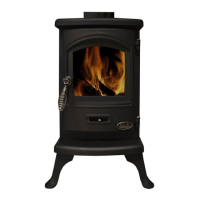
Do you have a question about the Tiger Wood stove and is the answer not in the manual?
Technical specifications including output, mass, flue draught, and fuel load for the stove.
Key considerations and requirements before starting installation or operation.
Specifications for the chimney, including height, cross-section, bends, and insulation.
Required distances from combustible materials and hearth specifications for safe installation.
Ensuring the floor has adequate load-bearing capacity for the stove's weight.
Instructions for attaching the standard legs and securing the stove to the hearth.
Details for fitting the optional Americana cooktop kit to the stove.
Instructions for assembling and fitting the optional Europa Hi-Leg kit.
Guidelines for connecting the flue outlet, ensuring airtightness and sweepability.
Requirement for permanent air supply into the room for safe and efficient operation.
Step-by-step guide for safely lighting the stove and initial fire.
Instructions on how much fuel to add and avoiding overfilling, especially with mineral fuels.
How to adjust the air control slide to manage the fire's output and burn rate.
Tips for achieving best economy by filling the firebox fully and using the 'low' air setting.
Procedure for operating the de-ashing mechanism and safely removing the ashpan.
Guidelines for drying and burning wood fuel, emphasizing dry wood to prevent tars.
Characteristics of housecoal, including its heat, flame, tar production, and gas emissions.
Description of coke as a smokeless fuel derived from coal.
Description of anthracite and Welsh dry steam coal as hard, smokeless fuels.
Information on peat as a fuel, noting it is legally smokeless in certain areas.
Description of lignite as a mineral fuel that lights easily but may produce excessive ash.
Information on compressed fuel blocks, including smokeless types and consistency.
Warning against using petroleum coke alone due to grate damage and reduced firebar life.
Prohibition of burning household waste, plastics, batteries, aerosols, or liquid fuels.
Addressing issues of insufficient heat output, suggesting checking room size and fuel.
Managing fuels that emit flammable gas, suggesting low output settings and checking seals.
Reducing window staining caused by extended low output use by using dry fuel.
Resolving fires going out by ensuring adequate air supply and checking flue integrity.
Troubleshooting common causes of smoke entering the room, like seals or chimney issues.
Procedure for handling a chimney fire and preventative measures like annual sweeping.
Cleaning the throat plate and checking door seals for proper function and integrity.
Recommendation to sweep the chimney annually or more often if smoky fuels are used.
Instructions for repainting the stove body with heat-resistant paint.
List of available spare parts for the Tiger stove, identified by part numbers.
 General
| Fuel Type | Wood |
|---|---|
| Material | Steel |
| EPA Certified | Yes |
| Efficiency | 75% |
| Emissions | 2.5 g/hr |

 To Next Page