1. Top Panel Controls
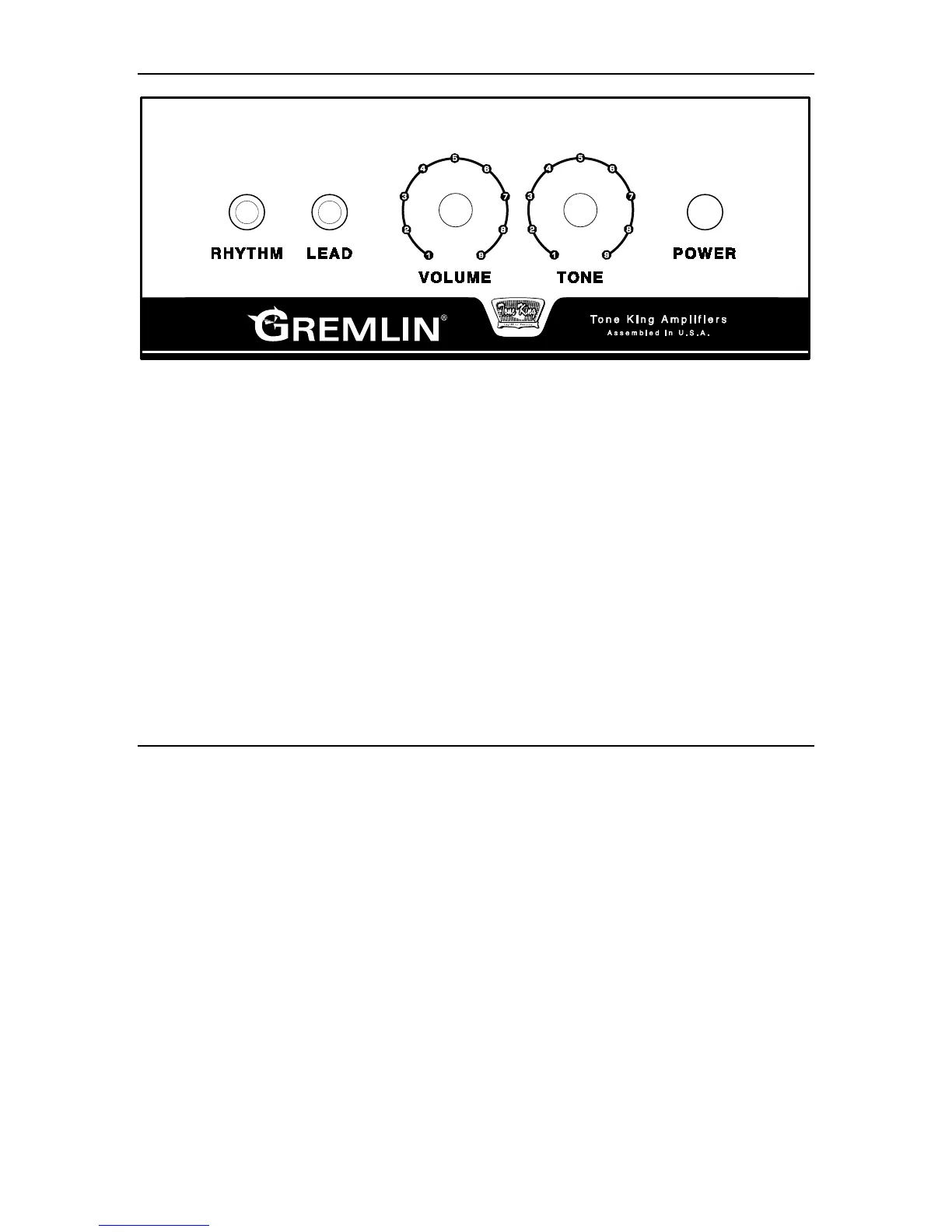
Rhythm and Lead Inputs
Two input jacks are provided, each with a different tone and level of gain. The Rhythm
input has a lower level of gain than the Lead input. This is where you determine the
“channel” of the amplifier. You can plug the cable into either of the two inputs. Or,
using an A/B or A/B/Y switch you can select between them, or jump them together for
a sound that combines the two channels for additional character.
Volume & Tone Controls
… of the Gremlin’s preamplifier is very similar to a vintage tweed deluxe amplifier.
Because of this, the volume and tone controls are highly interactive. This means that
changing the volume control will have some effect on the tone (balance of treble-to-
midrange-to-bass), and changing the tone control will have some effect on the volume of
the amp. Although this seems like an inconvenient setup, it actually provides a much
wider range of available tones. If you are not familiar with using interactive Volume and
Tone controls, it may take some experimenting to become familiar with how best to use
it.
2. Dialing In Your Sound
The Gremlin is capable of a surprisingly wide range of tones, between the two inputs.
Each channel is intended for a specific use, and it’s important to know the intention of
each voicing in order to get the most out of the Gremlin.
“Rhythm” Voicing
The "rhythm" voicing is intended to give you more or less a blackface Fender sound.
Cleaner in lower volume settings, but still with good breakup when cranked, and full
saturation when hit with an overdrive.
“Lead” Voicing
The "lead" voicing is intended exclusively for overdriven and distorted tones. It is not
intended for clean tones. This is why it has more gain than the other setting, and why
it begins to break up at low volume control settings. It may take some experimenting to
find the sweet spots that give you the best tones with a particular guitar.
The Gremlin gets much of its overdrive and distortion from the output stage. When
you are pushing it hard in the lead setting, it reaches maximum output early on, and
simply becomes more saturated as you turn up the volume control. This is how any
non-master design works - tweed amps, etc. The Gremlin is designed for rootsy, old-
school vintage tone, and this kind of tone is all about power tubes being driven hard
and generating their own kind of distortion and compression.


 To Next Page