4
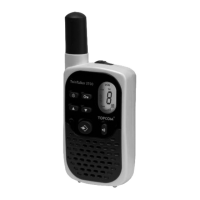
Twintalker 9500
7 Using a PMR device
To communicate between PMR devices they need to be set all on the same channel and CTCSS/
DCS code (see chapter “13.7 CTCSS (Continious Tone Coded Squelch System) / DCS (Digital
Coded Squelch)” and within receiving range (up to max. 10 km in open field). Since these
devices use free frequency bands (channels), all devices in operation share these channels(total
8 channels). Therefore, privacy is not garanteed. Anybody with a PMR set to your channel can
overhear the conversation. If you want to communicate (transmitting a voice signal) you need to
press the -button .
Once this button pressed, the device will go into transmit mode and you can speak into the
microphone. All other PMR devices in range , on the same channel and in standby mode (not
transmitting) will hear your message. You need to wait until the other party stops transmitting
before you can reply to the message. At the end of each transmission the unit will send a beep
if the Roger Beep is enable (see chapter “13.12 Roger Beep On/Off” ). To reply, just press the
-button and speak into the microphone.
8 Included in the package
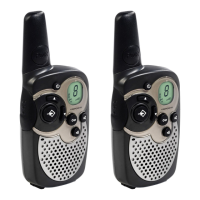
• 2 x Twintalker 9500
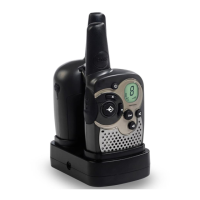
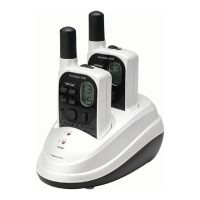
• 2 x Desktop Charger
• 2 x Power adapter
• 8 x AAA NiMh batteries
• User guide
• Card with service address and Hotline
9 Getting started
9.1 Installing/Removing the Belt Clip
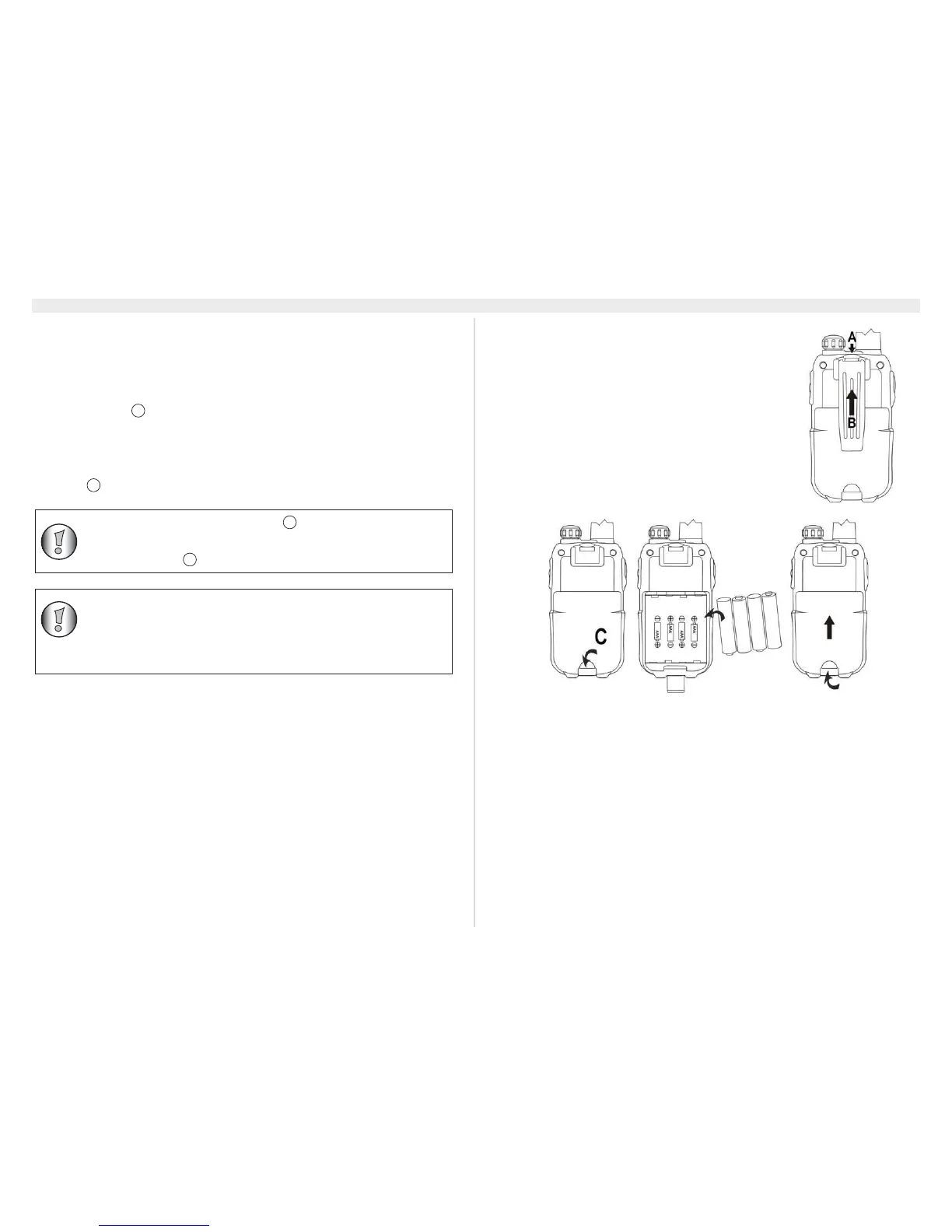
1. To remove the belt clip from the unit, push the belt clip
(B) towards the antenna, while pulling the clip tab (A).
2. When re-installing the belt clip, a click indicates the belt
clip is locked into position
9.2 Battery Installation
1. Remove the belt clip (see chapter “9.1 Installing/Removing the Belt Clip”)
2. Lift the battery door by gently pushing the door clip (C) using your finger nail.
3. Install the NiMh batteries. Make sure that the polarity of the NiMh batteries is correct.
4. Close the battery door.
5. Re-install the belt clip
The range of radio waves is strongly affected by obstacles such as
buildings, concrete/metal structures, the unevenness of the landscape,
woodland, plants, … This implies that the range between two or more PMR's
may in some extreme cases be restricted to a maximum of a few tens of
meters. You will soon notice that PMR works best when there is a minimum
of obstacles between users.




 To Next Page