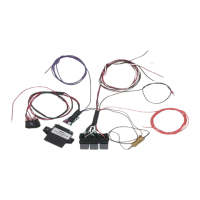
The Toyota Dynamic Laser Cruise Control System, applicable to 2008-2012 Sequoia models, is an advanced driver-assistance system designed to enhance the driving experience by providing both conventional cruise control and adaptive cruise control functionalities. This system aims to improve driver comfort and safety by automating speed and distance management relative to other vehicles on the road.
Function Description
The primary function of the Dynamic Laser Cruise Control System is to maintain a set speed and, when necessary, adjust that speed to maintain a safe following distance from a preceding vehicle. It operates in two distinct modes:
-
Constant Speed Control Mode: This is the traditional cruise control function, often referred to as "fixed speed" control. In this mode, the system maintains a constant speed set by the driver, similar to conventional cruise control systems. It is ideal for cruising on open roads where maintaining a steady speed is desired and there are no vehicles directly ahead within the sensor's detection range.
-
Vehicle-to-Vehicle Distance Control Mode: This is the adaptive aspect of the system. In this mode, a laser sensor, typically mounted at the front of the vehicle, continuously emits a laser beam to detect vehicles ahead. It then measures the distance to the preceding vehicle. The detection range of this sensor is approximately 394 feet (120 meters). Based on this measurement, the system automatically adjusts the vehicle's speed to maintain a pre-selected following distance. This involves:
- Deceleration Control: If the system detects a slower vehicle ahead, it will automatically reduce the vehicle's speed, potentially applying brakes, to maintain the set following distance.
- Follow-up Control: Once a safe following distance is established, the system will "follow" the preceding vehicle, matching its speed up to the driver's set maximum speed.
- Acceleration Control: When the preceding vehicle speeds up or moves out of the lane, allowing for a clear path, the system will accelerate the vehicle back to the driver's set speed.
The core components enabling these functions include:
- Laser Radar Sensor: This is the central component responsible for emitting the laser beam and receiving its reflection to detect and measure the distance to preceding vehicles. It converts the received light into electrical signals, allowing the system's Electronic Control Unit (ECU) to determine distance and angle.
- Cruise Control Switch: Located on the steering wheel, this switch allows the driver to activate/deactivate the system, set/resume speed, and adjust the following distance. It typically includes buttons for "RES+" (resume/accelerate), "SET/=" (set/decelerate), "CANCEL," and a "MODE" button to switch between constant speed and vehicle-to-vehicle distance control.
- Distance Control Switch: This switch, often integrated with the cruise control switch, allows the driver to select the desired following distance (e.g., long, medium, short).
- Multi-Information Display: This display, usually located in the instrument cluster, provides visual feedback to the driver regarding the system's status, including the selected mode, set speed, and following distance.
- CRUISE Main Indicator Light: Illuminates when the cruise control system is active.
- Master Warning Light: May illuminate in conjunction with a VSC Warning Buzzer if there are system malfunctions or critical conditions.
- VSC Warning Buzzer: Provides audible alerts for system warnings.
- Stop Light Switch: Provides input to the system regarding brake pedal application, which typically disengages cruise control.
- DLC3 (Data Link Connector 3): Used for diagnostic purposes, allowing technicians to connect a Techstream diagnostic tool to access system data and perform adjustments.
- Steering Angle Sensor: Provides information about the steering wheel position, which can be used by the system for contextual awareness.
- Yaw Rate & Deceleration Sensor: Provides data on the vehicle's rotational movement and deceleration, crucial for dynamic control.
- Accelerator Pedal Position Sensor: Provides input on the driver's accelerator pedal position, which can override cruise control.
- Throttle Body (with Throttle Control Motor and Throttle Position Sensor): The system interfaces with the throttle body to control engine speed and, consequently, vehicle speed.
- ECM (Engine Control Module): The main engine computer, which communicates with the cruise control system to manage engine output.
- Skid Control ECU: Integrates with the cruise control system, particularly for braking actions during deceleration control.
- Park/Neutral Position Switch: Provides input on the transmission's gear selection.
Usage Features
The Dynamic Laser Cruise Control System is designed for intuitive operation, allowing drivers to easily engage and manage their cruising experience.
- Activation: The system is typically activated by pressing the "CRUISE Main" switch.
- Speed Setting: Once activated, the driver can set the desired cruising speed using the "SET/=" button.
- Distance Adjustment: In Vehicle-to-Vehicle Distance Control Mode, the driver can adjust the following distance using the dedicated distance control switch, allowing for customization based on driving conditions and personal preference.
- Resuming Speed: After braking or temporarily disengaging, the "RES+" button allows the vehicle to return to the previously set speed.
- Cancellation: The system can be canceled by pressing the "CANCEL" button, applying the brakes, or turning off the main cruise control switch.
- Mode Switching: The "MODE" button allows the driver to toggle between Constant Speed Control Mode and Vehicle-to-Vehicle Distance Control Mode.
- Visual Feedback: The Multi-Information Display provides clear visual indicators of the system's status, including the selected mode, set speed, and the presence of a detected preceding vehicle.
Maintenance Features
Proper maintenance and adjustment are crucial for the optimal performance and safety of the Dynamic Laser Cruise Control System.
- Sensor Cleanliness: A critical maintenance aspect is keeping the laser sensor clean. Obstructions such as snow, ice, or plastic objects can interfere with the sensor's ability to detect preceding vehicles, potentially causing the system to cancel or malfunction. Regular cleaning of the sensor's light-emitting and light-receiving portions is essential.
- Pre-Checks for Adjustment: Before any adjustment procedure, several pre-checks are recommended:
- Tire Pressure: Ensure tire pressures are set according to the vehicle's specifications (found on the door jamb label or in the Owner's Manual).
- Vehicle Load: The trunk and passenger compartment should be unloaded to ensure accurate measurements.
- Sensor Installation: Verify that the laser sensor, bumper reinforcement, and related components are installed correctly and securely.
- Laser Beam Axis Adjustment: This is a precise calibration procedure that ensures the laser sensor's beam is correctly aligned. It involves:
- Work Area Preparation: Requires a specific indoor, level work area free of reflective objects.
- Vehicle Centerline Determination: Using a plumb bob and masking tape to accurately mark the vehicle's centerline on the ground.
- Work Area Centerline Marking: Extending the vehicle's centerline into the work area using a string.
- Reference Point Marking: Precisely marking specific reference points (D, E, F, G) on the ground using measurements and string. Point G is where the reflector SST (Special Service Tool) will be placed.
- SST Reflector Height Adjustment: Measuring the height of the laser sensor emitter from the ground and adjusting the SST reflector height to be 0.4 inches (9mm) higher than this measurement.
- SST Placement: Placing the adjusted SST reflector precisely on Point G.
- Techstream Diagnostics: Connecting a Techstream diagnostic tool to the DLC3 to monitor "Laser Cruise Divergence Data."
- Beam Signal Check: Moving the SST slightly to the left and right of Point G to confirm that the "UPPER/LOWER SIDE" and "LEFT/RIGHT SIDE" values on Techstream change, indicating a proper laser beam signal.
- Storing Adjustment Data: Once the divergence data is within the specified standard values, the adjustment data must be stored in the Laser Radar Cruise ECU using Techstream.
- Mechanical Adjustment Method: If the laser cruise divergence data does not meet the standard values after initial checks, a mechanical adjustment of the laser sensor is required. This involves turning specific adjustment bolts (Adjustment Bolt A and Adjustment Bolt B) on the sensor to fine-tune its direction (right/left and up/down). The adjustment bolt information provides precise turn amounts (e.g., 0.75 turns for 1° change in upper/lower direction, 4.5 turns for 1° change in right/left direction) to achieve the desired alignment. Bolt A and B are used together for right/left adjustments, while Bolt B is used for upper/lower adjustments, with other bolts acting as fixed pivot points.
These maintenance procedures ensure that the Dynamic Laser Cruise Control System operates accurately and reliably, providing the intended safety and convenience features.

 Need help?
 General

 To Next Page