
 Need help?
Do you have a question about the TP-Link Archer A5 and is the answer not in the manual?
Connect the modem to the router's Internet port and the power adapter to the router.
Verify that the router's Power, 2.4GHz, 5GHz, and Internet LEDs are solid on.
Connect a computer to the router and access the web interface for setup.
Connect the router's Internet port to your wired router's Ethernet port.
Access the web interface and run Quick Setup to configure Access Point mode.
Download and use the TP-Link Tether app to manage your router.
Enables WPS function or toggles the router's wireless function on/off.
Resets the router to its factory default settings by pressing for 2 seconds.
Supports Guest Network, Parental Controls, and Access Control configuration.
Access technical support, user guides, and more information online.
Troubleshooting steps for when the router login window does not appear.
Solutions for common issues when unable to access the internet.
Instructions on how to restore the router to its factory default settings.
Guidance on recovering forgotten web management or wireless network passwords.
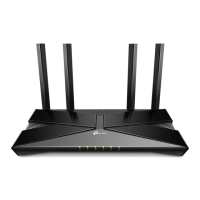
This document describes a TP-Link Wireless Dual Band Router, designed for both home and small office network environments. It offers comprehensive functionality as a router and an access point, with user-friendly setup and management options.
The primary function of this device is to act as a Wireless Dual Band Router. In this mode, it connects to your internet service provider's modem (DSL, Cable, or Satellite) and broadcasts a wireless network, allowing multiple devices to connect to the internet simultaneously. It supports dual-band Wi-Fi (2.4GHz and 5GHz), providing flexibility for different types of devices and network demands. The 2.4GHz band is suitable for basic internet use and wider coverage, while the 5GHz band offers faster speeds for bandwidth-intensive activities like streaming and gaming.
The router can also operate in Access Point Mode. In this configuration, it transforms an existing wired network into a wireless one. This is particularly useful for extending the wireless coverage of an existing network or adding Wi-Fi capabilities to a wired-only network. When in Access Point mode, the device connects to a wired router and broadcasts its own wireless network, effectively acting as a Wi-Fi extender or a new wireless access point.
Easy Setup and Installation: The router is designed for straightforward installation. The Quick Installation Guide provides clear, step-by-step instructions for both Router Mode and Access Point Mode.
http://tplinkwifi.net or http://192.168.0.1. A Quick Setup wizard guides users through the process of configuring their internet connection and wireless settings.Flexible Connectivity Options:
Advanced Management with Tether App: The TP-Link Tether app provides a simple and intuitive way to manage the router from a smartphone or tablet.
Enhanced Network Control:
The router offers several advanced features accessible through its web management page (http://tplinkwifi.net):
WPS/Wi-Fi Button: A multi-functional button on the rear panel serves two purposes:
Troubleshooting and Support: The manual includes a comprehensive FAQ section to address common issues:
admin credentials.Factory Reset Options: The router provides two methods to restore it to its factory default settings, which can be useful for troubleshooting or reconfiguring the device:
System Tools > Factory Defaults and clicking "Restore."Firmware Updates and User Guide:
For technical support, detailed user guides, and the latest firmware updates, users are directed to the TP-Link support website (http://www.tp-link.com/support). This ensures users have access to the most current information and solutions for their device.
 General
| Product type | Tabletop router |
|---|---|
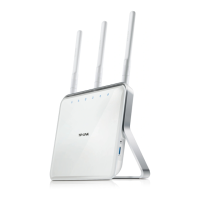
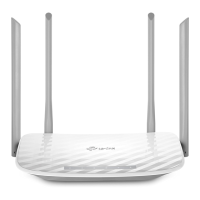
| Product color | White |
| Storage temperature (T-T) | -40 - 70 °C |
| Operating temperature (T-T) | 0 - 40 °C |
| Storage relative humidity (H-H) | 5 - 90 % |
| Operating relative humidity (H-H) | 10 - 90 % |
| Cables included | LAN (RJ-45) |
| Quick installation guide | Yes |
| Certification | CE, FCC, RoHS |
| Cabling technology | 10/100Base-T(X) |
| Networking standards | IEEE 802.3, IEEE 802.3u |
| Receiver sensitivity | 5GHz: 11a 54M: -73dBm 11ac VHT20 MCS8: -68dBm 11ac VHT40 MCS9: -64dBm 11ac VHT80 MCS9: -60dBm 2.4GHz: 11g 54M: -76dBm 11n HT20 MCS7: -74dBm 11n HT40 MCS7: -71dBm |
| Ethernet LAN data rates | 10, 100 Mbit/s |
| Ethernet LAN interface type | Fast Ethernet |
| Supported network protocols | IPv4, IPv6 |
| Security algorithms | 64-bit WEP, 128-bit WEP, WPA, WPA-PSK, WPA2, WPA2-PSK |
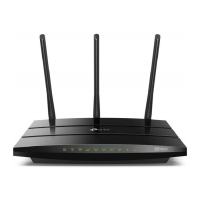
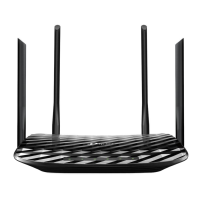
| Antennas quantity | 4 |
| 3G | No |
| Wi-Fi band | Dual-band (2.4 GHz / 5 GHz) |
| Wi-Fi standards | 802.11a, Wi-Fi 5 (802.11ac), 802.11b, 802.11g, Wi-Fi 4 (802.11n) |
| Top Wi-Fi standard | Wi-Fi 5 (802.11ac) |
| WLAN data transfer rate (max) | 867 Mbit/s |
| WLAN data transfer rate (first band) | 300 Mbit/s |
| WAN connection type | RJ-45 |
| Output current | 0.85 A |
| Output voltage | 9 V |
| Power source type | DC |
| Mac operating systems supported | macOS |
| Windows operating systems supported | Windows 10, Windows 2000, Windows 7, Windows 8, Windows 8.1, Windows 98SE, Windows Vista, Windows XP |
| Package depth | 240 mm |
| Package width | 290 mm |
| Package height | 76 mm |
 Weight and Dimensions
| Depth | 144.2 mm |
|---|---|
| Width | 229.9 mm |
| Height | 36.85 mm |


 To Next Page