EasyManua.ls Logo

TPS Tenney TUJR - User Manual

TPS Tenney TUJR
62 pages
Print Icon
To Next Page IconTo Next Page
Loading...
Order Number: 113119
Revision Date: 01-25-15
Operation and Maintenance Manual
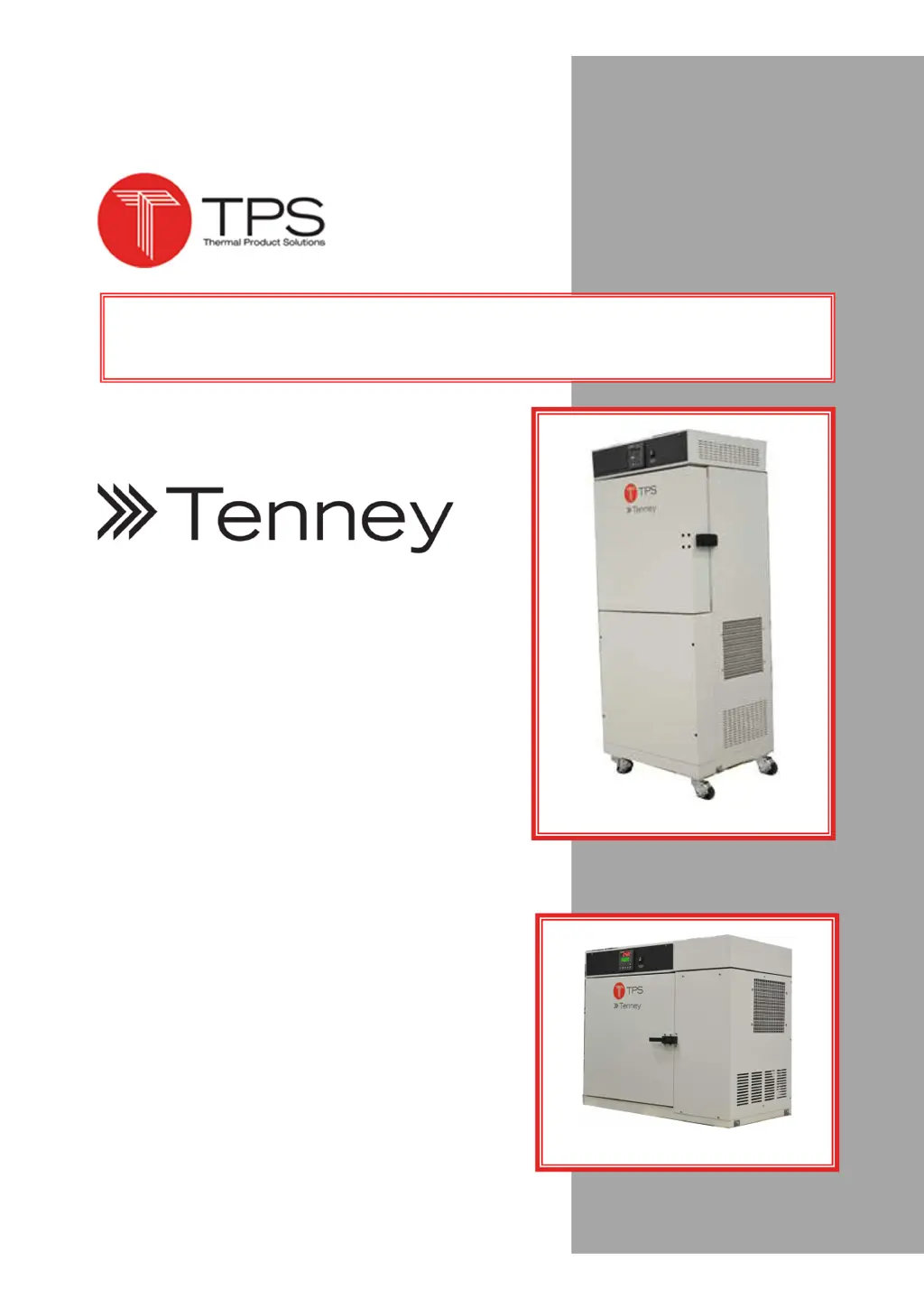
Tenney Junior
Environmental Test
Chambers
Models TJR/TUJR
Model TJR
Model TUJR

Table of Contents

Questions and Answers

  • R
    reginawilcoxAug 18, 2025
    What to do if the refrigeration system is dead in TPS Laboratory Equipment?
    • D
      Denise FriedmanAug 18, 2025
      If the refrigeration system in your TPS Laboratory Equipment is dead, it could be due to several reasons. The cooling output might be failing to close, in which case you should verify this. Another possibility is that the Solid State Relay 2SSR is failing to conduct, and it should be replaced. Lastly, the compressor motor overload protector might have tripped; wait for 5 minutes, and if it doesn't close, replace it.
  • J
    Jessica JohnstonAug 20, 2025
    Why does the compressor repeatedly trip out overload protector in TPS Laboratory Equipment?
    • K
      kelly34Aug 20, 2025
      If your TPS Laboratory Equipment compressor is tripping the overload protector repeatedly, this could be due to a pressure switch failure. Have a refrigeration mechanic check the switches.
  • J
    Joseph PatelAug 23, 2025
    What to do if the compressor starts, hums, and runs slowly in TPS Laboratory Equipment?
    • J
      john53Aug 23, 2025
      If your TPS Laboratory Equipment's compressor starts, hums, and runs slowly, staying on the start winding, it's likely due to low line voltage, so get proper electrical service. Alternatively, there could be a shorted winding, so test resistances and test for grounds.
  • W
    wisemollyAug 26, 2025
    What to do if the compressor hums but will not start in TPS Laboratory Equipment?
    • J
      Justin GrahamAug 26, 2025
      If your TPS Laboratory Equipment's compressor hums but won't start, it may be due to low line voltage; ensure you get proper electrical service. Another cause could be a defective starting capacitor, which would need replacement. It's also possible there's an internal compressor problem; in that case, measure winding resistance and test for grounds.
  • G
    Gloria SmithAug 28, 2025
    Why is there excessive heat in TPS Laboratory Equipment?
    • T
      tiffany18Aug 28, 2025
      If you are experiencing excessive heat in your TPS Laboratory Equipment, it could be because the 1SSR failed in a conducting state, which is its usual failure mode, so replace it. Another cause might be that the heat output is failing to open, so verify this. Finally, a short-circuited temperature sensor could be the culprit, so replace it.
  • D
    Deborah JohnsonAug 30, 2025
    Why does refrigeration work long or continuously in TPS Laboratory Equipment?
    • D
      David DavilaAug 30, 2025
      If your TPS Laboratory Equipment is running refrigeration for a long time or continuously, it could be due to an excessive heat load; reduce the load if possible. Alternatively, there might be ice on the evaporator coil, so defrost it. A low refrigerant charge is another possibility; have the charge checked by a refrigeration mechanic.
  • E
    Elizabeth HillSep 2, 2025
    Why is there insufficient heat in TPS Laboratory Equipment?
    • D
      David CollinsSep 2, 2025
      If your TPS Laboratory Equipment is not producing enough heat, first ensure that the chamber door is securely closed. If it is, check if one of the heater elements has burned out by measuring the current. Lastly, check the controller programming to ensure there are no failures.
  • E
    eric68Sep 4, 2025
    Why is there no heat in TPS Laboratory Equipment?
    • V
      Vanessa MorganSep 4, 2025
      If your TPS Laboratory Equipment is not heating at all, it could be due to several reasons. The heat limiter might have opened, so replace it. The heater elements might be burned out or open, so replace them. The Solid State Relay 1SSR might have failed open, so replace it. Or the temperature sensor might be open, so replace it.
  • M
    Melinda LopezSep 7, 2025
    How to troubleshoot a dead conditioner fan in TPS Laboratory Equipment?
    • C
      Charles NicholsSep 7, 2025
      If the conditioner fan in your TPS Laboratory Equipment is dead, it could be due to a frozen motor shaft; verify by rotating it carefully by hand. Another possibility is a defective motor; verify by feeling for heat and measuring current.
  • W
    wongpamelaSep 10, 2025
    Why does the compressor run but cools inefficiently in TPS Laboratory Equipment?
    • H
      hammondmichaelSep 10, 2025
      If your TPS Laboratory Equipment's compressor runs but cools inefficiently, it may be due to restricted ventilation or dirty condenser fins. Move the unit away from the wall and clean the condenser fins.

Summary

Introduction and Contact Information

Contact Information

Provides contact details for Thermal Product Solutions, including mailing and physical addresses, phone numbers, and website.

Parts and Service Inquiries

Guide on how to inquire about parts and service for the equipment, emphasizing OEM parts.

Technical Specifications

Details the mechanical, electrical, and environmental specifications for the Tenney Junior test chambers.

Safety Guidelines and Warnings

Symbols

Explains various symbols used in the manual to alert readers to potentially dangerous situations.

Warnings

Lists critical warnings and precautions for operating and maintaining the equipment to prevent injury or damage.

System Overview and Conditioning

Application

Describes the general use of Tenney Junior environmental test chambers and their conditioning functions.

Environmental Conditioning Functions

Details how heating, cooling, and air circulation are achieved within the chamber.

Heating System Details

Heating - All Models

Describes the use of open air low mass nichrome wire heating elements.

Heater Control

Explains how the heating elements are controlled via a time-proportioned output and solid-state relay.

Cooling System Description

Cooling - All Models

Explains how cooling is achieved by recirculating air through a refrigerated cooling coil.

Capillary Tube Control Description

Describes the capillary tube type refrigerant control system used for cooling.

Low Stage Description

Details the components and operation of the low stage refrigeration system.

High Stage Description

Details the components and operation of the high stage refrigeration system.

Refrigerant Flow

Explains the path and process of refrigerant flow through the high stage system.

Air Circulation System

Air Circulation

Describes the vertical-down airflow system for temperature uniformity.

Over Temperature Protection

Watlow F4 Temperature Controller

Features

Lists the features of the Watlow F4 profiling type temperature controller.

Displays

Describes the PV Display, LCD Display, and Scroll Bar functions of the controller.

Indicator Lights

Explains the function of various indicator lights on the controller.

Keys

Explains the function of the different keys on the Watlow F4 controller.

Data Communications

Details various data communication interfaces like RS232, RS422A, EIA-485, and IEEE-488.

Controller Configuration

Mentions controller configuration documented in the Test Report and importance of not changing settings.

Optional Equipment and Features

Boost Heat

Describes the optional boost heat feature for rapid temperature increases.

Dry Air Purge System

Explains the purpose and operation of the dry air purge system.

GN2 Purge System

Details the requirements and connection for the GN2 Purge System.

LN2 Boost Cooling System

Explains the LN2 boost cooling system for increasing cooling rates.

CO2 Boost Cooling System

Explains the CO2 boost cooling system for increasing cooling rates.

TEMPGARD IV IV Alarm and Shutdown Circuit

Details the optional Tempgard IV IV circuit for product over/under temperature protection.

Intrinsically Safe Interior Design

Describes design features to protect against explosive conditions with volatile materials.

Data and Communications Ports

Details various types of communication ports offered as options for external devices.

LinkTenn32 Software

Introduces the LinkTenn32 software for remote monitoring and control of chambers.

Chart Recorder

Explains the optional chart recorder for recording temperature versus time.

Installation Procedures

Delivery and Uncrating of Unit

Provides instructions for inspecting and uncrating the delivered equipment.

Location and Installation of Unit

Details requirements for selecting a location and installing the chamber.

Air Supply Connection

Describes the connection requirements for the Dry Air Purge system's compressed air supply.

GN2 Connection

Details the requirements and connection for the GN2 Purge System.

LN2 Connection

Details the connection requirements for the LN2 Boost Cooling option.

LN2 Flow Adjustment

Explains how to adjust the LN2 flow for optimal performance.

CO2 Connection

Details the connection requirements for the CO2 Boost Cooling option.

Power Supply Specifications and Connection

Provides specifications and guidance for connecting the chamber to the power supply.

Power Connection

Details the steps for making the power supply connection to the unit.

Making the Power Supply Connection to the Chamber

Guides on how to properly connect the chamber to the power supply, including safety.

Application of Power

Outlines procedures for applying power and initial checks before operation.

Chamber Operation

Standard Control Panel

Describes the components and functions of the standard control panel.

Standard Operation Procedure

Provides a step-by-step guide for standard operation of the chamber.

Operation with Tempgard IV IV Installed

Details the operation procedure when the Tempgard IV IV option is installed.

Operation Procedure

Provides a step-by-step procedure for operating the chamber.

Alarms

Explains how alarms are activated and managed using the SILENCE switch.

Clearing Alarms

Details the procedures for clearing alarms and resetting the system.

Tempgard IV IV Alarm Setpoint Entry-WATLOW EZ

Guides on setting low and high temperature alarm setpoints for the Watlow EZ Zone.

Alarm Setpoint Entry Procedure

Step-by-step instructions for entering alarm setpoints on the Watlow EZ Zone controller.

Alarm Conditions

Describes how alarm conditions are displayed and what triggers the alarm buzzer.

Saving and Restoring User Settings

Explains how to save and restore controller settings using the Watlow Limit Controller manual.

Preventive Maintenance and Servicing

Preventive Maintenance

Provides guidance on performing preventative maintenance on the equipment.

Maintenance Checks;Procedures

Lists periodic maintenance tasks with their assembly and specific tasks.

Preventative Maintenance Schedule; Log

Provides a schedule and log for tracking preventative maintenance activities.

Refrigeration System

Discusses maintenance and servicing aspects of the refrigeration system.

Introduction to Refrigeration Servicing

Introduces the information for refrigeration servicemen on troubleshooting and repair.

History of Refrigeration Systems

Provides historical context for low temperature refrigeration systems.

How the Refrigeration System Works

Explains the principles of the capillary tube cascade refrigeration system.

High Stage Refrigeration

Describes the components and operation of the high stage refrigeration system.

Low Stage Refrigeration

Details the components and operation of the low stage refrigeration system.

Cascade Condenser Function

Explains the function of the cascade condenser in the refrigeration system.

De-Superheater Component

Describes the de-superheater component and its role in the high stage.

Evaporator Coil Function

Explains the function of the evaporator coil in the low stage system.

Capillary Tube Functionality

Describes the function and construction of the capillary tube.

Thermostat Function

Explains the function of the thermostat in the low stage system.

Load Limit Switch Function

Explains the function of the Load Limit Switch (4PS).

Artificial Loading Process

Describes the artificial loading process in response to thermostat or load limit switches.

Expansion Tank Purpose

Explains the purpose of the expansion tank in the low stage.

Leak Testing Procedures

Provides methods and considerations for leak testing the refrigeration system.

Testing by Static Charge

Explains how to check system tightness using static pressure readings.

Evacuation Process

Details the process of evacuating the refrigeration system.

Charging a Low Stage

Provides instructions and precautions for charging the low stage of the refrigeration system.

Spare Parts Information

Information on ordering spare parts for specific components.

Thermal Cutoff Replacement

Step-by-step guide for replacing the thermal cutoff.

Drawings and Manuals

Drawings and OEM Manuals Overview

Lists available drawings and OEM manuals for the equipment.

OEM Manuals

Lists the OEM manuals that are provided with the unit or its options.

Troubleshooting Guide

TPS Tenney TUJR Specifications

General IconGeneral
Cooling MethodMechanical Refrigeration
Heating MethodElectric Resistance Heaters
Control SystemPID control
DisplayDigital touchscreen
ConstructionStainless steel interior, powder-coated steel exterior
ShelvesAdjustable stainless steel shelves

Related product manuals