2
• IMPORTANT SAFETY INSTRUCTIONS •
Read the Operator’s Manual and follow all warnings and safety
instructions. Failure to do so can result in serious injury to the
operator and/or bystanders.
FOR QUESTIONS, CALL 1-800-345-8746 IN U.S. OR
1-800-668-1238 in CANADA
The purpose of safety symbols is to attract your attention to possible dangers. The safety symbols, and their explanations, deserve your careful
attention and understanding. The safety warnings do not by themselves eliminate any danger. The instructions or warnings they give are not
substitutes for proper accident prevention measures.
NOTE: Advises you of information or instructions vital to the
operation or maintenance of the equipment.
SYMBOL MEANING
SAFETY ALERT:
Indicates danger, warning or
caution. Attention is required in order to avoid serious
personal injury. May be used in conjunction with other
symbols or pictographs.
DANGER:
Failure to obey a safety warning will result
in serious injury to yourself or to others. Always follow
the safety precautions to reduce the risk of fire, electric
shock and personal injury.
WARNING:
Failure to obey a safety warning can
result in injury to yourself and others. Always follow the
safety precautions to reduce the risk of fire, electric
shock and personal injury.
CAUTION:
Failure to obey a safety warning may result
in property damage or personal injury to yourself or to
others. Always follow the safety precautions to reduce
the risk of fire, electric shock and personal injury.
RULES FOR SAFE OPERATION
SYMBOL MEANING
READ ALL INSTRUCTIONS BEFORE OPERATING
• Read the instructions carefully. Be familiar with the controls and
proper use of the unit.
• Do not operate this unit when tired, ill, or under the influence of
alcohol, drugs, or medication.
• Children and teens under the age of 15 must not use the unit,
except for teens guided by an adult.
• All guards and safety attachments must be installed properly
before operating the unit.
• Inspect the unit before use. Replace damaged parts. Check for
fuel leaks. Make sure all fasteners are in place and secure.
Replace parts that are cracked, chipped, or damaged in any way.
Do not operate the unit with loose or damaged parts.
• Be aware of the risk of injury to the head, hands and feet.
• Carefully inspect the area before starting the unit. Remove all
debris and hard or sharp objects such as glass, wire, etc.
• Clear the area of children, bystanders, and pets. At a minimum,
keep all children, bystanders, and pets outside a 50 feet (15 m.)
radius; there still may be a risk to bystanders from thrown
objects. Bystanders should be encouraged to wear eye
protection. If you are approached, stop the unit immediately.
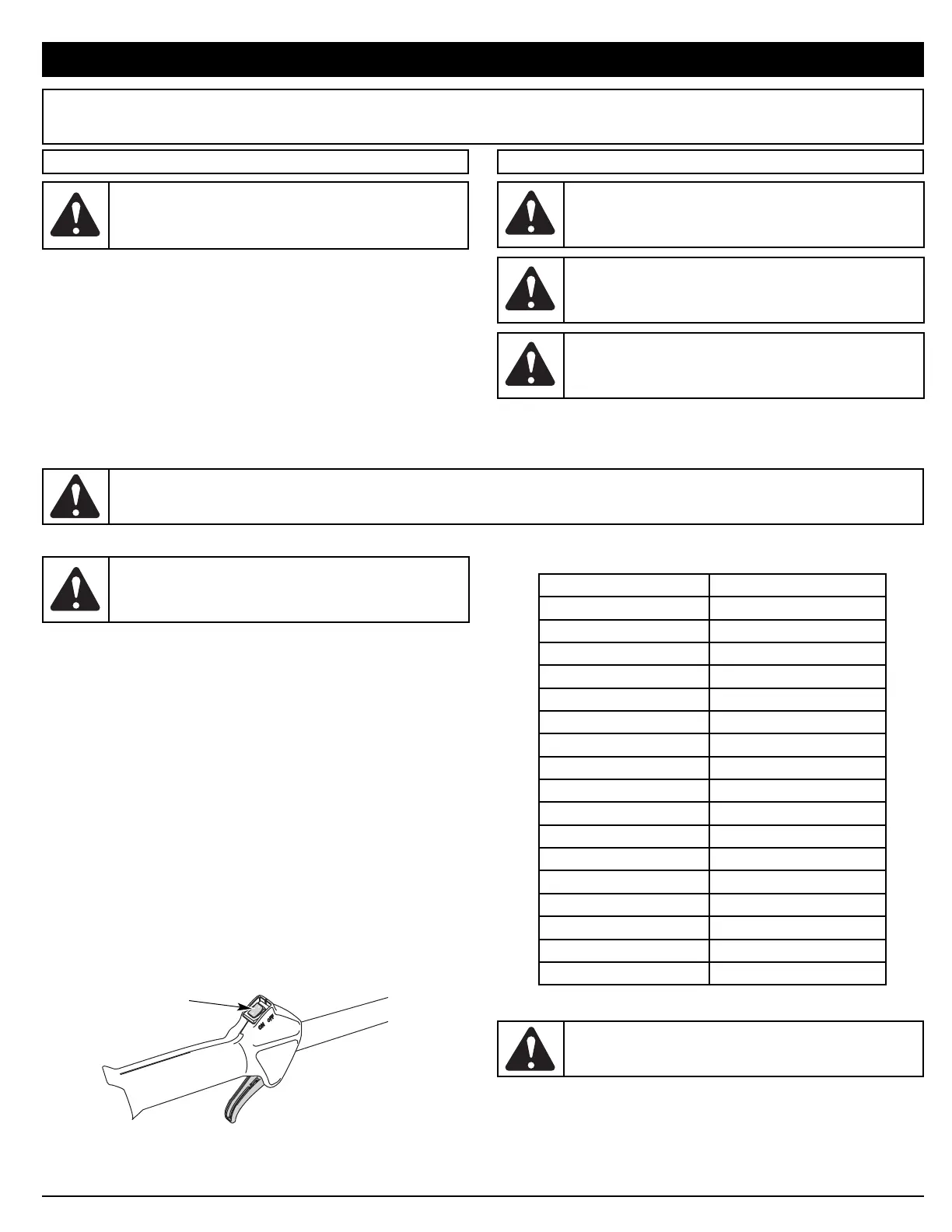
• Only for use on add-on-capable, gas-powered trimmers that have
the On/Off Stop control located on the grip.
• The BC720 is specifically approved for use with the following
models of add-on-capable trimmers:
SAFETY WARNINGS FOR GAS POWERHEADS
• Store fuel only in containers specifically designed and approved
for the storage of such materials.
• Always stop the engine and allow it to cool before filling the fuel tank.
Never remove the cap of the fuel tank, or add fuel, when the engine
is hot. Never operate the unit without the fuel cap securely in place.
RYOBI: TROY-BILT:
775R TB20CS
750R TB25CS
790R TB25ET
890R TB70SS
TB75SS
YARD MAN:
TB90BC
YM25 TB425CS
YM75 TB475SS
YM90 TB490BC
YM26BC
BOLENS (CANADA):
CUB CADET:
BL26BC
CC2025
CC3075
YARDWORKS:
CC4025 60-2310-6
CC4075 60-2311-4
CC4090 60-2312-2
On/Off Stop Control
(located on grip)
WARNING:
When using the unit, you must follow the
safety rules. Please read these instructions before operating
the unit in order to ensure the safety of the operator and any
bystanders. Please keep these instructions for later use.
WARNING:
Gasoline is highly flammable, and its
vapors can explode if ignited. Take the following
precautions:
WARNING:
Never use this add-on with an electric-powered unit. Only attach the BC720 to gas-powered trimmers or
brushcutters. Use with an electric product could lead to damage to the unit or serious personal injury.


 To Next Page