EasyManua.ls Logo

Tritonaudio D2O Standalone - User Manual

Tritonaudio D2O Standalone
2 pages
Print Icon
To Next Page IconTo Next Page
Loading...
D
2
O Standalone
Thank you for purchasing a TritonAudio product!
TritonAudio strives to create innovative audio products which excel in design and
quality. We supply components to the high-end and pro audio community. We wish
you lot's of fun with your purchase. Please visit our website (www.tritonaudio.com)
to stay informed about new products.
D
2
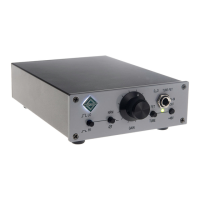
O Standalone Low-noise discrete microphone preamp.
D
2
O is a low noise discrete microphone preamp inspired by the famous German V
series preamps of the 40's and 50's. D
2
O's general layout consists of a Lundahl
1571 input transformer followed by a 2 stage amplifier with enough gain to amplify
all types of microphones. The second gain stage can be selected to be either a
high gain jFet or a Tube stage. Output drive is supplied by a discrete low
impedance jFet buffer with superb sonic properties. Quality Paper in oil coupling
capacitors are used, all other used components are high-end grade aswell.
©TritonAudio 2013
Question and Answer IconNeed help?

Do you have a question about the Tritonaudio D2O Standalone and is the answer not in the manual?

Summary

D2 O Standalone Product Overview

D2 O Standalone Operation and Connection

How to connect D2 O

Connect the power supply, input signal source, and output to mixer, DAW, or recorder.

How to use D2 O

Follow usage rules to avoid noise: manage phantom power, gain, and signal connections.

Overview

The TritonAudio D₂O Standalone is a low-noise discrete microphone preamplifier, drawing inspiration from the renowned German V series preamps of the 1940s and 1950s. Designed for high-end and pro audio applications, it aims to deliver exceptional sound quality and performance.

Function Description:

The D₂O Standalone serves as a microphone preamplifier, boosting the signal from various types of microphones to a line level suitable for mixers, Digital Audio Workstations (DAWs), or recorders. Its core design features a Lundahl 1571 input transformer, followed by a two-stage amplifier. A key feature of the D₂O is its selectable second gain stage, allowing users to choose between a high-gain jFet stage or a Tube stage, offering flexibility in tonal characteristics. Output drive is handled by a discrete low-impedance jFet buffer, known for its superb sonic properties. The preamp incorporates high-quality Paper in oil coupling capacitors and other high-end grade components to ensure optimal audio fidelity and a low-noise floor.

Important Technical Specifications:

  • Gain:
    • Tube-Fet mode: 60 dB
    • Fet mode: 70 dB
  • EIN (Equivalent Input Noise): -128 dB
  • Headroom: 32 dB
  • Input Impedance: 2.25 kOhm / 6.25 kOhm (selectable via transformer ratio)
  • Output Impedance: 100 Ohm
  • Power: 24V AC
  • Input Connector: XLR
  • Output Connector: XLR (pin 2 hot) + 1/4" TRS
  • Input Transformer: Lundahl 1571

Usage Features:

The D₂O Standalone offers several features to enhance its versatility and ease of use:

  • Switchable Transformer Ratio / Input Impedance: This allows users to match the preamp to different microphones and achieve varying tonal responses.
  • Selectable All Fet or Tube-Fet Circuit: Users can choose between a pure jFet amplification path or a hybrid Tube-Fet path for different sonic characteristics.
  • Stepped Attenuator: Provides precise and repeatable gain adjustments.
  • Phase Reverse Switch: Corrects phase issues that can arise in multi-microphone setups.
  • Phantom Power (+48V): Supplies power to condenser microphones.
  • Low Noise / Low ESR Power Supply: Contributes to the overall clean and quiet operation of the preamp.
  • Low Impedance jFet Buffer: Ensures a robust output signal with excellent sonic properties.

Connection Instructions:

  • Power Supply: Connect the supplied 24VAC PSU to the "24VAC" input on the rear panel.
  • Input: Connect your microphone to the "INPUT" XLR connector.
  • Output: Connect the "OUTPUT" XLR or 1/4" TRS connector to your mixer, DAW, or recorder.

Operational Guidelines for Optimal Performance and Noise Avoidance:

  • Phantom Power Disconnection: Always switch off phantom power before disconnecting the microphone to prevent potential damage or loud pops.
  • Gain Adjustment: Turn down the gain control before switching on phantom power or changing the feedback ratio switch position. This prevents sudden loud signals or potential damage to connected equipment.
  • External Phantom Power: When connecting the D₂O to a channel or device that also supplies phantom power, ensure that the phantom power on the receiving channel/device is turned off.
  • Balanced Output Usage: When utilizing the D₂O's balanced output, adding +6dB gain on the receiving channel is recommended if that channel is not servo-symmetrical. This practice helps maintain optimal headroom and signal integrity.

Maintenance Features:

The manual does not explicitly detail maintenance features. However, the use of high-quality components and a robust design suggests a focus on reliability and longevity. As with most audio equipment, keeping the unit clean and free from dust, and ensuring proper ventilation, would contribute to its long-term performance. The discrete design and use of standard components like the Lundahl transformer might imply that repairs, if necessary, could be more straightforward than with highly integrated, proprietary designs. However, any internal maintenance or repair should ideally be performed by qualified technicians to avoid damage and ensure safety.

Tritonaudio D2O Standalone Specifications

General IconGeneral
BrandTritonaudio
ModelD2O Standalone
CategoryAmplifier
LanguageEnglish

Related product manuals