Importance of Daily Use
If you miss sessions or discontinue use of the Day-Light,
your body will return to its usual wintertime doldrums.
Your energy should return within a few days of resum-
ing use.
Using Day-Lights for Non-Seasonal Mood Disorders
Increasing evidence points to the efficacy of using bright
light therapy lamps for non-seasonal depressions of vari-
ous kinds, as well as circadian sleep disorders. Some-
times bright light is used in conjunction with drugs,
sometimes timing and duration of use are varied accord-
ing to the particular condition.
Such conditions are very individual and require the su-
pervision and guidance of a medical professional.
WARNING: The guidelines provided in the Users
Guide are applicable for SAD, the winter blues, and
supporting general well-being. Do not use the Day-
Light for relief of any other type of mood disorder
without the close supervision of your doctor.
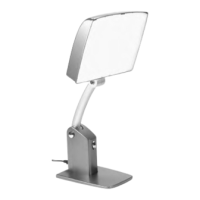
Using the Built-in Stand
On the back of the Day-Light light
case you will find a built-in stand
and keyhole for wall mounting the
light.
Simply remove the legs from your
Day-Light, pull out the built-in
stand and set it on any stable sur-
face that is convenient. This option
is best for ambient lighting.
When used correctly, your Day-Light can help alleviate
the fatigue and decreased activity commonly experienced
in the shorter days of fall, winter, or even into spring.
Please read and follow these instructions carefully to
ensure success.
Using Your Day-Light for Light Therapy
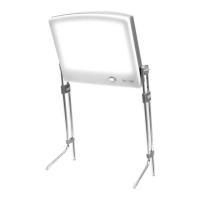
It is best to use your Day-Light with the legs for light
therapy. As described previously, tilt the light at a
15°
angle and adjust the legs so that your eyes are
approximately in the center of the light.
This is the
position recommended by light therapy experts.
Begin with a 30 minute session early in the morning if
possible. Feel free to read, eat breakfast, talk on the
phone, etc. There is no need to look directly into the
light.
NOTE: While you should face the Day-Light and
have your eyes open during your light therapy
session, it is neither necessary nor recommended to
look directly into the light.
Timing and Duration of Session
For best results use your Day-Light shortly after waking,
preferably before 9 a.m. A 20-30 minute session is usually
sufficient. Begin with a 30 minute session and adjust
according to your needs – whether shorter or longer
sessions are required to alleviate your symptoms.
Symptoms of Overuse
Although there are rarely any negative side effects of
using light therapy, it is possible to use the Day-Light too
much. If you experience increased irritability, excessive
energy, and/or any discomfort consistently during or
after use, decrease the length of your sessions, or move
the light several inches further away from you.
Adjusting to Light Intensity
Some individuals prefer to get used to the brightness of
the light before their therapy session. This can be
achieved by turning the system on a short time before
sitting directly in front of it, allowing your eyes to adjust
more comfortably. You might also wish to wake up using
the Day-Light by putting it on a lighting timer. These are
available at your local electrical supply store.
Day-Light User Guide
6 2009-02
Guidelines for Light Therapy Use


 To Next Page
 Loading...