Need help?
Do you have a question about the Velleman K4301 and is the answer not in the manual?
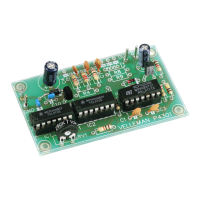
The Velleman K4301 Pink Noise Generator is a versatile electronic kit designed to assist in the analysis and correction of acoustic properties within a room, such as a living room or studio. This device is an indispensable tool for anyone looking to optimize their audio system's performance, especially when paired with a spectrum analyzer and a high-quality microphone. By generating a specific type of noise, the K4301 allows users to identify and address imbalances in their audio environment, leading to a more accurate and enjoyable listening experience.
At its core, the K4301 produces random digital noise, a fundamental element for acoustic testing. This noise is not just any random sound; it's carefully crafted through a sophisticated 33-bit shift register, ensuring a consistent and reliable output for precise measurements. The ability to generate such controlled noise is crucial for obtaining meaningful data when evaluating room acoustics. Without a stable and predictable noise source, any analysis would be prone to inaccuracies, making it difficult to pinpoint specific issues or verify the effectiveness of acoustic treatments.
One of the key features of the K4301 is its adjustable clock frequency. Users can fine-tune the clock frequency between 30KHz and 100KHz, providing flexibility to adapt the noise generation to various testing scenarios and specific requirements of the audio system being analyzed. This adjustability is particularly useful when dealing with different types of audio equipment or when focusing on particular frequency ranges during the acoustic assessment. The precision offered by this adjustable clock frequency ensures that the generated noise is optimally suited for the task at hand, whether it's a broad-spectrum analysis or a more targeted investigation of specific frequency bands.
The K4301 incorporates a specialized pink noise filter, which is designed to produce a noise signal with a -3 dB per octave slope across the audible frequency range of 20Hz to 20000Hz. Pink noise is widely preferred over white noise for acoustic measurements because it more closely mimics the energy distribution of natural sounds and music. In pink noise, each octave carries an equal amount of energy, making it an ideal reference for evaluating the frequency response of an audio system and the acoustic characteristics of a room. This ensures that the generated noise provides a realistic representation of how sound energy is distributed across the spectrum, allowing for more accurate and relevant acoustic analysis.
Beyond its primary function as a pink noise generator, the K4301 is also easily adaptable to produce "white noise." This flexibility adds another layer of utility to the device, as white noise, with its equal energy per frequency, can be useful for certain specific tests or for comparison purposes. The ability to switch between pink and white noise generation modes makes the K4301 a more comprehensive tool for audio professionals and enthusiasts alike, catering to a broader range of acoustic measurement needs. This adaptability is a testament to the thoughtful design of the kit, providing users with options to suit various experimental setups and analytical approaches.
The device is designed for ease of assembly, making it suitable for beginners in electronics while still offering advanced functionality. The assembly manual provides clear, step-by-step instructions, emphasizing the importance of proper tools and soldering techniques. This focus on a smooth assembly process ensures that even those with limited experience can successfully build and utilize the K4301. The detailed guidance helps prevent common errors, fostering a sense of accomplishment and encouraging further exploration into electronics.
For maintenance and adjustment, the K4301 includes a trimmer, RV1, which allows users to fine-tune the noise signal for optimal reproduction characteristics. This adjustment is crucial for obtaining a flat frequency response, especially at higher frequencies, when using a spectrum analyzer. The manual provides instructions on how to connect the device to a power supply and a spectrum analyzer, guiding users through the testing and adjustment process. This hands-on approach to calibration ensures that the generated noise is as accurate as possible, providing a reliable reference for acoustic measurements.
The K4301 also offers opportunities for experimentation for those who wish to delve deeper into its capabilities. By adapting certain components, such as capacitor C1, users can modify the clock frequency of the shift register to achieve different noise characteristics, including "white noise" at higher frequencies. This experimental aspect encourages users to explore the underlying principles of noise generation and filter design, enhancing their understanding of audio electronics. The ability to customize the device's behavior makes it a valuable learning tool, allowing users to tailor its performance to their specific research or testing needs.
In summary, the Velleman K4301 Pink Noise Generator is a robust and adaptable kit for acoustic analysis. Its features, including random digital noise generation, a 33-bit shift register, adjustable clock frequency, and a precise pink noise filter, make it an essential component for anyone serious about evaluating and improving their audio environment. The kit's design also supports easy assembly and offers avenues for advanced experimentation, making it a valuable tool for both learning and practical application in audio engineering.
 General
| Output Power (continuous) | 300 W |
|---|---|
| Output Power (peak) | 600 W |
| Output Waveform | Modified sine wave |
| Output Voltage | 230V AC |
| Output Frequency | 50Hz |
| Low Battery Alarm | 10.5 VDC ± 0.5 VDC |
| Low Battery Shutdown | 10V ±0.5V |
| Protection | Overload, short circuit, over temperature |
| Efficiency | 85% |

 To Next Page