This manual describes the Vertical Express I-2® / I-3® Valve, a critical component in hydraulic elevator control systems. The valve is designed to manage the flow of oil to and from the elevator jack, thereby controlling the car's movement, speed, and stopping accuracy.
Function Description:
The I-2/I-3 Valve is a sophisticated hydraulic control valve that regulates the up and down motion of an elevator car. It achieves this by precisely controlling oil pressure and flow. The valve incorporates several key sections:
-
Up Valve Section: This section is responsible for the upward movement of the car. It includes an up leveling speed adjustment, a check valve piston, a regulator piston, and a relief valve. Its functions encompass accelerating the car to full speed, decelerating to leveling speed, providing hydraulic stopping, and high-pressure relief during the up cycle.
- Up Start: When the pump starts and the up fast solenoid energizes, the regulator piston is held open by its spring and pump pressure. Oil initially bypasses to the tank through the up start and up stop adjustments. As the regulator piston closes due to pressure build-up, the check valve piston opens, allowing oil to flow into the jack and lift the car. The up start adjustment controls the speed at which the regulator piston moves and the car starts.
- Up Slowdown and Leveling Speed: To transition from full speed to leveling speed, the up fast solenoid de-energizes, and the up slow solenoid energizes. This reduces pressure on the spring end of the up pilot piston, causing it to shift. The up stop adjustment closes, and the up slowdown and leveling adjuster opens to the back of the regulator piston. Oil flows out through the up slowdown adjuster, causing the regulator piston to open and valve pressure to drop. The check valve piston begins to close. When the slot on the check valve piston aligns with the hole in the leveling speed adjuster, a hydraulic balance is achieved, resulting in leveling speed. The up slowdown adjuster determines the rate of speed change, while the leveling speed adjuster controls the leveling speed.
- Up Stop: To stop the car, the up slow solenoid de-energizes. The pump runs for a timed delay to ensure a valve stop rather than a pump stop. Pressure equalization on both ends of the up pilot piston causes it to park in the down position, closing the up slowdown and leveling adjuster openings, and opening the up stop adjuster. This allows oil to flow from behind the regulator piston, dropping pressure. Decreased oil pressure, combined with jack pressure and spring force, pushes the piston against the low-pressure adjustment stud, allowing full bypass and closing the check valve piston. The stop adjustment controls the stop rate.
- High-pressure Relief: The valve incorporates a high-pressure relief mechanism. When oil pressure is transmitted to the high-pressure pilot, oil behind the regulator piston and at the high-pressure adjustment escapes to the tank. The regulator piston rapidly moves to the low-pressure stud, allowing full bypass from the pump to the tank and relieving excess pressure. This maintains relief pressure as long as the pump operates.
-
Down Valve Section: This section controls the downward movement of the car. It consists of a piston that can be closed (to stop the car), partially open (for slow speed), or fully open (for high speed).
- Down Start and Full Speed: To initiate downward movement, the down fast and down slow solenoids are simultaneously energized. This allows oil behind the piston to flow to the tank through the down start adjustment, causing the piston to lift. The down start adjustment must be more open than the down stop adjustment to ensure oil drains to the tank. The size of these openings dictates how fast the piston moves and how rapidly the car starts. The lowering speed adjustment limits the piston's opening, controlling the car's down speed.
- Down Slowdown and Leveling: To transition to leveling speed, the down fast solenoid closes. The lowering piston, initially fully open, begins to close as its skirt blocks the oil passage to the tank. Oil flows in through the down stop adjustment to the rear of the lowering piston and out through the slowdown adjustment. The down slow solenoid and down start adjustment cause the lowering piston to move towards the closed position. The down slowdown adjuster governs the speed at which the piston moves and the car slows down. The piston stops when its skirt opens the oil passage to the tank through the down slow solenoid. The lowering and leveling adjustment controls the lowering speed (in half-turn increments) and leveling speed (in less than one-quarter turn increments).
- Manual Lowering: This valve operates in parallel with the down slow solenoid. When opened, it allows the car to lower at leveling speed during emergencies.
- Down Stop: The down slow solenoid de-energizes, stopping all flow to the tank and stopping the car. Pressure from the jack and spring causes the piston to close. The down stop adjustment controls the rate of closing and smoothness.
Important Technical Specifications:
- Minimum Static System Pressure: The I-2/I-3 Valve requires a minimum static system pressure of 90 PSI for proper operation.
- Oil Temperature Range: Adjustments should be made when the oil is at its operating temperature, typically between 100°F and 170°F. Unit performance should be checked when oil temperature is no less than 100°F.
- Relief Pressure Limit: The power unit must be stopped immediately if pressure exceeds 625 PSI.
- Leveling Speed: The recommended leveling speed for both up and down operations is 10 to 12 FPM (Feet Per Minute).
- Leveling Zone: The desired leveling zone is 3 to 4 inches.
- Adjustment Sensitivity: Many adjustments, particularly for leveling speed and slowdown, are highly sensitive and require small, incremental turns.
Usage Features:
- Preliminary Settings: The manual outlines initial setup procedures including verifying power unit ventilation and oil temperature, setting relief pressure, and adjusting low pressure, up leveling, and various adjustment needles (up start, up stop, up slowdown, down start, down stop, down slowdown, lowering and leveling speed).
- Preliminary Adjustments: Detailed steps are provided for initial adjustments, including disabling solenoids, placing the controller on Inspection Operation, and fine-tuning low pressure and inspection speeds.
- Final Adjustments: This section covers fine-tuning the valve for optimal performance in Automatic Operation. It includes adjusting up slowdown, up leveling speed, up stop, up start, lowering speed, down leveling speed, and down stop. The manual emphasizes rechecking leveling speed after each up slowdown adjustment.
- Performance Check with Full Load: After initial adjustments, a full capacity load is used to verify performance at all floors, check for full speed in both directions, and record working pressure for final relief pressure setting.
- Valve Tests: Procedures for verifying relief pressure and adjusting low pressure are provided to ensure safety and proper function.
Maintenance Features:
- Troubleshooting: Comprehensive troubleshooting tables and flowcharts are included for both "Up Operation" and "Down Operation" issues. These guides help diagnose problems such as the car not running at high speed, not slowing down, erratic movement, settling, or issues with starting and stopping.
- Replacement Parts: An exploded view diagram of the valve is provided with a corresponding table listing item numbers, print numbers, and descriptions for various components like valve main body assemblies, pilot assemblies, gaskets, faceplates, and adjustment screws.
- Static Protection Guidelines: Strict guidelines are provided for handling electronic circuit boards to prevent damage from static electricity, emphasizing the use of static bags, wrist straps, and proper handling techniques. Failure to adhere to these guidelines voids the card warranty.
- General Safety: The manual stresses the importance of qualified personnel performing work, adherence to electrical and mechanical safety precautions, proper fuse usage, and safe handling of printed circuit cards. It also includes guidelines for handling and storing equipment upon arrival.
- Asbestos Compliance: Vertical Express has a strict policy regarding asbestos-containing materials (ACM) or possible asbestos-containing materials (PACM) in elevator doors, outlining procedures for replacement or abatement by licensed companies.
The I-2/I-3 Valve is a complex, precision-engineered device requiring careful adjustment and adherence to safety protocols to ensure the safe and efficient operation of hydraulic elevators. The manual serves as an essential guide for qualified elevator personnel in its installation, adjustment, and maintenance.

 Need help?
 General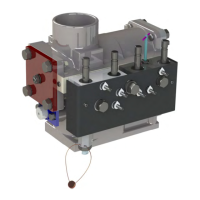

 To Next Page